

Challenging tongue twisters: Introducing high-difficulty phrases and sentences!

Tongue twisters exist in every country.
I think everyone in Japan has been familiar with them since childhood.
This time, I’ve picked out only the especially difficult tongue twisters.
You’ll find not only long, complicated ones, but also very short tongue twisters that are surprisingly hard to say.
Although tongue twisters might seem like they’re just for kids, adults can enjoy them too at parties or drinking gatherings.
If you practice in advance, you might even become the center of attention in those situations.
Now then, please sit back and enjoy!
- Tongue twisters that will make you laugh out loud! Super funny
- [Diction Training] A Collection of Tongue Twisters to Improve Articulation
- A collection of long tongue twisters. Also recommended for practicing announcements and narration.
- Nagoya dialect tongue twisters are exquisite! A fun collection where your tongue gets tied in knots with regional dialects
- Challenge together! A roundup of word games for adults
- “Chau chau, anta” — a Kansai-dialect tongue twister. A phrase only Kansai folks can say.
- Bursting into laughter! A roundup of Hakata dialect tongue twisters
- [Recreation] Challenge! A roundup of tongue twisters recommended for elementary school students
- [Challenging and Fun!] Quizzes & Riddles for Adults
- Chinese tongue twisters: A collection of rao kou ling helpful for learning Chinese
- Perfect for pronunciation practice! A collection of English tongue twisters.
- [Trick Quiz] Quiz Questions That Excite Everyone from Kids to Adults
- Get Caught? Or Not!? Simple Ways to Kill Time During Class
Challenging Tongue Twisters: Introducing High-Difficulty Phrases and Sentences! (21–30)
osteoporosis, lawsuit, winning the case

Because similar sounds like “soshōshō,” “soshō,” and “shōso” pile up, your tongue naturally twists when you say it aloud, which sparks laughter.
Even if children don’t understand the meanings, they can enjoy playing along with the rhythm, and adults can use it as a fun tongue and mouth exercise or for pronunciation practice.
Combining medical and legal terms lends it a slightly uncanny ring, giving it a humorous feel just by reading it.
With repetition, the rhythm and pacing shift, letting you enjoy both the pleasure of voicing it and the challenge it presents—a delightfully fun tongue twister.

During magic, martial arts pain, surgery 2

Because the same “-jutsu” sound repeats, it’s amusing to say aloud—it makes your mouth feel like it’s spinning.
Both kids and adults can enjoy trying it together to the rhythm.
If you picture things like “the strangeness of magic,” “the pain of martial arts,” and “the tension of surgery” as you read, it can feel a bit like a mini story, and might even make you chuckle.
With repetition, the rhythm and pace of your voice change, letting you enjoy the fun of speaking and laughing at the same time—this tongue twister is addictive after just one read.
Difficult Tongue Twisters: Introducing High-Difficulty Phrases and Sentences! (31–40)
Armor and tack, armor and tack, bugu-bagu bugu-bagu; three armor-and-tack, mibugu-bagu; together armor and tack, bugu-bagu; six armor-and-tack.
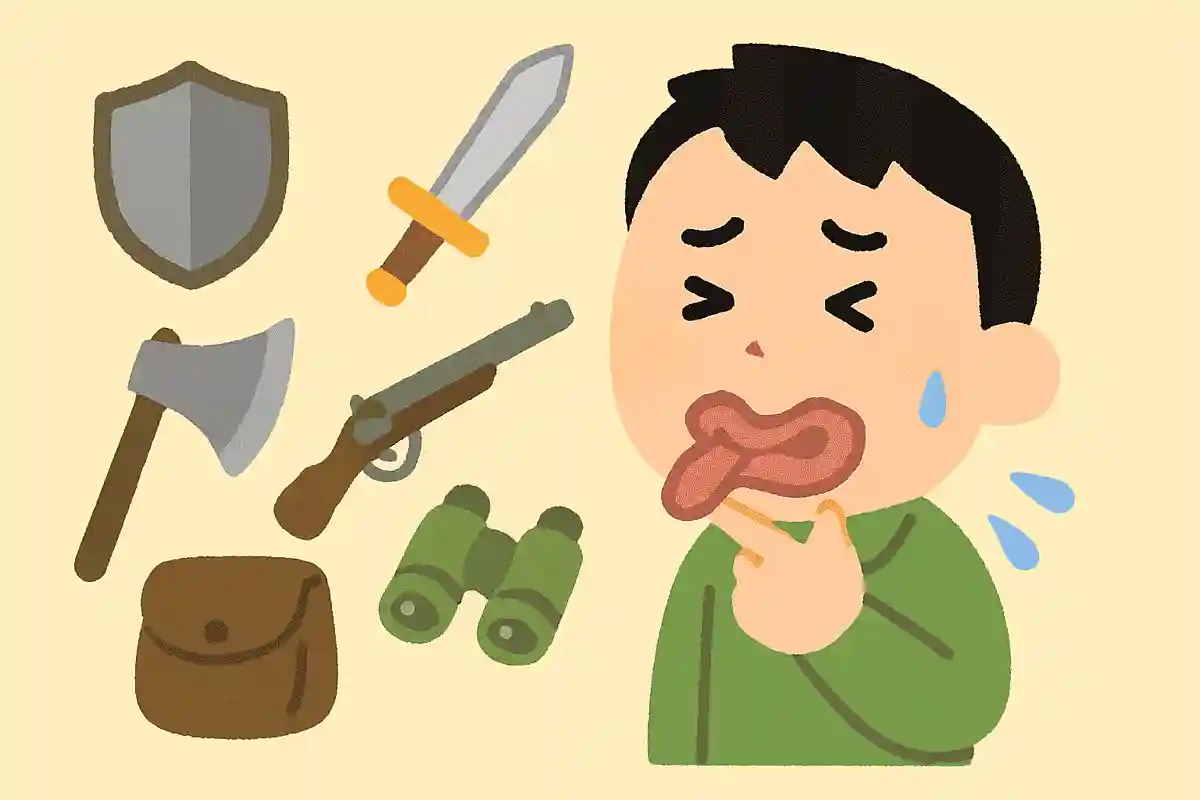
Some tongue twisters are short.
A famous example is “bgu-bagu” (bugu bagu, meaning armor and tack).
Saying just “bgu-bagu” on its own is easy, but when you repeat it, your lips get all tangled—one of those lip-twister types.
That alone is hard enough, but here’s an even tougher version: “Bugu bagu bugu bagu bugu bagu bugu bagu, san bugu bagu mi bugu bagu, awasete bugu bagu bugu bagu, roku bugu bagu.” It follows the same pattern as the “Kaeru pyokopyoko” frog tongue twister, but your lips will be in total chaos! It’s easier if, like beatboxing, you pronounce the ba and bo using your lips and breath rather than your vocal cords—give it a try!

Pad kid poured curd pulled cold

Because similar sounds like “poured,” “curd,” “pulled,” and “cold” come in succession, your tongue quickly gets tied when you say it out loud.
Both children and adults can practice pronunciation and exercise their tongues by repeating it to a rhythm, making it feel like a game.
Each time you read it, the speed and timing change, which sparks a bit of challenge and laughter—that’s the key point.
By consciously focusing on the sounds of the words as you try it, you can enjoy both the fun of speaking out loud and a sense of accomplishment at the same time.
It’s a difficult English tongue twister.
You keep calling me “you, you,” but I don’t go around calling you “you, you,” so stop calling me “you, you,” you!

The fun part is how your tongue gets twisted by repeating “anta” and “atashi” over and over.
It’s great practice for rhythm and pronunciation when read aloud by both kids and adults.
It feels like a humorous exchange—“Don’t say anta or atashi!”—almost like a real conversation.
The key is to savor the words and laugh as you take on the challenge.
Each read creates slightly different rhythms and pauses, so repeating it makes it even more enjoyable.
It’s a playful way to cultivate a feel for language—and once you read it, you might find it irresistibly catchy.
Totetchiteta tote chite tote chite tote chiteta—oops, I danced. Tontsutsu ton tsutsu toton tsutsu—let’s dance the Dontaku dance.

Because sounds like “totechite” and “tontsutsu,” which resemble onomatopoeia, appear repeatedly, your mouth naturally tangles when you say them aloud, making you laugh without meaning to.
Both children and adults can take it on playfully, imagining the rhythm of the sounds and the dancing.
If you read while picturing the scene of dancing the “Dontaku Dance,” that’s the key to enjoying it as a story that’s more fun than a simple tongue twister.
With each repetition, the rhythm and timing shift, letting you savor both the joy of speaking out and the urge to challenge yourself.
Once you read it, it becomes addictive—so try enjoying it in all sorts of situations!
Today’s kyōgen performer came today from the capital, performs kyōgen today, and today returns to his hometown in the capital.

This is a tongue twister rich with rhythm, where the words “today,” “Kyō” (Kyoto), and “kyōgen” are repeated over and over.
When you try to read it, your mouth gets tangled, and you can’t help but laugh.
Children can enjoy challenging it aloud as a playful activity, and adults can use it for tongue and mouth exercises or pronunciation training.
It blends the everyday word “today” with story elements like “kyōgenshi” (kyōgen performer) and “the old hometown in Kyoto,” letting you imagine a little story just by reading it—that’s part of the charm.
Each repetition shifts the rhythm and timing, letting you enjoy both the fun of speaking it out loud and the laughter it brings.
It’s a tongue twister that’s truly worth the challenge.