



Tongue twisters exist in every country.
I think everyone in Japan has been familiar with them since childhood.
This time, I’ve picked out only the especially difficult tongue twisters.
You’ll find not only long, complicated ones, but also very short tongue twisters that are surprisingly hard to say.
Although tongue twisters might seem like they’re just for kids, adults can enjoy them too at parties or drinking gatherings.
If you practice in advance, you might even become the center of attention in those situations.
Now then, please sit back and enjoy!
- Tongue twisters that will make you laugh out loud! Super funny
- [Diction Training] A Collection of Tongue Twisters to Improve Articulation
- A collection of long tongue twisters. Also recommended for practicing announcements and narration.
- Nagoya dialect tongue twisters are exquisite! A fun collection where your tongue gets tied in knots with regional dialects
- Challenge together! A roundup of word games for adults
- “Chau chau, anta” — a Kansai-dialect tongue twister. A phrase only Kansai folks can say.
- Bursting into laughter! A roundup of Hakata dialect tongue twisters
- [Recreation] Challenge! A roundup of tongue twisters recommended for elementary school students
- [Challenging and Fun!] Quizzes & Riddles for Adults
- Chinese tongue twisters: A collection of rao kou ling helpful for learning Chinese
- Perfect for pronunciation practice! A collection of English tongue twisters.
- [Trick Quiz] Quiz Questions That Excite Everyone from Kids to Adults
- Get Caught? Or Not!? Simple Ways to Kill Time During Class
Tongue Twisters That Are Hard. Introducing High-Difficulty Phrases and Sentences! (1–10)
The Director of the Tokyo Patent Approval Bureau suddenly refused to grant leave today.

When it comes to tongue twisters, maybe not the very first, but I bet “Tokyo Patent Approval Bureau” makes it into most people’s top three.
Of course, even just saying “Tokyo Patent Approval Bureau” is quite a mouthful, but there’s an even harder level.
That would be: “Tokyo Patent Approval Bureau Chief suddenly today denies vacation approval.” It’s a glorious parade of hard K sounds.
The “kyo” that follows the “ka” is especially tricky, so even those confident in their diction might struggle with this one.

Cherry blossoms bloom on Sakura Mountain: some blossoms are in bloom, and some are falling.

Difficult tongue twisters often target sounds that include small ya-row vowels like ‘ryo’ or ‘pyo,’ as well as the na, ma, and ka rows.
Indeed, these sounds are hard to say even in short sequences and are notoriously difficult.
However, there are also challenging tongue twisters that use other sounds.
A representative example is: ‘Sakura saku sakura no yama no ōka; saku sakura ari, chiru sakura ari.’ Because it focuses on the ‘sa’ row, people who struggle with breath control using the teeth may find it particularly hard.
Today’s kyogen performer came from Kyoto today, performs kyogen today, and today returns to their hometown, Kyoto.

Common tongue twisters are generally kept fairly short, but when it comes to high-difficulty ones, even just reading them as a sentence can be tough.
One such tongue twister is: “Today’s kyōgen performer came from Kyōto today, performed kyōgen today, and is going back today to his hometown in Kyōto.” It’s a tongue twister that mixes “kyo” sounds with other K-row consonants, and it wouldn’t be an exaggeration to say it’s one of the hardest among those that use “kyo.” Give it a try!
Sugamo-Komagome, Komagome-Sugamo, parent duck and duckling, big duck and small duck

This tongue twister shifts from the names of stations on Tokyo’s Yamanote Line to the names of birds.
Because similar-sounding words come one after another, you may find the words getting swapped without noticing, or end up not even understanding what you’re saying.
Effective strategies include writing the words in kanji instead of relying on your ears, and isolating the tricky parts to practice them repeatedly.
It’s also classic but recommended to start slowly and gradually increase your speed.

As a result of consultations among the instructors for each subject this semester in the Mechanical Department of the Naval Engineering School, the following have been finalized: science, geometry, mechanics, national language, foreign languages, drawing, civics.
There are pronunciations that are hard to say due to cultural backgrounds.
However, there are also large individual differences, and many people may find that words in the “ka” consonant series are easy to pronounce, right? This tongue twister—‘Kaigun Kikan Gakkō Kikaika Konkigakki Gakka Kamoku Kaku Kyōkan Kyōgi no Kekka Kaki no Gotoku Kakutei, Kagaku Kika Gaku Kikaigaku Kokugo Gogaku Gaikokugo Kaiga Kokkasaku’—is a challenge I’d like those who are good with the “ka” sounds to try.
It’s said to be one of the most difficult “ka”-series tongue twisters, and it really makes your mouth snap and pop.
Give it a try!
The riddle about bananas is a mysterious riddle and all, but the banana riddle is still a riddle, you know.

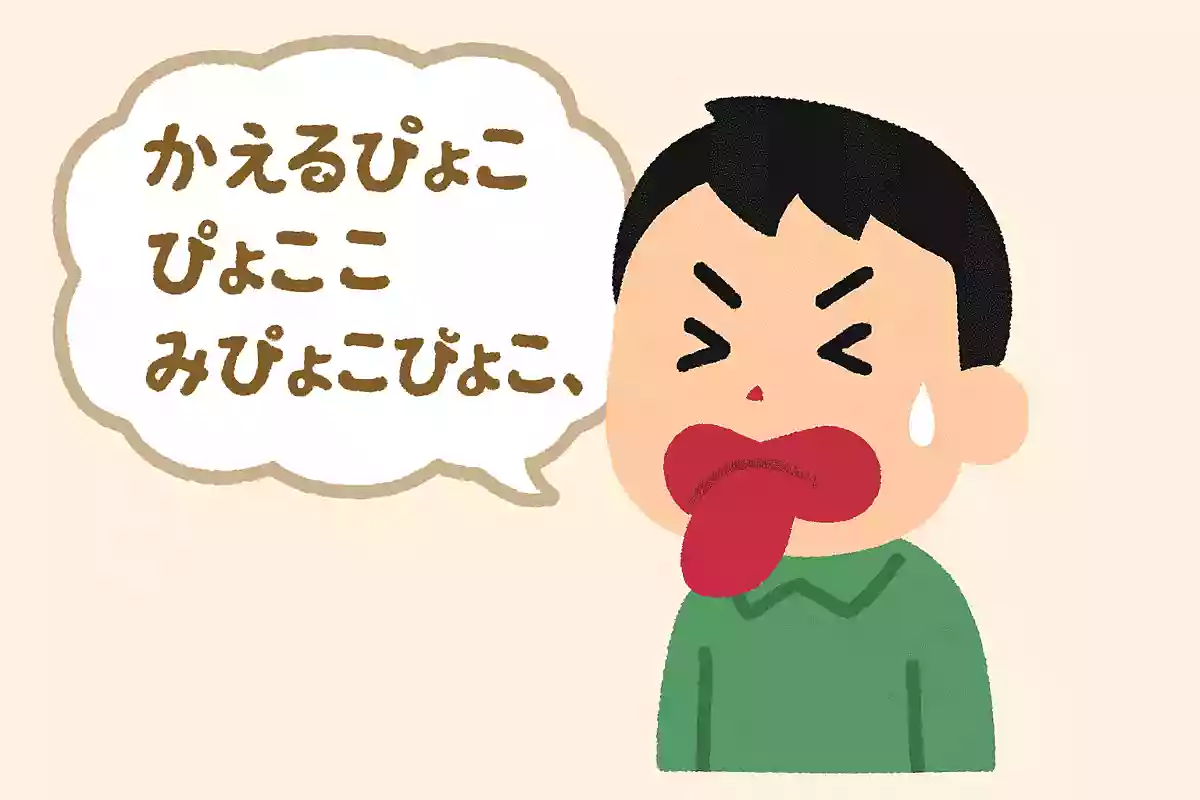
When many people hear “tongue twisters,” they probably think of ones like “Kaeru pyoko-pyoko” or “Tokyo Tokkyo Kyoka-kyoku.” But if you ask, “So, what’s a really hard tongue twister?” many might think of this one: “Banana no nazo no nazo-nazo nado nazo na no dakeredo, banana no nazo wa mada nazo na no da zo.” What makes this tongue twister so difficult is, above all, the repeated ‘na’ sounds.
With “nazo,” “dazo,” and “nano” all jumbled together, your tongue might go into panic mode! Give it a try!
Frogs hop-hop three hop-hop; together they hop-hop six hop-hop.

Among the tongue twisters introduced here, the most popular is “Kaeru pyoko-pyoko 3 pyoko-pyoko, awasete pyoko-pyoko 6 pyoko-pyoko.” Haven’t we all tried it at least once? The tricky part of this tongue twister is definitely the combination of “pyo” and “ko.” The key is whether you can pronounce “pyo” clearly.
By the way, it’s said that any French person can pronounce this tongue twister.
If you have friends who are international students, try tackling it together.