

Challenging tongue twisters: Introducing high-difficulty phrases and sentences!

Tongue twisters exist in every country.
I think everyone in Japan has been familiar with them since childhood.
This time, I’ve picked out only the especially difficult tongue twisters.
You’ll find not only long, complicated ones, but also very short tongue twisters that are surprisingly hard to say.
Although tongue twisters might seem like they’re just for kids, adults can enjoy them too at parties or drinking gatherings.
If you practice in advance, you might even become the center of attention in those situations.
Now then, please sit back and enjoy!
- Tongue twisters that will make you laugh out loud! Super funny
- [Diction Training] A Collection of Tongue Twisters to Improve Articulation
- A collection of long tongue twisters. Also recommended for practicing announcements and narration.
- Nagoya dialect tongue twisters are exquisite! A fun collection where your tongue gets tied in knots with regional dialects
- Challenge together! A roundup of word games for adults
- “Chau chau, anta” — a Kansai-dialect tongue twister. A phrase only Kansai folks can say.
- Bursting into laughter! A roundup of Hakata dialect tongue twisters
- [Recreation] Challenge! A roundup of tongue twisters recommended for elementary school students
- [Challenging and Fun!] Quizzes & Riddles for Adults
- Chinese tongue twisters: A collection of rao kou ling helpful for learning Chinese
- Perfect for pronunciation practice! A collection of English tongue twisters.
- [Trick Quiz] Quiz Questions That Excite Everyone from Kids to Adults
- Get Caught? Or Not!? Simple Ways to Kill Time During Class
Difficult Tongue Twisters: Introducing High-Difficulty Phrases and Sentences! (31–40)
Art room, technology room, operating room, art preparation room, technology preparation room, operating preparation room

Because the words for “room” and “preparation room” keep popping up, the moment you read it aloud your mouth can’t keep up and you can’t help but laugh.
Both kids and adults can enjoy it playfully while picturing familiar school classrooms and hospital rooms.
Each time you read it, the rhythm and the timing of your pauses shifts a little, so the more you repeat it, the more fun it becomes to use your voice.
If you read while conjuring different images for “art,” “technology,” and “surgery,” it feels like more than mere diction practice—you can savor a sense of story, too.
Once you read it, it’s addictive, so definitely give it a try.

Parent turtle, child turtle, descendant turtle; parent duck, child duck, descendant duck

This is a charming tongue twister that rhythmically expresses the bond between parent and child in turtles and ducks.
Because the same sounds for “parent,” “child,” and “grandchild” repeat, reading it aloud naturally tangles your tongue and brings out laughter.
Children can take it on playfully while imagining the animals, and adults can enjoy it as an exercise for the tongue and mouth, as well as for pronunciation practice.
With turtles and ducks appearing alternately, the sense of rhythm and vocal tempo change, revealing something new each time you read it.
Through repetition, you develop a sense of rhythm and can enjoy both the fun of speaking out and a good laugh—so give it a try!
Ministry of Agriculture and Commerce Patent Bureau, Bank of Japan Treasury Bureau, Monopoly Patent Authorization Bureau, Tokyo Patent Authorization Bureau
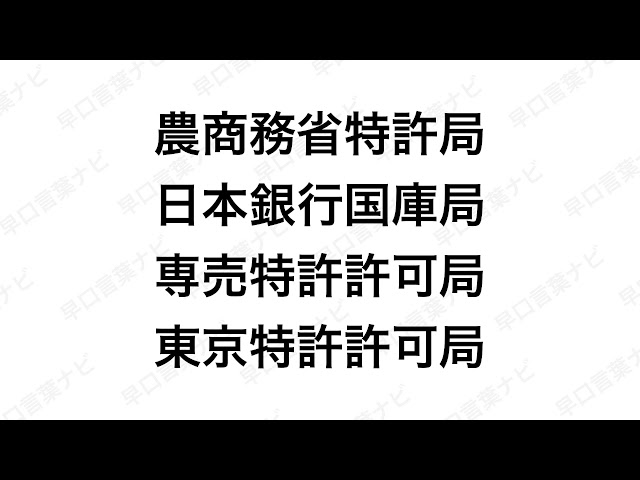
It’s a classic tongue twister that’s long and easy to trip over.
Because a string of names of government offices and bureaus with long titles comes one after another, you can’t help but lose the rhythm and laugh when you say it out loud.
Both kids and adults can enjoy taking on the challenge while getting into the rhythm.
Words with similar sounds like “tokkyo” (patent), “kyoka” (permission), and “kyoku” (bureau) appear repeatedly, so each repetition naturally trains your mouth movements and sense of rhythm.
Every time you read it, the tempo and timing change, letting you enjoy both the fun of speaking out and a good laugh—there’s plenty of challenge to it, isn’t there?
The Kyary Pamyu Pamyu and PUFFY next door are the Kyary Pamyu Pamyu and PUFFY who often eat parfaits.

It’s a humorous tongue twister where the rhythm of the names intertwines perfectly with the phrase “eating parfait.” Because the long, easy-to-repeat names “Kyary Pamyu Pamyu” and “PUFFY” come one after another, your tongue quickly gets tied when you say it aloud, which makes everyone laugh.
Another highlight is that children can enjoy imagining the scene of eating parfaits and the playful sounds.
If you read it while picturing a little story—like “eating parfaits together next door”—it adds a playful touch beyond simple pronunciation practice.
The more you repeat it, the more your sense of rhythm and pronunciation improve, so be sure to say it out loud and have fun!
elevated bridge pier

This is a tongue twister that uses words evoking the pillars that support an overpass.
Because similar or identical sounds like “kōkakyō” and “kyōkyaku” repeat in succession, your mouth gets tangled when you say it aloud, making you laugh without meaning to.
Children can take it on playfully, imagining peeking under the bridge or picturing turtles and little birds walking along the elevated bridge.
If you read it while picturing “a row of bridge piers of an overpass lined up in succession,” it feels more narrative than just a string of repeated words.
The more you repeat it, the more your sense of rhythm and mouth movements are trained, letting you enjoy both the fun of speaking out and the spirit of challenge each time you read—so try incorporating it into recreational activities.
Difficult Tongue Twisters: Introducing High-Difficulty Phrases and Sentences! (41–50)
This kid had a hard time writing katakana, didn’t they? I wonder if they didn’t cry?
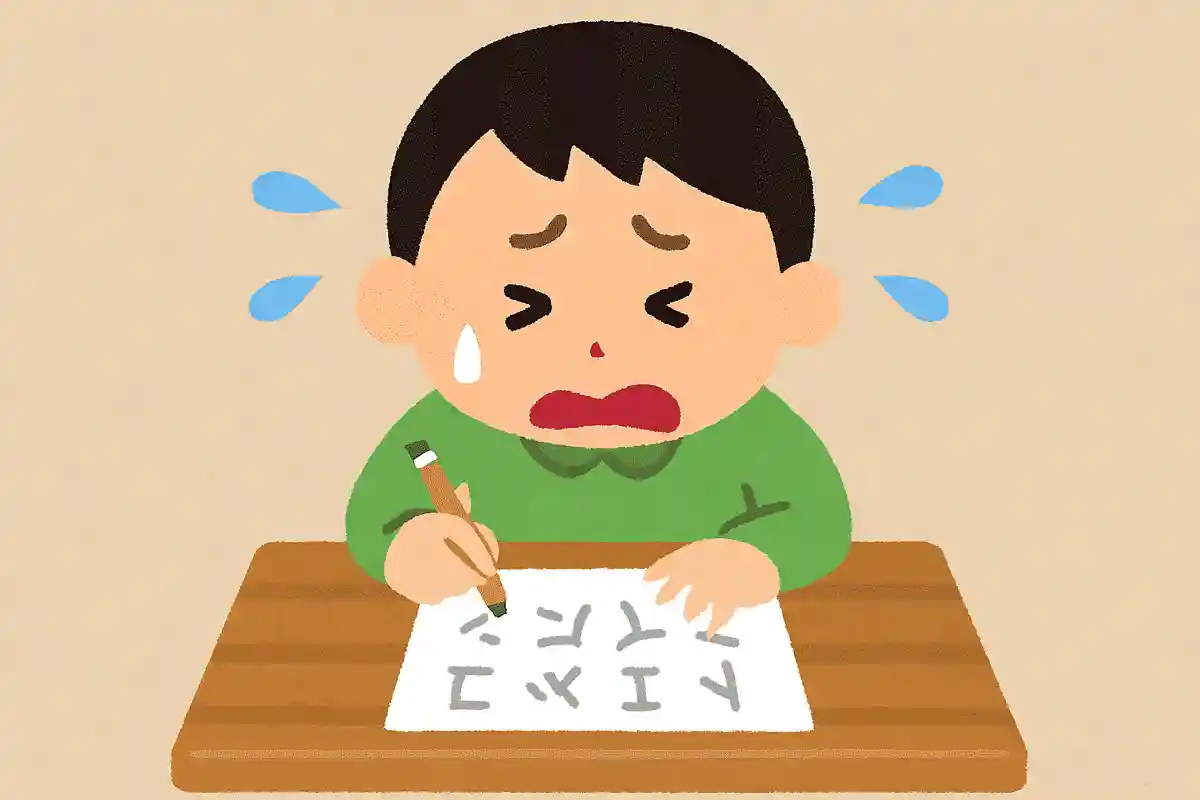
The author is unknown, but there is a tanka that has been passed down to the present as something amusing, like a tongue twister: “Tsukizuki ni tsuki miru tsuki no ookeredo tsuki miru tsuki no kono tsuki no tsuki.” The sound tsuki repeats, but no other similar-sounding words appear, so it might actually be a relatively easy tongue twister to say! On the other hand, it may be hard to memorize if you try to carefully decipher its meaning.
It’s easier to remember if you imagine it like this: “I look at the moon every month, so I often see the moon, but looking at the moon of this particular month is the best.”

Since I couldn’t tell whether it was a mule or a donkey, I compared the mule and the donkey, but I still couldn’t tell whether it was a donkey or a mule.
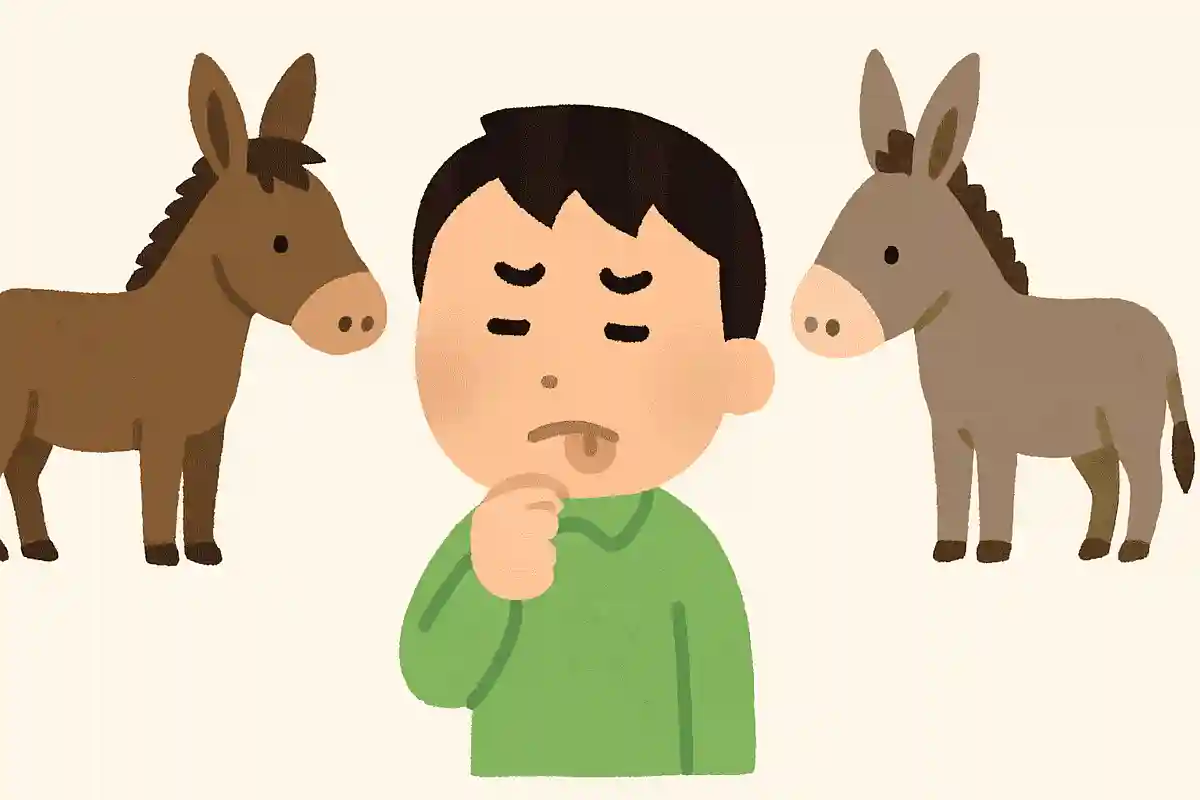
If you’re looking for a challenging tongue twister that focuses on the Japanese “ra” line, I recommend this one: “Since I can’t tell whether it’s a raba or a roba, when I compared the raba and the roba, I still couldn’t tell if it was a roba or a raba.” What makes this tongue twister difficult is the barrage of “ra” and “ro” sounds that come at a very high frequency.
The trick is the “ba”! The more crisply you pronounce it, the harder it becomes to say “ra” and “ro,” so try to keep your “ba” as light and simple as possible.
