

Challenging tongue twisters: Introducing high-difficulty phrases and sentences!

Tongue twisters exist in every country.
I think everyone in Japan has been familiar with them since childhood.
This time, I’ve picked out only the especially difficult tongue twisters.
You’ll find not only long, complicated ones, but also very short tongue twisters that are surprisingly hard to say.
Although tongue twisters might seem like they’re just for kids, adults can enjoy them too at parties or drinking gatherings.
If you practice in advance, you might even become the center of attention in those situations.
Now then, please sit back and enjoy!
- Tongue twisters that will make you laugh out loud! Super funny
- [Diction Training] A Collection of Tongue Twisters to Improve Articulation
- A collection of long tongue twisters. Also recommended for practicing announcements and narration.
- Nagoya dialect tongue twisters are exquisite! A fun collection where your tongue gets tied in knots with regional dialects
- Challenge together! A roundup of word games for adults
- “Chau chau, anta” — a Kansai-dialect tongue twister. A phrase only Kansai folks can say.
- Bursting into laughter! A roundup of Hakata dialect tongue twisters
- [Recreation] Challenge! A roundup of tongue twisters recommended for elementary school students
- [Challenging and Fun!] Quizzes & Riddles for Adults
- Chinese tongue twisters: A collection of rao kou ling helpful for learning Chinese
- Perfect for pronunciation practice! A collection of English tongue twisters.
- [Trick Quiz] Quiz Questions That Excite Everyone from Kids to Adults
- Get Caught? Or Not!? Simple Ways to Kill Time During Class
Difficult Tongue Twisters: Introducing High-Difficulty Phrases and Sentences! (41–50)
When a pig hit a pig, the pig that got hit hit back the pig that hit it, so the pig that hit and the pig that got hit both collapsed.

It’s a comedic tongue twister that depicts a quarrel between pigs.
At first glance it’s hard to follow, so let’s split it into two parts.
In the first half, “When a pig hit another pig, the pig that got hit hit back the pig that hit it,” it shows a pig striking another and getting counterattacked.
The second half, “The pig that hit and the pig that was hit both toppled over,” depicts both of them falling down, ending in a draw.
If you clearly distinguish between “buta” (pig) and “butta” (hit), your success rate will improve.

If you want to catch a tiger, catch a bird first—use the bird as bait to catch the tiger.
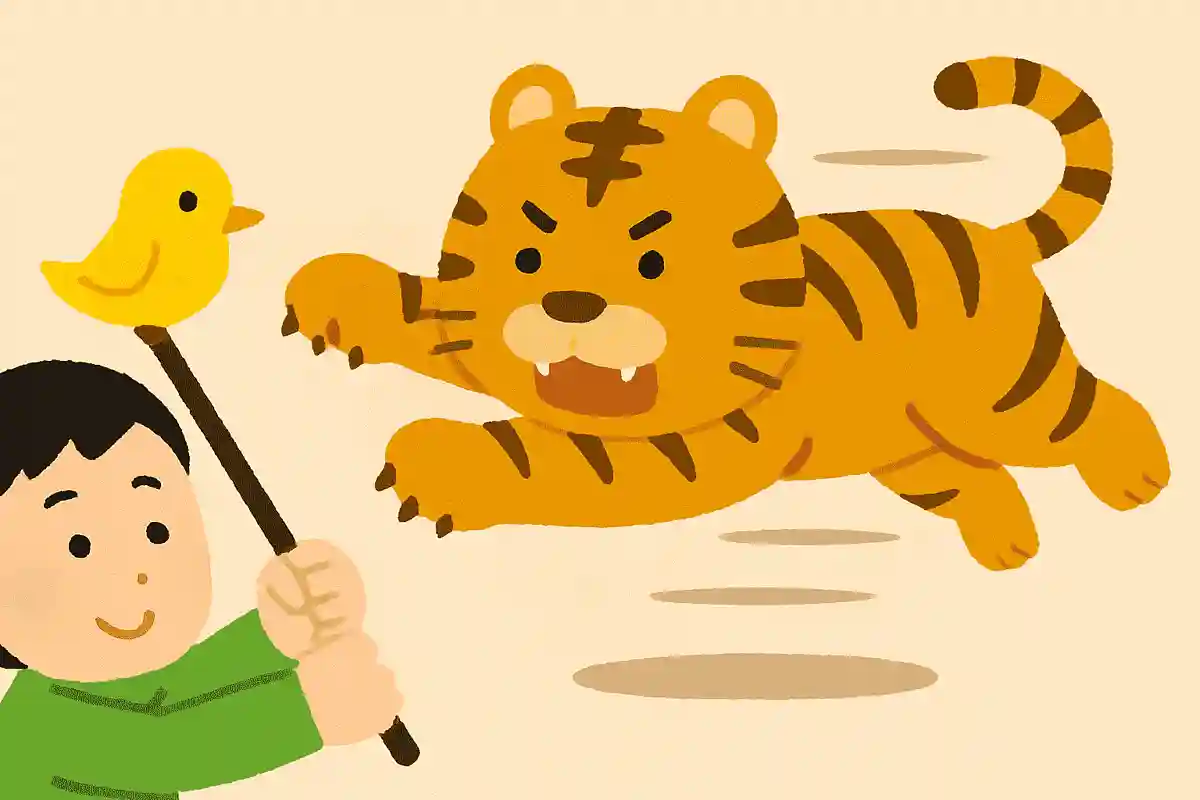
There are several patterns of tongue twisters.
Broadly speaking, they can be divided into two types.
One is the pattern that’s simply difficult to pronounce—“Kaeru pyokopyoko” is a classic example.
The other is the kind that gets you confused as you read.
This one—“If you’re going to catch a tiger, rather than catching a tiger, catch a bird; use the bird as bait to catch the tiger”—falls into the latter category.
You’ll probably lose track of what you’re even saying, so if you’re confident, give it a try.

Oaya, apologize to your parents; Oaya, when you go to the bathhouse, tell the greengrocer.
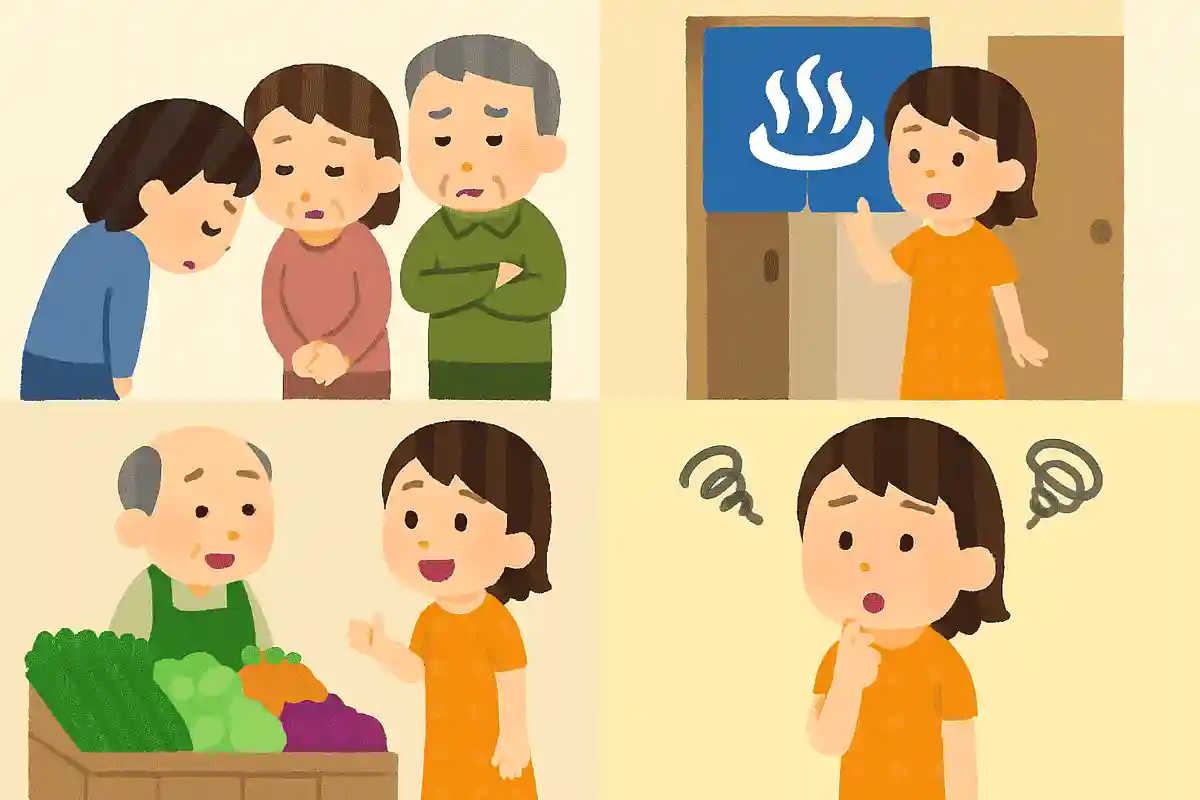
This tongue-twister seems to tell the story: “Aya was told by her parents to apologize, but she went to the bathhouse instead and ended up saying her apology to the greengrocer.” It’s a cute tongue-twister that shows Aya’s slightly tomboyish personality.
By the way, this tongue-twister often leads to mistakes like turning ‘o-Aya-ya’ into ‘o-ya-ya,’ or ‘o-ayamari’ into ‘o-yamari.’ Keep those points in mind, and try to make it all the way to the end!

Ottotto totto-tte.

I’d like to introduce this tongue twister that feels satisfying to say: “Ottotto totto-tte tte ittotta to ni, nande totto-tte kuren katta totte itto-o to.” On the page it makes no sense at all, right? It means: “I wanted you to save some Ottotto snacks for me—why didn’t you keep them?” There are many parts pronounced ‘to,’ so be careful not to get tangled up.
The trick is to insert brief pauses at phrase breaks.
The mystery of the banana is still a mystery.

There’s a unique tongue twister that goes, “Banana no nazo wa mada nazo na no da zo.” Grammatically, it may feel a bit unnatural.
The hallmark of this tongue twister is how often the sound nazo appears—it shows up five times.
To make matters trickier, there are similar-sounding phrases like nazo and na no da zo.
Plus, na no da zo also closely resembles nazo nazo (riddle), which raises the difficulty.
To avoid getting confused, make sure you’ve got it firmly in your head before you give it a try.
Please buy me a KitKat.

There’s a famous Hakata dialect tongue twister: “Kittokatto kattotte tte i’ttotta to ni nande kattotte kuren katta to, tte iwareta kenga Kit Kat kattokan to ikankan’tta to ni katteku’to wasuretotta ken, mata kaigiya ikan to ikanken ga mendokusaka.” It’s quite long, so even just reading it is tough.
In short, it says: “They wanted me to have bought a Kit Kat, but since I forgot to buy it, I have to go buy one now—what a hassle.”
Red paper roll, blue paper roll, yellow paper roll

There’s a classic Japanese tongue twister that goes, “Aka-makigami, ao-makigami, ki-makigami” (red wrapping paper, blue wrapping paper, yellow wrapping paper).
You can probably get through the first part, but the latter part around “ki-makigami” tends to be tricky.
The repeated “ki” in a short span makes your tongue trip up.
If you consciously separate the color and the word “makigami,” as in “aka | makigami,” it should come out more smoothly.
Incidentally, it’s said that the three colors in this tongue twister refer to a red ogre, a blue ogre, and a yellow ogre, and that chanting the tongue twister can drive them away.