

Mozart: An Introduction to His Signature and Popular Works

Wolfgang Amadeus Mozart, who had a profound impact on classical music.
He began composing at the age of five, displayed his talents from an early age by performing before European royalty, and left behind more than 800 works during his 35-year life.
He also produced masterpieces in every musical genre of his time and excelled not only as a composer but also as a conductor, pianist, organist, and violinist, earning him the title of a musical genius.
In this article, we introduce some of Mozart’s signature and most popular pieces.
Please enjoy his music—melodies that are catchy and familiar, yet of high quality and imbued with a charm that defies simple description.
- Pick up Beethoven’s famous and representative works!
- [Masterpiece Classics] A special showcase of gem-like masterpieces so beautiful they’ll move you to tears
- Classical masterpieces. Recommended classical music.
- [Tchaikovsky] Pick up famous and representative pieces!
- Classical piano masterpieces: legendary performances from around the world you should hear at least once
- J.S. Bach | Introducing Famous and Representative Works
- Timelessly beautiful classical masterpieces. Recommended classical music.
- Brahms's masterpieces. Popular classical music.
- Cool classical masterpieces. Recommended classical music.
- Today's Classics: Recommended classical music and great performances to listen to today
- Jacques Ibert Popular Song Ranking [2026]
- Famous pieces recommended for opera beginners. Recommended opera songs.
- Masterpieces of Ballet Music: Introducing Classic Favorites
[Mozart] Introducing Representative and Popular Pieces (141–150)
“Lacrimosa (Day of Tears)” from the RequiemWolfgang Amadeus Mozart

Requiem, the last piece Mozart left behind.
He died while composing the “Dies Irae,” leaving his own composition unfinished; the remaining sections were written and completed by his pupil.
It is said that when the commission for the Requiem arrived, Mozart wrote in a letter, “This piece is my own requiem,” leading some to describe the commissioner as a “messenger from the realm of the dead.” A Requiem is not a song to soothe the souls of the deceased, but a prayer asking that the punishment the dead receive from God after death be lightened, and that they be granted eternal light.

Dies Irae, the 3rd movement from “Requiem”Wolfgang Amadeus Mozart
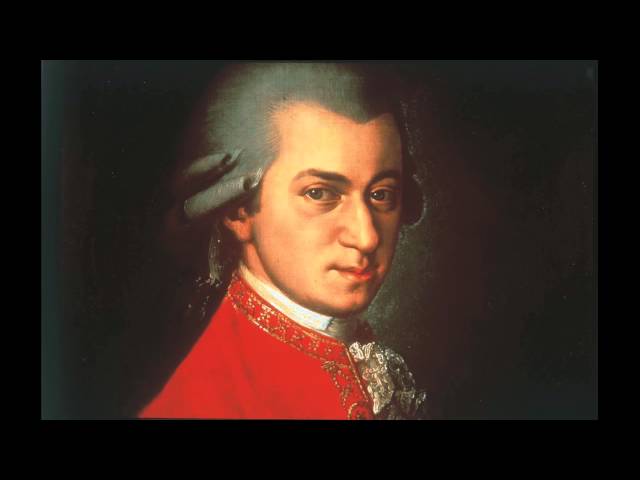
Mozart’s famous piece “Dies irae.” The “Day of Wrath” is a concept tied to eschatology, and beyond Mozart’s work, Giuseppe Verdi also created a setting of it.
This piece has many highlights, notably the powerful chorus that evokes a sense of despair.
Amid the interweaving of strings and intense percussion, the mixed male and female voices shape a masterful structure that conveys the end of days.
Listening to it in its entirety will let you feel the work’s impact even more strongly.

Overture from The Magic FluteWolfgang Amadeus Mozart

Mozart’s famous opera The Magic Flute.
This time, I’d like to introduce the Overture from The Magic Flute.
While it’s commonly performed as a violin solo, it is also played as a piano piece.
Since the original contains passages that are clearly unplayable as-is on the piano, it can be considered a difficult work in that sense; however, many scores simplify those sections.
In terms of difficulty, it’s around an intermediate level, and if your left-hand technique is nimble, you should be able to play it smoothly.
The duet sections also turn out to be easier than expected when you try them, so be sure to check it out.
sleddingWolfgang Amadeus Mozart

Mozart created numerous masterpieces, and Sleigh Ride is one that’s especially perfect for Christmas.
While Mozart often wrote complex melodies, this piece is built around a simple, pop-like tune.
Even back then, works with a Christmas theme frequently featured the sound of bells.
Since bells are still commonly used in Christmas songs today, it might be interesting to listen while appreciating that continuity in history.
From Eine kleine Nachtmusik, Movement 1Wolfgang Amadeus Mozart

A string serenade composed by Mozart in 1787.
Its first movement is characterized by lively rhythms and melodies.
The powerful opening theme is likely one everyone has heard at least once.
In the middle section, an elegant melody unfolds, enchanting the listener.
Mozart began composing at the age of five and left more than 800 works before his death at 35.
From this piece, one can sense his genius and passion for music.
It’s a perfect choice for a piano recital—light, brisk, and bright—recommended for those who want to delight their audience.