

Intellectual beauty that shines! Stylish four-character idioms you can use in everyday situations

Yojijukugo are a linguistic art form that distills the beauty and depth of the Japanese language.
They’re popular as stylish calligraphy pieces and interior decor, and using them casually in everyday conversation can create an intellectual impression.
However, if you don’t know their correct meanings or usage, you might end up embarrassed.
So this time, we’ll introduce a world of chic yojijukugo that you can easily incorporate.
Why not enjoy discovering lovely expressions that add richer color to your daily life?
- Enrich your heart with beautiful four-character idioms! A collection of expressions you'll want to use in everyday life.
- Become positive with four-character idioms that resonate with the heart! Common yet deeply meaningful words.
- [Four-Character Idioms] Impressive and Cool Sound! A Collection of Famous Quotes Worth Knowing as General Knowledge
- Amusing four-character idioms you’ll want to use right away! A collection of expressions to remember as general knowledge.
- Popular even among elementary school students! Stylish and easy-to-remember four-character idioms
- [For Elementary Students] A Collection of Beautiful Four-Character Idioms to Know
- Learn the meanings too! Cool four-character idioms that elementary school students will want to remember
- Interesting four-character idioms for elementary schoolers! Words you'll want to use once you understand their meanings
- General: Four-character idioms that encourage determination—powerful, heart-stirring words
- Four-character idioms that help you achieve goals! Phrases you can use in everyday situations
- Surprisingly tricky! Check your general knowledge with a four-character idiom quiz
- [Kakizome] Four-character idioms fit for the New Year: Introducing words that resonate with the heart and their meanings
- Easy-to-remember, positive four-character idioms for elementary school kids! Words that brighten the heart
Intellectual beauty shines! Stylish four-character idioms you can use in everyday life (91–100)
Learning new things by revisiting the old
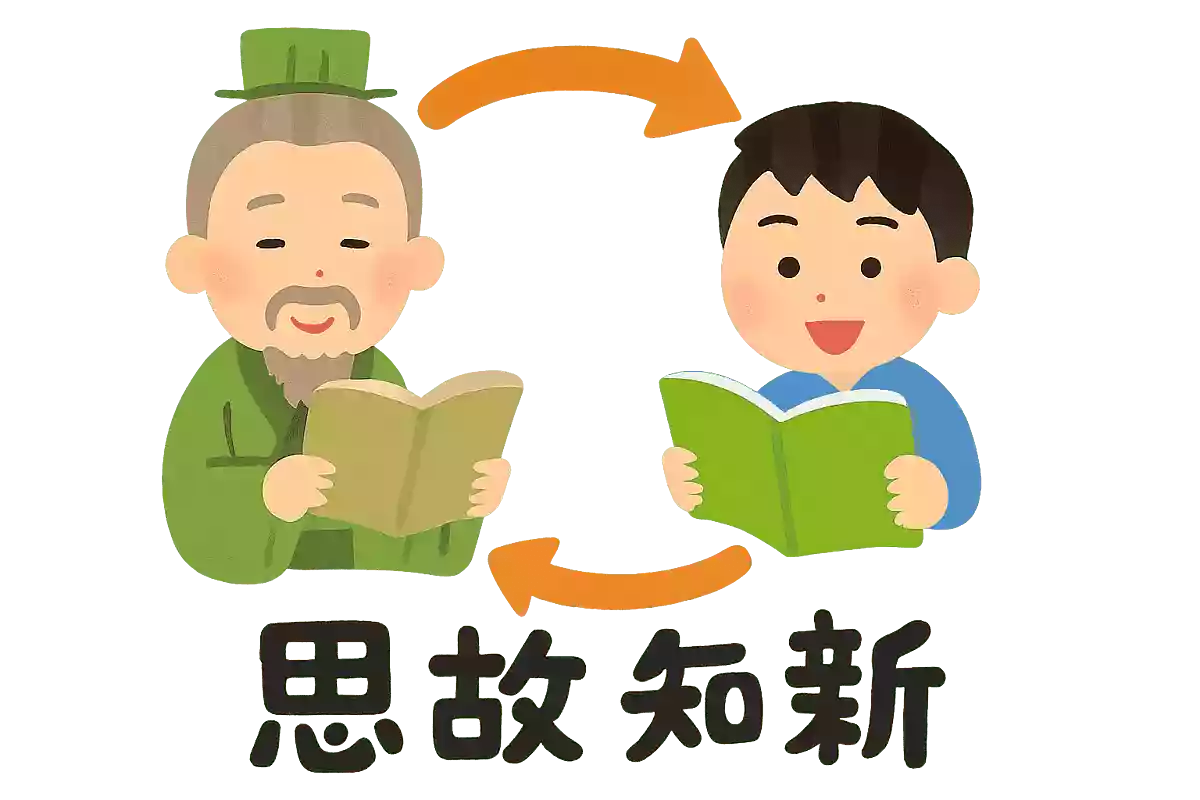
When you’re studying history, you might wonder, “Why do I need to learn about things that are already over?” In times like that, remember this four-character idiom: Onko chishin.
It means gaining new knowledge by learning from the past.
For example, say you try something and fail.
If you leave it at that, it’s just the past.
But if you think about why you failed and find a new approach, it can lead to success next time.
Even things that don’t seem necessary now might actually be connected to a better future for you.

being absorbed in something; being frantic; in a daze; wholeheartedly; with all one’s might

The state of being so absorbed or captivated by one thing that you lose sight of your surroundings or even yourself is expressed as “muga-muchu” (literally, selfless absorption).
There are times when we forget the time while reading or playing games, right? And when you’re running away from the ‘oni’ in a game of tag, everyone runs in a muga-muchu state.
It’s a four-character idiom you surprisingly encounter often in daily life and is easy to use.
Getting engrossed in something is a wonderful thing, but if you get too absorbed without paying attention to your surroundings, it can lead to injury, so it’s something to be careful about.
Intellectual beauty shines! Stylish four-character idioms you can use generally (101–110)
battle-hardened; seasoned (literally: experienced in a hundred battles)
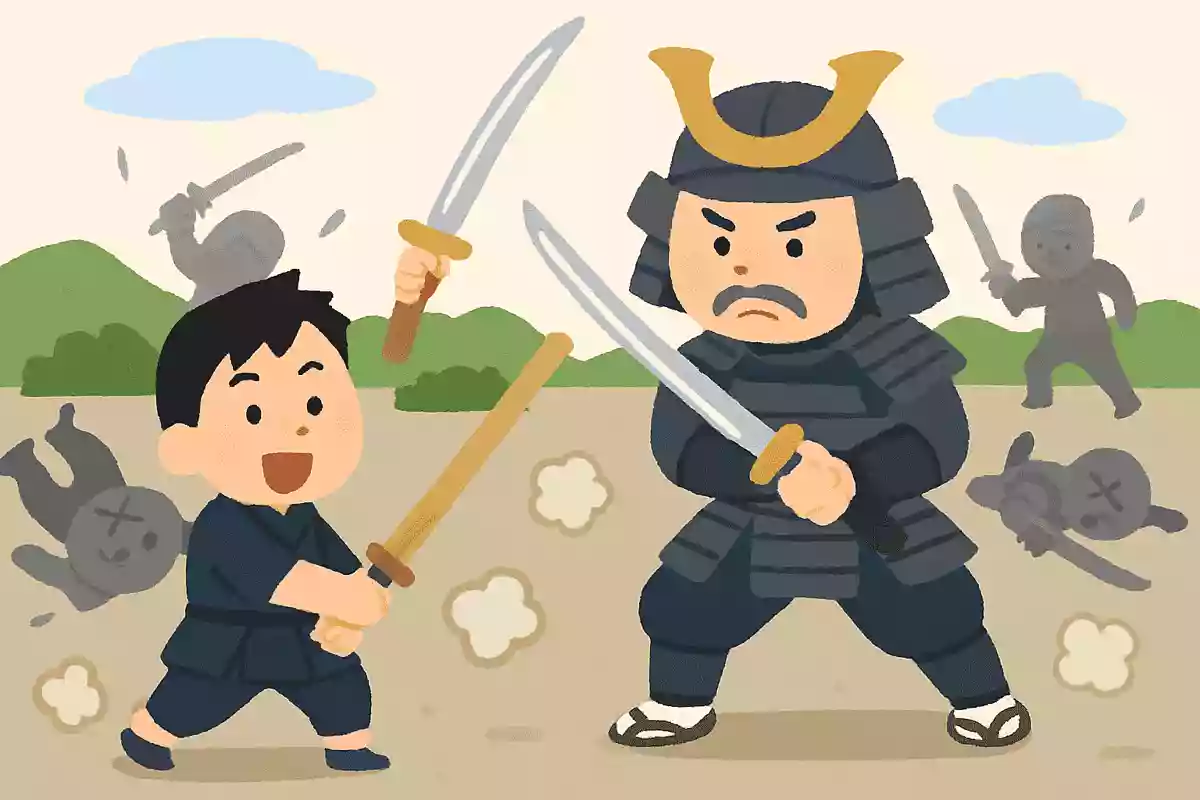
This four-character idiom describes an excellent state in which one’s martial skills, mind and body, and abilities have been honed through numerous real battles and experiences.
“Hyaku” (hundred) signifies a large number, expressing repeated combat, while “renma” means to polish and refine martial arts.
By using this phrase, you convey that you’ve thoroughly accumulated experience and also express the will to push forward.
It evokes the image of mustering confidence to advance by making use of all past experience.

flexible; adaptable; responding appropriately to the situation

Taking appropriate actions according to the situation at hand—that is what we call being “flexible and adaptable.” For example, saying, “We planned to go to the pool today, but since it started raining, we decided to watch anime at home instead,” is an example of adaptability.
Even when faced with bad weather, finding another way to enjoy yourself—isn’t that wonderful? Take this opportunity to learn the term ‘flexible and adaptable’ (rinkiohen), and be sure to develop the ability to handle troubles with resilience and flexibility.
self-praise

This is a four-character idiom that describes praising or boasting about one’s own actions and thoughts.
It comes from the image of someone writing a poem or prose praising a picture they themselves painted.
People often confuse the characters for “painting” and “self,” so be careful.
Because it carries a strong negative nuance and is mainly used to criticize conceited people, you should use it with caution.
If you deliberately apply it to yourself, though, it can suggest that you’re moving forward in your own way and taking on challenges with confidence.
Wind, Forest, Fire, Mountain
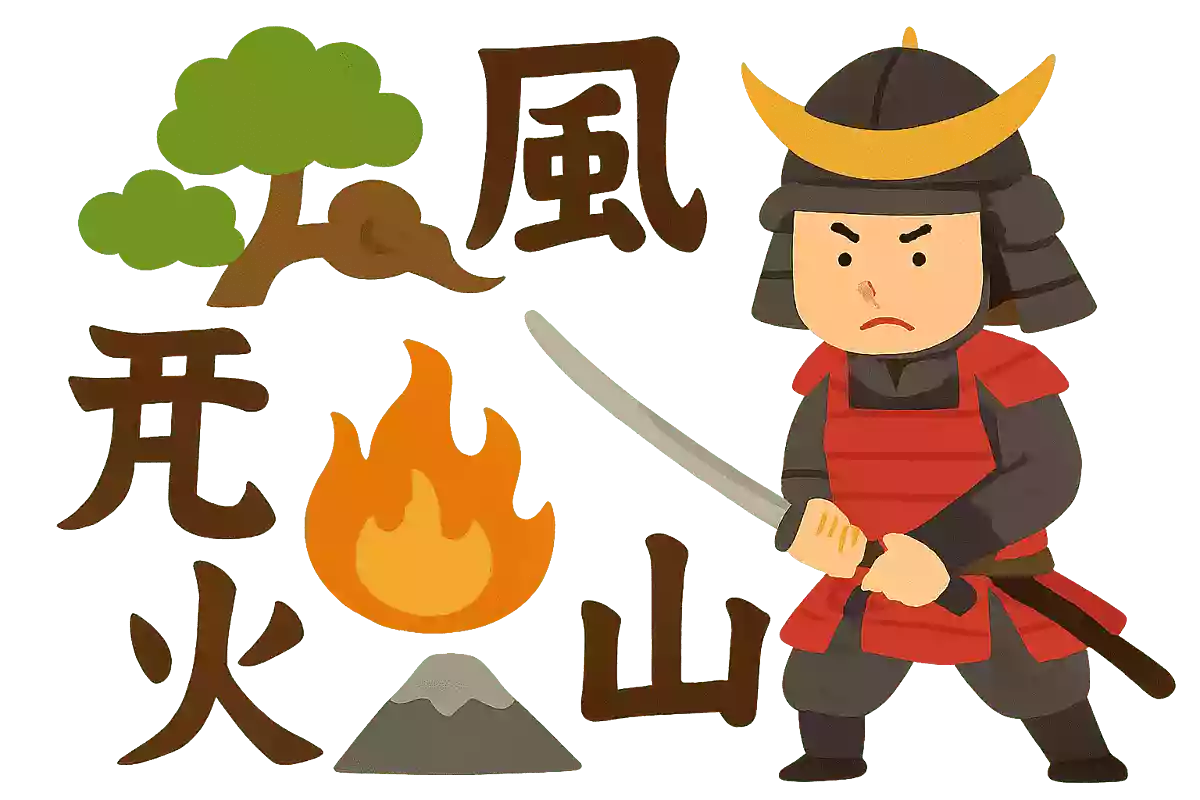
People say, “His life is like Fūrinkazan.” This sentence means that he responds flexibly to various situations and takes bold action as needed.
“Fūrinkazan” is a famous four-character idiom written on the war banner of the warlord Takeda Shingen.
When using the idiom “Fūrinkazan,” it’s clearer to the listener if you explain specifically how each element—wind, forest, fire, and mountain—maps to actions, behaviors, or states.

Cherry, plum, peach, and apricot (Ōbai Tōri)
@yoji_jukuko Four-character idiomTranslationtranslationCherry, plum, peach, and apricotHere is the revised thumbnail for a past video.
♬ Escort – MoppySound
Using the four kanji for sakura (cherry), ume (plum), momo (peach), and sumomo (Japanese plum), the idiom “ōbai tōri” (桜梅桃李) came from China and is also deeply connected to Buddhism.
Cherry blossoms create a dazzling impression of spring, yet their full bloom is brief, and they flourish with all their might.
Plums overcome the adversity of the cold winter to bloom modest yet beautifully, releasing a strong fragrance.
Peaches and Japanese plums likewise have their own distinct blossoms, each blooming at different times.
In the same way, people each have their own individuality and strengths.
This phrase teaches us to value our true selves and that being just as we are is best.

In conclusion
By incorporating four-character idioms into your daily life, you can rediscover the beauty of language while refining your stylish expressive skills. Take your time to savor the world of four-character idioms, which is also useful as general knowledge, whenever the mood strikes. We hope you enjoy a lovely moment in which your heart is enriched along with the richness of words.