

Intellectual beauty that shines! Stylish four-character idioms you can use in everyday situations

Yojijukugo are a linguistic art form that distills the beauty and depth of the Japanese language.
They’re popular as stylish calligraphy pieces and interior decor, and using them casually in everyday conversation can create an intellectual impression.
However, if you don’t know their correct meanings or usage, you might end up embarrassed.
So this time, we’ll introduce a world of chic yojijukugo that you can easily incorporate.
Why not enjoy discovering lovely expressions that add richer color to your daily life?
- Enrich your heart with beautiful four-character idioms! A collection of expressions you'll want to use in everyday life.
- Become positive with four-character idioms that resonate with the heart! Common yet deeply meaningful words.
- [Four-Character Idioms] Impressive and Cool Sound! A Collection of Famous Quotes Worth Knowing as General Knowledge
- Amusing four-character idioms you’ll want to use right away! A collection of expressions to remember as general knowledge.
- Popular even among elementary school students! Stylish and easy-to-remember four-character idioms
- [For Elementary Students] A Collection of Beautiful Four-Character Idioms to Know
- Learn the meanings too! Cool four-character idioms that elementary school students will want to remember
- Interesting four-character idioms for elementary schoolers! Words you'll want to use once you understand their meanings
- General: Four-character idioms that encourage determination—powerful, heart-stirring words
- Four-character idioms that help you achieve goals! Phrases you can use in everyday situations
- Surprisingly tricky! Check your general knowledge with a four-character idiom quiz
- [Kakizome] Four-character idioms fit for the New Year: Introducing words that resonate with the heart and their meanings
- Easy-to-remember, positive four-character idioms for elementary school kids! Words that brighten the heart
Intellectual beauty shines! Stylish four-character idioms you can use in everyday life (41–50)
consistent throughout
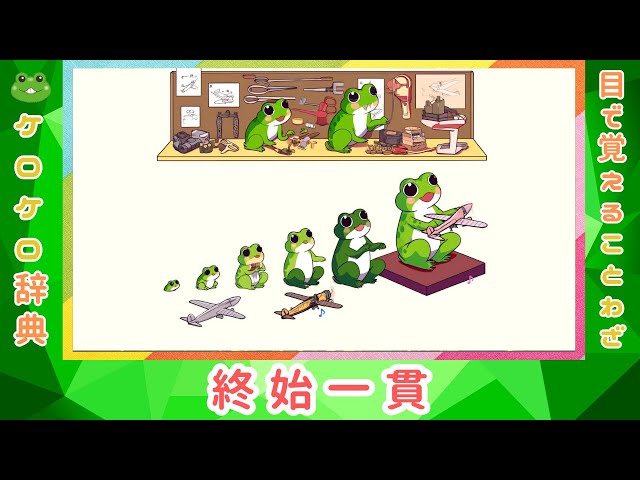
This is a four-character idiom that means remaining unwavering and consistent from beginning to end.
When facing difficulties, hesitating or changing course along the way can render the efforts you’ve built up meaningless.
However, by keeping this phrase in mind, you can stay steady against doubts and temptations that arise on the path to your goal and make steady progress.
In any challenge, maintaining an unshakable attitude and conviction leads to results.
Consistent actions also make it easier to earn the trust of those around you, which becomes a powerful asset in gaining their cooperation.
When you want to keep challenging yourself without giving up, this phrase will serve as a guiding support for your heart.

cutting straight through with a single stroke
It is a four-character idiom that means deciding things clearly without hesitation.
It conveys the strength to cut off doubt and hesitation, make judgments immediately, and take action.
The word evokes the image of neatly resolving even complex problems and worries, and despite its brevity, it communicates the weight of decisive action.
Just hearing it brings a bracing tension and gives you the courage to move forward without wavering.
It is a powerful phrase that teaches the importance of facing matters without hesitation and of having a firm will.
Three Monjus (Three Manjushris)

It’s a phrase that expresses the idea that even if you can’t come up with good ideas on your own, wonderful wisdom emerges when three people gather and consult.
It’s a compact version of the proverb “Sannin yoreba Monju no chie” (“When three people come together, they have the wisdom of Manjushri”), and it conveys the importance of cooperating as a group.
Monju refers to Manjushri, the bodhisattva who symbolizes wisdom, and this saying lets you feel the excellence of ideas born from collaboration.
It’s a phrase that could prompt people who tend to work alone to take a more effective path.

An unwavering, deeply held aspiration
@hiroaki946 Meimei no kokorozashi Shorts Short videos Mini videos Idioms Four-character compounds Proverbs Japanese Language meanings Wordplay Learning Education Trivia Japanese culture Killing time Study Knowledge Trivia Everyday life The power of words VOICEVOX: Shikoku Metan Dark-sounding four-character idiom: “Meimei no kokorozashi” Example sentence: From a young age, he maintained a strong interest in astronomy. He never made his passion public to his family or friends, but he continued stargazing late into the night, and within his heart, a powerful longing for the stars and a burning “meimei no kokorozashi” to unravel the mysteries of the universe never ceased. As a result of his efforts, he was finally recognized as an international astronomer, and his name became known throughout the world. Meaning: Meimei no kokorozashi refers to a strong will or goal hidden within oneself that is unknown to others. This four-character idiom expresses deep wishes or resolve in the depths of one’s heart—things that do not appear outwardly but serve as the driving force behind a person’s actions and efforts. That is all.
Original song – hiroaki946 – hiroaki946
Pronounced “meimei no kokorozashi,” this four-character idiom combines two words: “冥冥” (meimei) and “志” (kokorozashi).
“冥冥” refers to a darkness without light or to something deep and hidden from people’s eyes, while “志” refers to a resolve one sets in one’s heart.
In other words, this idiom likely means “to make a determination deep in one’s heart without others knowing” or “to strive without announcing it to others.” The image of steadily working toward one’s self-set goals seems likely to influence many people.
Vast sky and boundless sea
It is a four-character idiom that expresses a heart as vast and expansive as the sky or the sea, and a mindset free of any reservations, open to uninhibited ideas.
It symbolizes boundless possibilities and a carefree spirit, conveying the importance of keeping a broad perspective.
While accepting things as they are, it gives a positive impression of relaxing your shoulders and taking on challenges freely.
Even when facing difficulties, it suggests maintaining a generous heart and approaching situations with flexible thinking.
It can be called the perfect phrase for nurturing a spirit that believes in one’s own potential, thinks freely, and embraces challenges.
balmy spring breeze; a tranquil and genial spring atmosphere (calm, carefree mood in spring)
@yojijyukugo.seizan Four-character idioms #working adult #learning #study
Original Song – Four-character Idioms/Holy Mountain – Four-character Idioms/Holy Mountain
This four-character idiom is used to describe people with a calm, gentle personality or peaceful, laid-back scenes.
A place embraced by nature where you can relax in both body and mind can be described as “shunpu taitō” (literally, “spring breeze, untroubled and easy”).
It’s a tender expression also used when you meet someone who may not be flashy but has a composed air or a warm character.
When someone is easily irritated, quick to anger, or short on patience, gifting them this phrase might help them regain a sense of calm and create mental space, encouraging a more positive outlook.

The benevolent person has no enemies.4

This is a four-character idiom meaning that a person endowed with virtue has no enemies.
It teaches that by loving others and treating them with compassion, one earns genuine trust from everyone, leaving no one to oppose them.
The phrase originates from the words of Mencius, a thinker active during China’s Warring States period, and is said to appear in the chapter “Liang Hui Wang I” of the Mencius.
Although it expresses the stance a king should take toward his people, it also prompts us to reflect on how we treat others and to reconsider the way we interact with people going forward.