

Intellectual beauty that shines! Stylish four-character idioms you can use in everyday situations

Yojijukugo are a linguistic art form that distills the beauty and depth of the Japanese language.
They’re popular as stylish calligraphy pieces and interior decor, and using them casually in everyday conversation can create an intellectual impression.
However, if you don’t know their correct meanings or usage, you might end up embarrassed.
So this time, we’ll introduce a world of chic yojijukugo that you can easily incorporate.
Why not enjoy discovering lovely expressions that add richer color to your daily life?
- Enrich your heart with beautiful four-character idioms! A collection of expressions you'll want to use in everyday life.
- Become positive with four-character idioms that resonate with the heart! Common yet deeply meaningful words.
- [Four-Character Idioms] Impressive and Cool Sound! A Collection of Famous Quotes Worth Knowing as General Knowledge
- Amusing four-character idioms you’ll want to use right away! A collection of expressions to remember as general knowledge.
- Popular even among elementary school students! Stylish and easy-to-remember four-character idioms
- [For Elementary Students] A Collection of Beautiful Four-Character Idioms to Know
- Learn the meanings too! Cool four-character idioms that elementary school students will want to remember
- Interesting four-character idioms for elementary schoolers! Words you'll want to use once you understand their meanings
- General: Four-character idioms that encourage determination—powerful, heart-stirring words
- Four-character idioms that help you achieve goals! Phrases you can use in everyday situations
- Surprisingly tricky! Check your general knowledge with a four-character idiom quiz
- [Kakizome] Four-character idioms fit for the New Year: Introducing words that resonate with the heart and their meanings
- Easy-to-remember, positive four-character idioms for elementary school kids! Words that brighten the heart
Intellectual beauty shines! Stylish four-character idioms you can use generally (51–60)
calm and composed
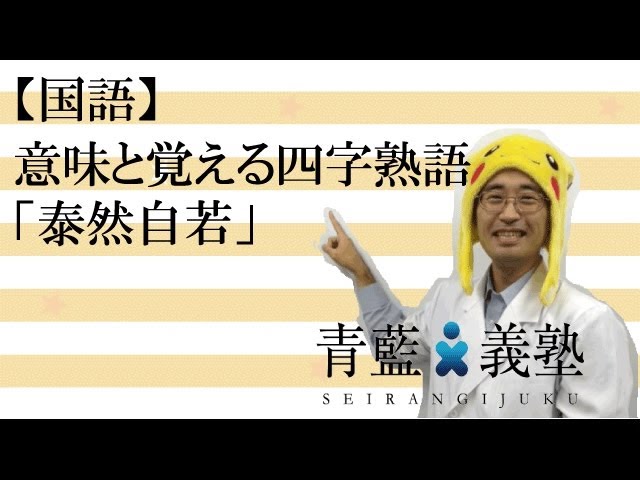
Pronounced “taizen jijaku,” “taizen” refers to being calm and unshaken by things, while “jijaku” describes remaining composed without panic no matter what happens.
Combined, these two similar compounds express a state of composure that is unmoved by anything.
When you face tasks that require careful thought, you might find yourself flustered.
That’s exactly when you should recall this four-character idiom—and share it with your children, too.
a sly old fox; a seasoned and cunning person
It’s a term born from the legend that a snake becomes a dragon after living a thousand years in the sea and mountains, and it refers to someone who is highly experienced and very accustomed to the ways of the world.
This four-character idiom conveys the wisdom and resilience of a person who has weathered many events, suggesting a strength that is not easily deceived or shaken.
Especially when imagining someone taking on challenges or remaining composed in the face of difficulties, the weight of this idiom becomes even more apparent.
It can be seen as a concise expression that encapsulates the value of experience cultivated over a long period of time.

to devote oneself body and soul; to make every possible effort; with utmost dedication

It is a phrase that means to put forth every ounce of effort, to the point of grinding your bones and exhausting yourself.
It symbolizes an attitude of using all the strength you have and never giving up until the very end, conveying strong determination and passion.
Despite being only four characters long, it expresses the importance of effort and seriousness.
For elementary school students, it teaches the mindset of giving their all in daily club activities and competitions.
It is a phrase that reminds us to take one step at a time and do our utmost even when facing difficulties.
The achievement attained through diligent study by lamplight—success won by hard, persistent effort
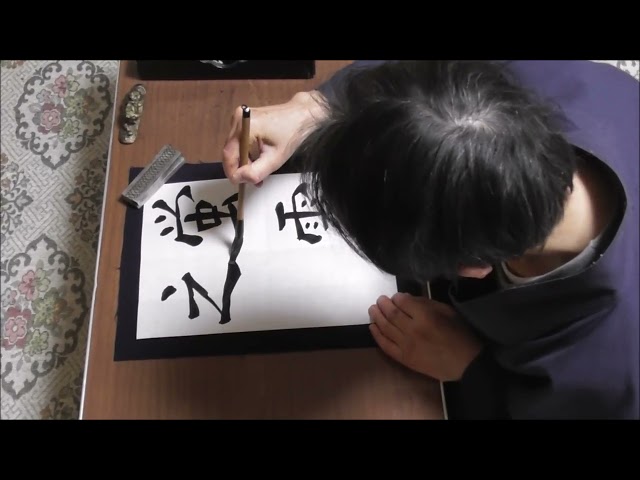
A four-character idiom derived from a Chinese classical anecdote.
It’s read as “keisetsu no kō,” and it carries the meaning that if you keep persevering and working hard, success awaits you in the end.
While you’re in the midst of making an effort, there are times when even you don’t notice your small steps of growth.
It’s an idiom with a message you’d want to convey when someone is struggling and on the verge of losing heart.
As you steadily work toward your goal, there will be moments when you feel like leaning on someone.
These are words that gently wrap around your feelings at such times.
Intellectual beauty that shines! Stylish four-character idioms you can use generally (61–70)
One good deed a day
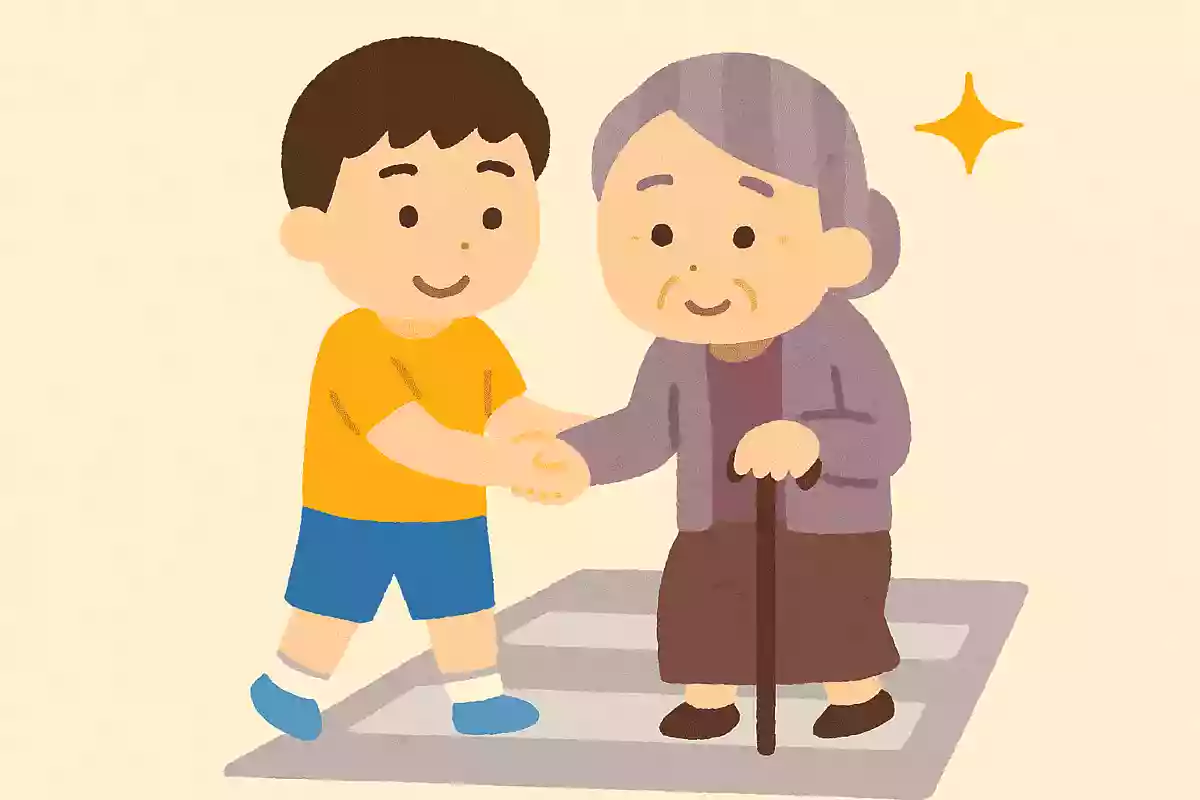
It’s a phrase that means “Do one good deed a day.” It can be something small.
For example, saying “thank you” to a friend or helping someone who’s having trouble on the street are both good deeds.
By doing even one good thing each day, you and the people around you will feel happier.
Your heart feels lighter, and you feel more energized.
If someone at school is struggling and you think, “I’ll help!”, that’s also “one good deed a day.” As you build up small acts of kindness every day, the world becomes more joyful and happy.
Keep “one good deed a day” in your heart, and spend each day with a smile.

with all one’s might
This is a phrase that expresses giving your all.
“Isshō” refers to one’s lifetime, and “kenmei” means to tackle something so seriously that you’d stake your life on it.
In other words, it means to devote yourself wholeheartedly, using all your strength.
For example, you can say, “I studied really hard to get a good score on the test,” or “I worked very hard at my job.” When you give your best effort, you’ll be able to do things you couldn’t before and gain confidence.
Even if you fail, continuing without giving up will make your heart stronger and brighter.
When you take on a challenge, try approaching it with all your might.
If you do, each day will become more enjoyable and you’ll feel more excited!
Fall down seven times, get up eight.

It’s a phrase that means standing up without giving up, no matter how many times you fall.
For example, when practicing riding a bicycle, even if you fall over and over, the spirit of saying “Let’s try one more time!” is shichiten-hakki (literally, “fall seven times, stand up eight”).
Since it means “fall seven times, stand up eight,” it’s an encouraging saying that tells you, “It’s okay to fail.
If you don’t give up, you’ll surely succeed!” Professional athletes and inventors have also failed many times.
Even so, because they didn’t give up, they were able to achieve amazing things.
Even when things are tough, it’s important to remember shichiten-hakki and keep facing forward as you move ahead.