

Hand games that liven things up for seniors—also great brain training

Hand-based activities are a fun and effective way for older adults to stimulate the brain.
Even simple hand games can stimulate the brain by moving the fingertips, helping to maintain or improve cognitive function.
In addition, doing them to music or together with others naturally brings more smiles and increases opportunities for communication.
In this article, we introduce hand games that are easy for seniors to enjoy without strain and also work as brain training.
Incorporate easy activities into your routine to maintain your health while having fun!
- [For Seniors] Hand and finger play roundup: Finger exercises that lead to brain training
- [For Seniors] Extremely Effective Brain Training! A Fun Collection of Hand Games
- [For Seniors] Fun and Engaging Brain-Training Recreation
- [Brain Training for Seniors] Recommended Hand-Play Recreation for Dementia Prevention
- [For Seniors] Recommended Muscle Training Gear. Simple and Easy
- Fun Brain Training! Memory Games for Seniors
- [For Seniors] Fun! Games and Ideas to Boost Memory
- [For Seniors] Easy to try. Fun, crowd-pleasing recreation
- [For Seniors] Let’s Have Fun While Training the Brain! Handmade Card Game Ideas
- [For Seniors] Enjoy Easily! Hand Play 'Shimoshika Meyo' (If If, Tortoise)
- [For Seniors] Popular Hand-Play Songs: Fun Brain-Training Ideas
- [For Seniors] Recommended Handmade Activities! Simple Ideas
- [For Seniors] Winter Haiku: Introducing Beautiful Masterpieces by Famous Haiku Poets
[For Seniors] Fun Hand Games That Get Everyone Involved: Also Great for Brain Training (161–170)
Boxercise

Boxercise is an exercise that incorporates boxing techniques and movements.
It’s often done standing, but with seated variations, it can be easier for older adults to participate.
Sit in a chair and throw punches with your right and left hands alternately, or throw consecutive punches with the same hand.
Of course, keep your stance with both hands clenched, elbows bent, and your fists in front of your face.
Once you get used to it, try increasing your punching speed or adding more movements.
Learning the sequences can also help stimulate the brain.

Earthworm Exercises

Some older adults may have had the experience of finding earthworms when digging soil in a field or garden.
Let’s try mimicking the worm’s movements with your fingers.
In time with phrases like “Worm Exercise,” bend and straighten both index fingers.
It may look easy at first glance, but some people find it challenging until they get used to it.
Even if you make mistakes with the finger movements, moving your fingers while thinking about the accompanying words is said to stimulate the brain.
It’s a finger exercise you can use not only as part of a daily routine but also during breaks in conversation or recreation.
Exercise along to ‘If You’re Happy and You Know It’

Let’s do some exercises to the children’s song “If You’re Happy and You Know It.” Move your hands open-and-close (clench and unclench your fists) in time with the music.
Then, following the lyrics, clap your hands and stomp your feet.
It could be fun to add your own variations beyond the actions in the lyrics, like lightly patting your thighs or doing a banzai pose with your arms raised.
It also gets more exciting if people don’t know what action is coming next.
It might be a bit more challenging, but once everyone gets used to the movements, try gradually stepping it up.
With its bright melody and lyrics, this activity is likely to warm the hearts of older adults as well.
Join hands and let go
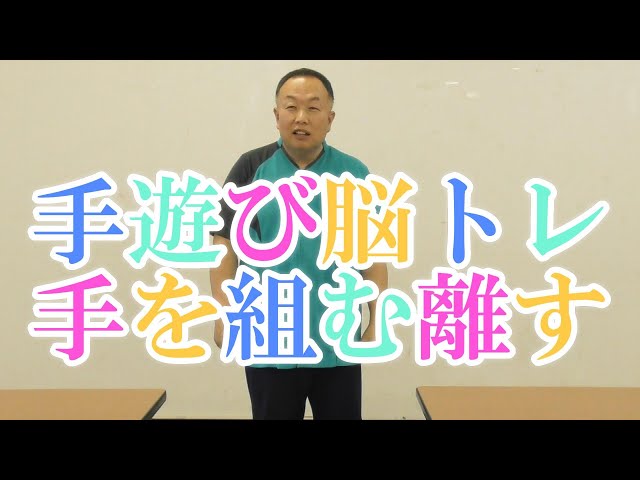
Let’s exercise our hands by interlacing and separating our fingers.
We’ll move our hands to the cues “interlace” and “separate.” Try calling out phrases like “don’t interlace” or repeating “separate,” similar to the flag-raising exercise done with red and white flags.
Just that will raise the difficulty.
They say the brain is more stimulated by challenging tasks and even by failure than by things that are easy.
So you don’t need to aim for perfection.
Please do this in a fun, warm atmosphere where it’s okay to make mistakes.
finger exercises
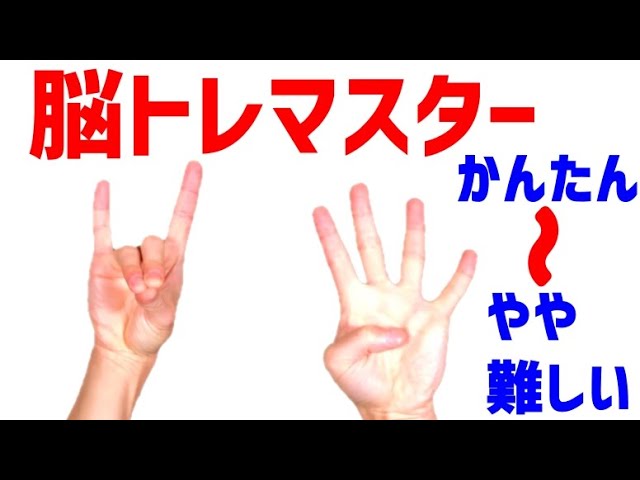
Here are some exercises with higher difficulty levels that we recommend even for older adults who are used to finger exercises.
If you practice daily, some seniors may find they’ve become accustomed to the movements.
Others might feel bored with the same finger routines.
In that case, let’s increase the difficulty by adding hand movements.
Hand play has a brain-training effect.
Not limited to hand play, it’s said that when something feels “a little difficult,” the brain becomes more active.
So please give it a try—even if you make mistakes, that’s perfectly okay.