

[For Seniors] Perfect Brain Training! Fun Trivia


When working at a senior care facility, you may sometimes need to come up with recreation activities or topics for conversations with older adults.
Do you ever struggle with ending up with similar recreation activities all the time or having the same conversations over and over?
So this time, we’ll introduce some fun trivia for older adults that can liven things up.
As people age and accumulate abundant knowledge and experience, they tend to have fewer opportunities to encounter new things and information.
However, incorporating new information such as trivia can evoke surprise and enjoyment, which is said to stimulate the brain.
After a long time, discovering something new and fun can make them want to share it with other seniors or their family members.
Trivia also helps promote communication by encouraging conversations with others.
- Conversations Made Easy! A Collection of Topics That Elderly People Enjoy
- [For Seniors] Fun and Informative! Trivia and Quizzes Introduced
- [Brain Training] Lively Word Quiz for Seniors
- [For Seniors] Lively two-choice trivia quiz. Handy to know and tidbits you'll want to share with others
- [For Seniors] Guaranteed to Liven Things Up! A Collection of Brain Training Activities That Will Spark Laughter
- [For Seniors] Fun and Informative! Health Trivia Quiz
- [For Seniors] Fun and Informative Trivia Quiz Collection
- Fun, engaging topics for conversations with older adults!
- Hand games that liven things up for seniors—also great brain training
- [For Seniors] Sports Trivia Quiz & Fun Facts. Easy and Entertaining
- [For Seniors] Recommended for Brain Training! Nostalgic Showa-Era Quiz
- [For Seniors] Great for killing time! A fun three-choice trivia quiz
- [For Seniors] Challenging but Exciting! Kanji Quiz
[For Seniors] Perfect for Brain Training! Lively Trivia (61–70)
When did the Obon holiday become established?
Obon is an event for welcoming one’s ancestors, and during the Obon holiday we carry out various observances.
So when did the Obon holiday, which serves both as time off for these events and as a beloved summer vacation for adults, become an established custom? The answer is the Edo period.
It is said to have taken root alongside the Obon observances themselves.
The fact that the holiday period aligns with the series of Obon events conveys the historical weight of these traditions and the sentiments imbued within them.

When you feel a sneeze coming on, you can stop it by using a certain part of your body. How do you use that body part?
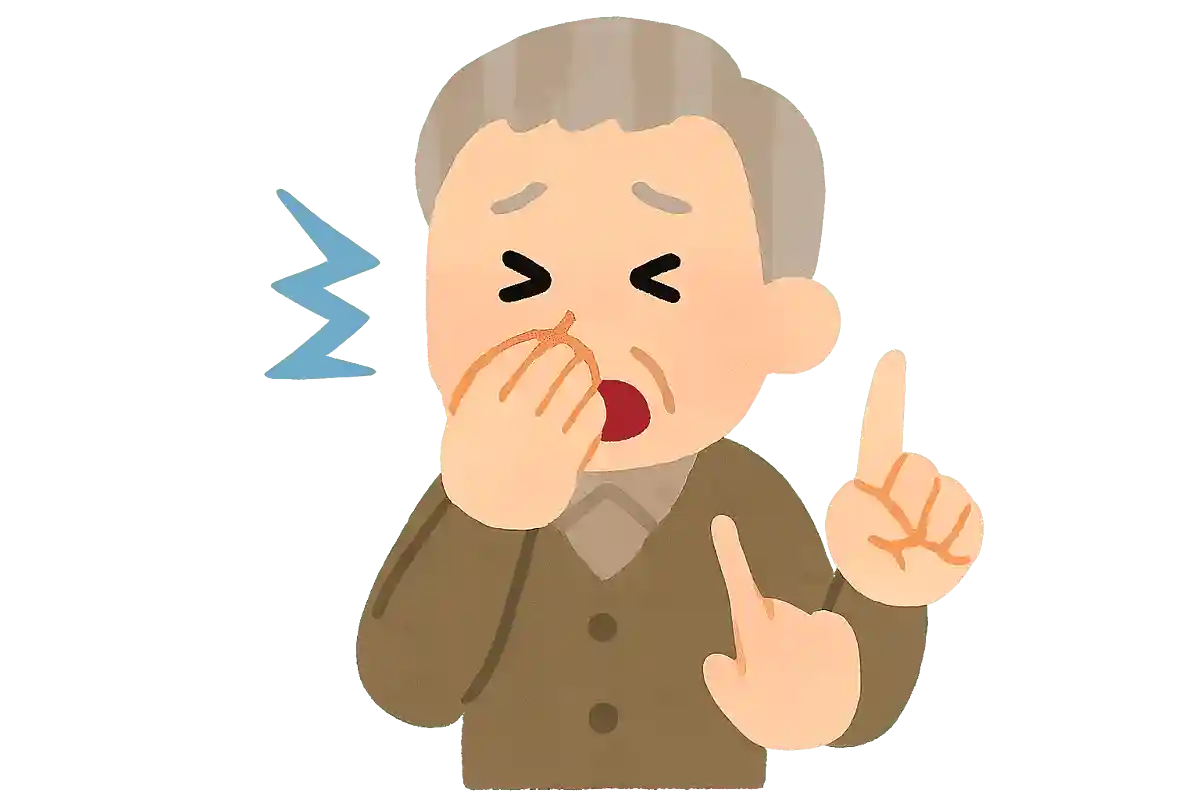
You’re about to sneeze in a quiet place… In times like that, knowing this method could come in handy! The spot is a part of your face—close to your nose, where the sneeze comes from.
The answer is to press under your nose with your finger.
If you say it’s the spot Kato-chan from The Drifters presses when he does “Kato-chan, pe!” older people might get it right away.
That said, it seems that stopping a sneeze isn’t very good for your body, so try using this only when you really have to!

When you can’t stop coughing, drinking a syrup made by soaking a certain vegetable in honey can calm it. What is that vegetable?
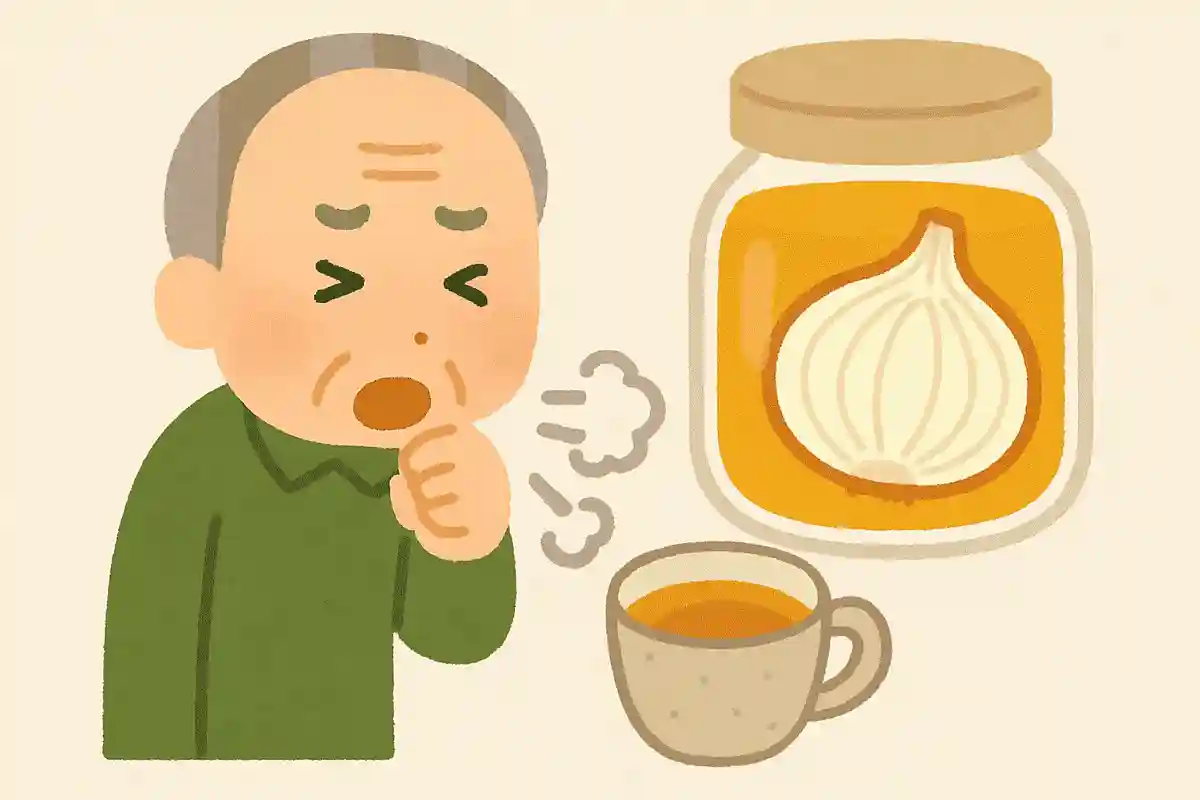
The correct answer is “daikon radish.” A compound found in daikon called isothiocyanate has anti-inflammatory effects, and honey contains an enzyme called glucose oxidase.
This enzyme reacts with oxygen in the air to produce hydrogen peroxide.
Hydrogen peroxide, also known as “oxydol,” has disinfectant properties—the same “oxydol” used to disinfect wounds.
Based on this, “honey daikon” appears to help soothe coughs by disinfecting the throat and reducing inflammation.
Osechi dishes, each ingredient and material carrying auspicious meanings—Which foods are eaten to pray for good financial fortune?
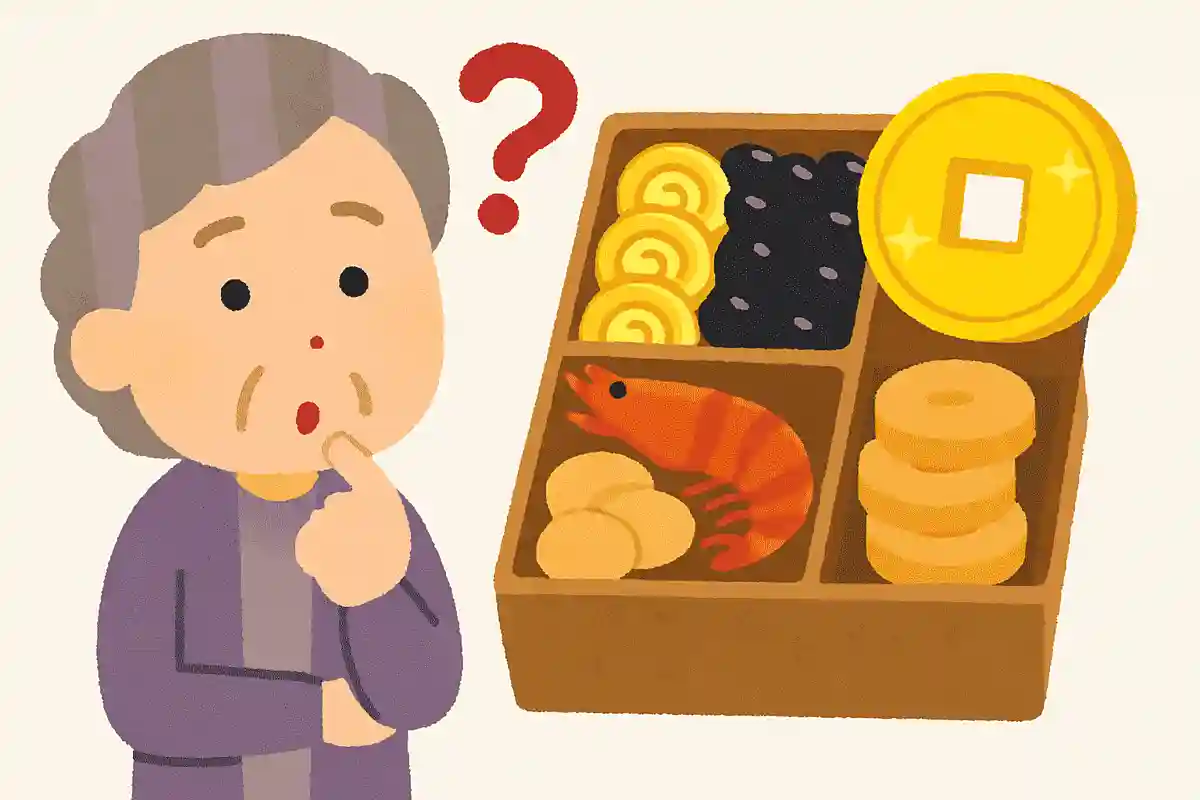
Many older adults might say that the colorful Osechi dishes are one of the joys of New Year’s.
Among these traditional dishes, there’s a certain food said to symbolize good fortune with money—but which one is it? Here’s a hint: it’s sweet and popular with children.
A big hint: it’s made with chestnuts.
The answer is kuri-kinton! The word kinton can mean “golden bedding” or “golden dumplings,” which is why it’s associated with financial luck.
Among the many foods, there is only one that does not spoil. What is it?
Speaking of food, we often worry about best-before and use-by dates.
But if a food doesn’t spoil, there’s no need to throw it away, which is very eco-friendly.
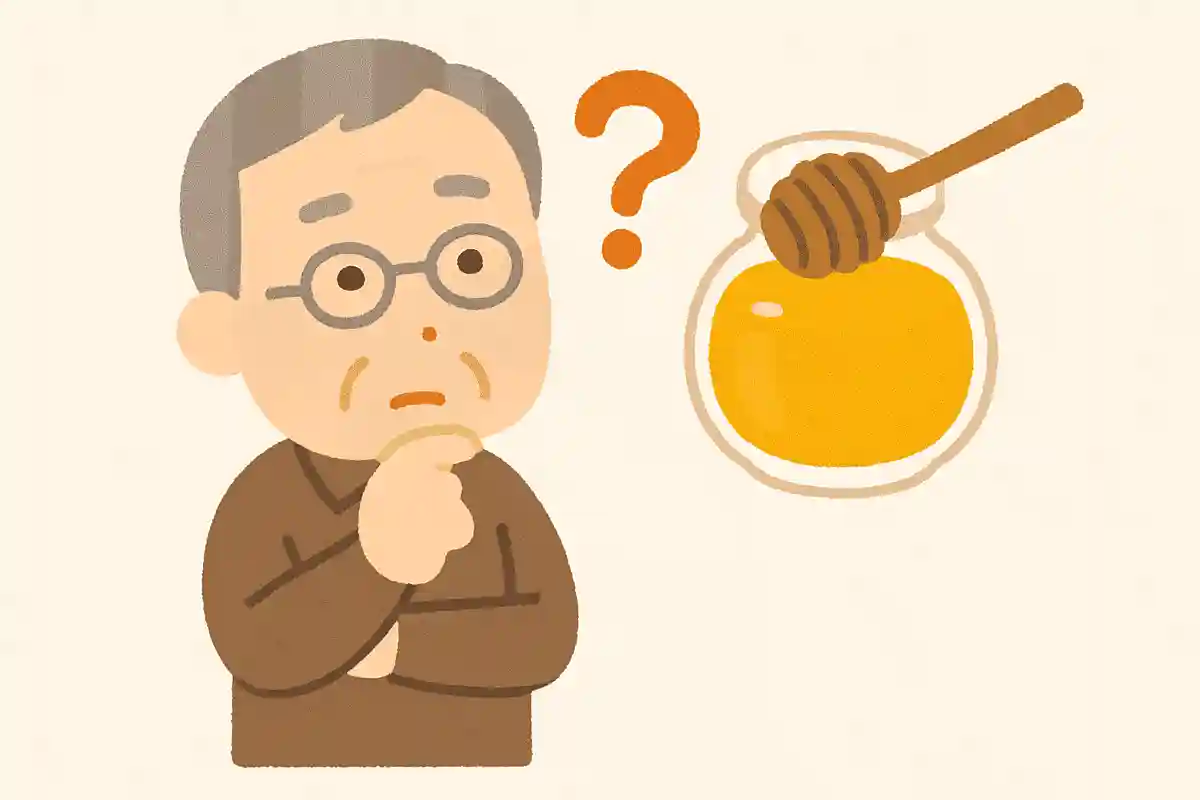
What do you think this wonderful food is? Here’s a hint: you eat it drizzled over things like bread, pancakes, and yogurt.
It’s diligently gathered by a certain insect, and it’s very sweet.
The answer is—honey! Honey is said not to spoil because it’s high in sugar and low in water content, conditions in which bacteria can’t survive.
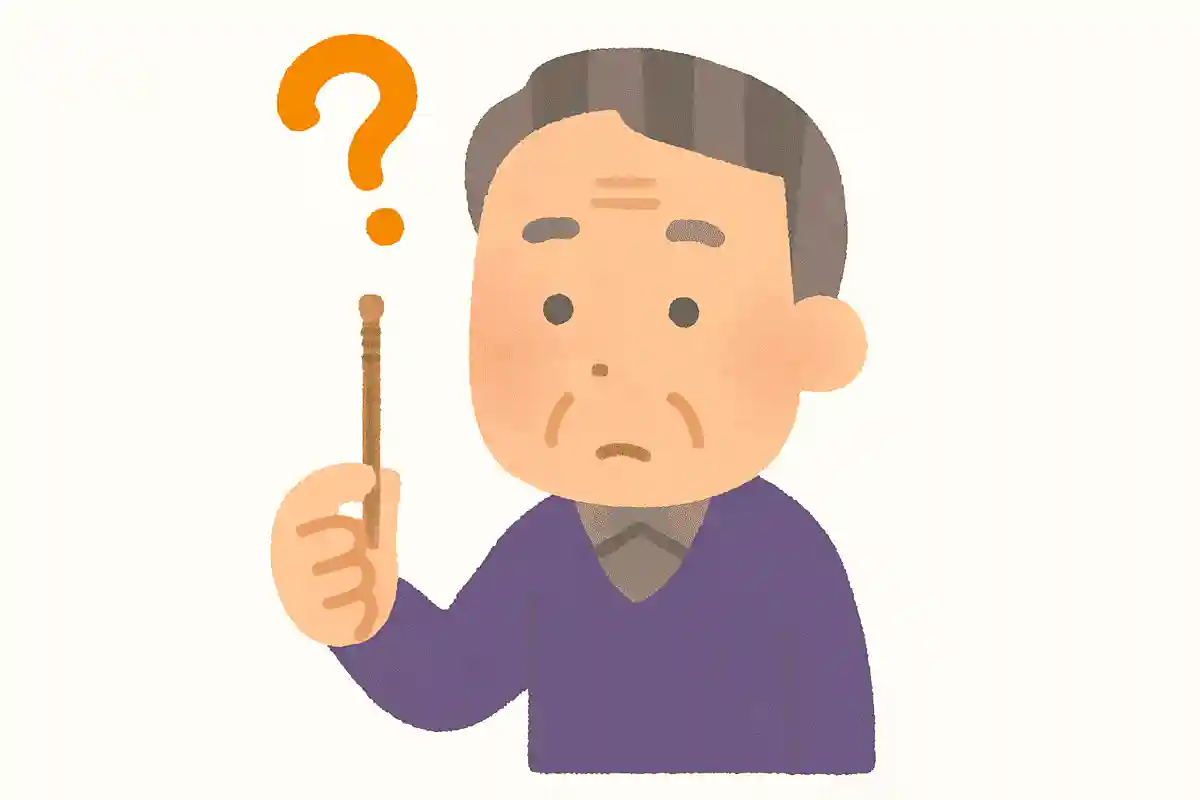
What is the purpose of the groove on the end of a toothpick where you hold it?
Toothpicks are commonly used in everyday life.
What’s the purpose of the grooves on the end you hold? Are they for grip, or is there some other use? The answer is: they don’t really have any special meaning.
According to toothpick manufacturers, when they sharpen the tip, the toothpicks are set in a machine and shaved at high speed.
The wood on the opposite end would get scorched and turn black, making it look bad, so they started adding grooves there as a workaround.
In the near future, if machines advance to the point where the wood no longer gets scorched, those grooves might disappear.

The calves are also called the “second heart.” Using a part of the body, what is it called as the “second” what?
The calf, located on the back of the lower leg, has a nickname that uses the name of a body organ: “the second ___.” What is it? The hints are that it’s an internal organ and an indispensable organ not only for humans but also for animals.
The answer is the second “heart”! Blood tends to pool in the legs, but by actively moving the calves, blood circulates better and can be sent back to the heart more effectively.
That’s why they’re called the “second heart.”