

[For Seniors] Haiku for February: A Collection of Famous Verses Depicting the Transition from Winter to Spring

It’s still quite cold in February, but with plum blossoms beginning to open and birdsong in the air, you can start to sense the coming of spring bit by bit, can’t you? Let’s savor some verses that capture scenes of February.
For older adults, haiku can be a way to experience the changing seasons with all five senses and to retrace old memories.
The biting cold wind, the thawing snowy landscape, the flower buds just beginning to swell—using the famous verses introduced here as a guide, try composing a haiku that can only be written at this time of year.
We hope you’ll enjoy putting into words the small discoveries found in everyday life.
- [For Seniors] Winter Haiku: Introducing Beautiful Masterpieces by Famous Haiku Poets
- [For Seniors] Famous Haiku About January: Learn New Year Season Words and Tips for Composing
- [For Seniors] Haiku for March: Enjoying a Spring Moment with Famous Verses
- [For Seniors] Famous Haiku for December: Masterpieces Depicting Winter Scenes and Year-End Moments, Plus Tips on How to Compose Them
- [For Seniors] Interesting spring haiku: introducing verses with striking kigo and unique expressions
- [For seniors] Classic winter kigo. Compose a verse with your favorite seasonal word.
- [For Seniors] February Songs You’ll Want to Hum: Enjoy Winter with Nostalgic Classics
- [For Seniors] Spring Haiku. Spring Activity
- [For seniors] Classic spring kigo: beautiful words that evoke the season
- [For Seniors] A Collection of Famous Autumn Haiku: Introducing Beautiful Verses That Evoke Vivid Scenery
- [For Seniors] Evoking autumn scenes: Introducing beautiful haiku for October
- [For Seniors] Haiku Introductions for May: A Fun Recreation Activity
- [For Seniors] February Trivia: Useful Knowledge
For Seniors: February Haiku — A Collection of Famous Verses Depicting the Transition from Winter to Spring (21–30)
February— plum blossoms at the Tenjin shrineKobayashi Issa
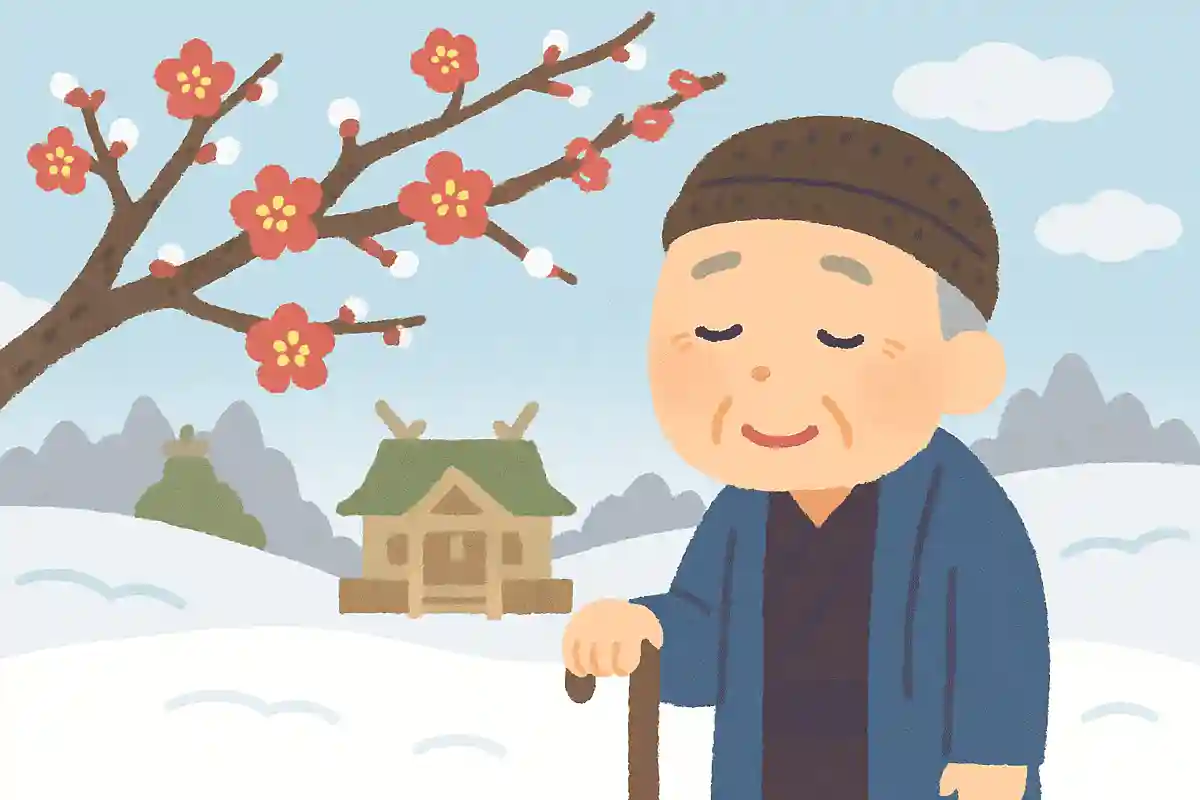
Tenjin-sama refers to Sugawara no Michizane, who was a politician and is also famous as the god of learning.
Because he excelled in many abilities and was widely respected, he has been venerated as Tenjin-sama even after his death.
Sugawara no Michizane is said to have loved plum blossoms dearly, and plum blossoms also appear in this haiku as a seasonal word.
The opening term “Ningatsu” (for February) is considered a colloquial misuse by some, though others say it feels characteristically Kobayashi Issa.
Setting aside which view is correct, I hope you enjoy it as one of the haiku for February.

Plum blossoms white—truly white—newly so.Ritsuko Hoshino
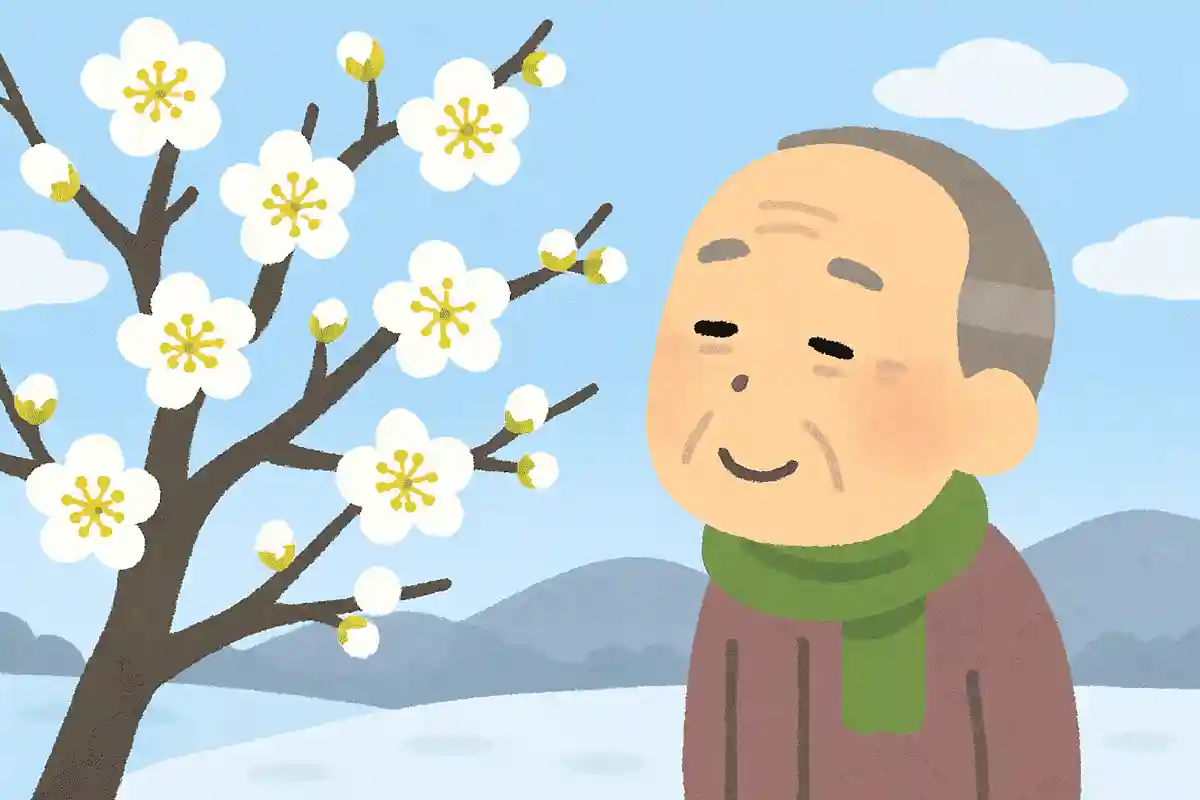
February is still a chilly time of year, yet many plum blossoms begin to bloom even then.
You often hear about the plum’s first blossoms on TV or online, don’t you? Plum trees that open small white, red, or pink petals in the cold wind convey both beauty and a touching sense of resilience.
In haiku as well, although we see plum blossoms every year, it feels like we can enjoy their bloom with fresh feelings again this year.
Some older adults may also look forward to the plum blossoms.
When you go for a walk together, it might be nice to enjoy haiku not only about the plum blossoms you see, but also about other outdoor scenes.

In mountain hamlets, Banzai comes late—the plum blossoms.Matsuo Bashō
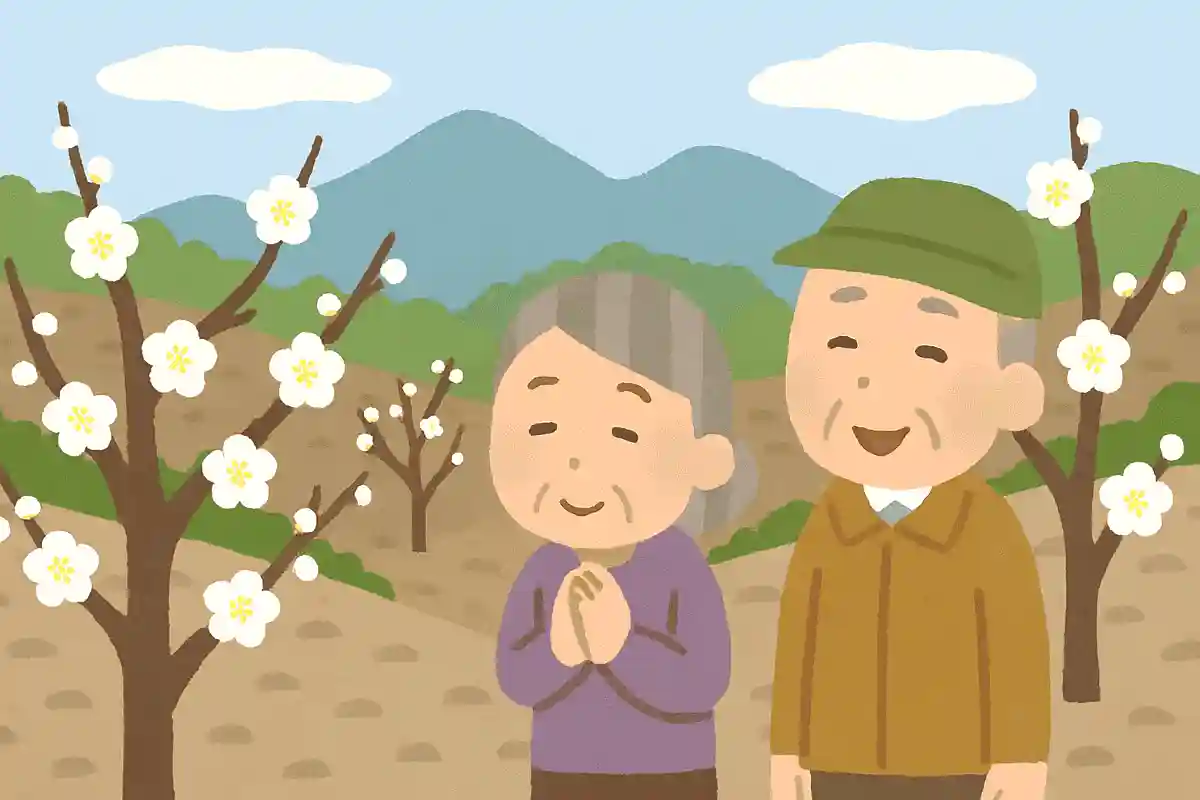
It’s a verse about how, in a mountain village far from the town, the manzai performers finally arrive around the time the new year has begun and the plum blossoms are in bloom.
Manzai is a performing art in which entertainers visit homes singing words of New Year’s celebration; it’s also said to be the origin of today’s manzai comedy duos.
You may have noticed that this poem uses two seasonal words: “plum blossoms” and “manzai.” As a rule, overlapping seasonal words is a technique to be avoided.
However, in this verse the primary season word is clearly defined, and the content of the haiku isn’t impaired.
Truly worthy of Bashō, the poet known as the Haiku Sage.
With the scent of plum blossoms, the sun suddenly rises on a mountain path.Matsuo Bashō
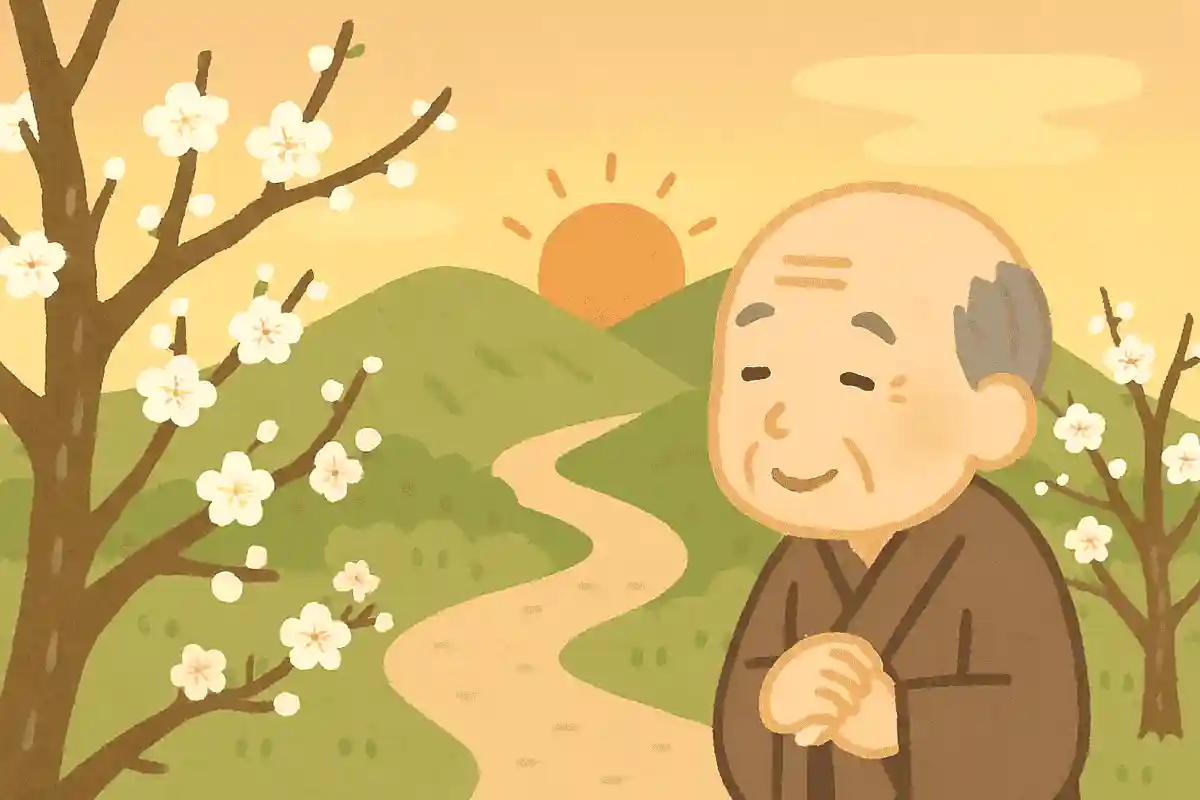
Plum blossoms are flowers that often reach their blooming season in February.
Though the blossoms are small, they make an impressive sight as they bloom even in the chilly early spring winds.
Their fragrance is wonderful, too, and it seems to carry a hint of spring.
In haiku, it’s said that not only people but even the sun is lured by the scent of plum blossoms.
That’s how enchanting their fragrance must be.
Walking near a plum tree, you can savor the changing seasons through both sight and sound.
Among older adults as well, there may be those who look forward to the plum blossoms’ bloom.
Shallow spring— crossing the water goes a single nightingale.Kawahigashi Hekigoto
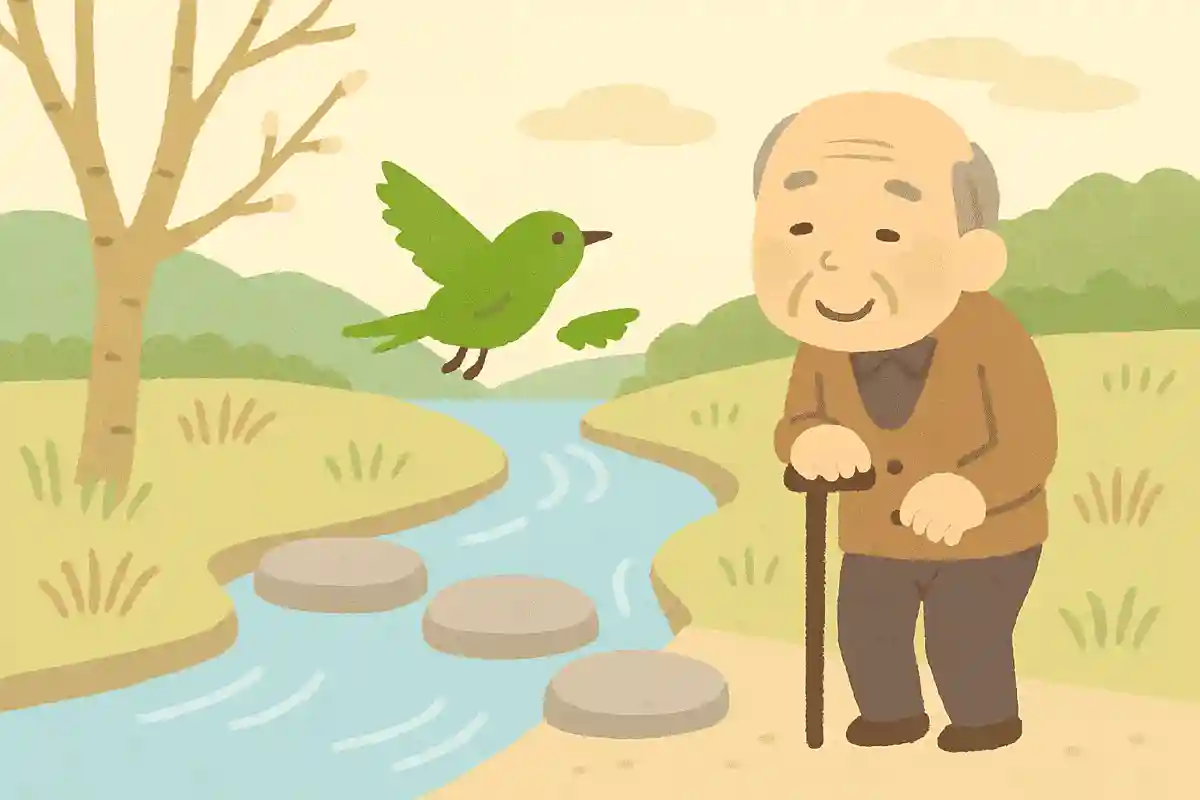
I imagine many older people have seen herons searching for and eating food in rice paddies and rivers.
Herons are distinctive birds, known for slowly taking one step at a time through the shallow parts of the Kyukawa River.
February’s river water is still cold.
Watching a heron with its characteristic gait there makes the water seem even colder.
For the heron, it’s just its usual behavior while feeding, but it’s interesting how the viewer’s perception can change the way the heron appears.
How about finding something in everyday life that evokes a sense of cold, and composing a haiku that matches your own feelings?
Kisaragi— let the body-cutting wind cut my bodyMasajo Suzuki
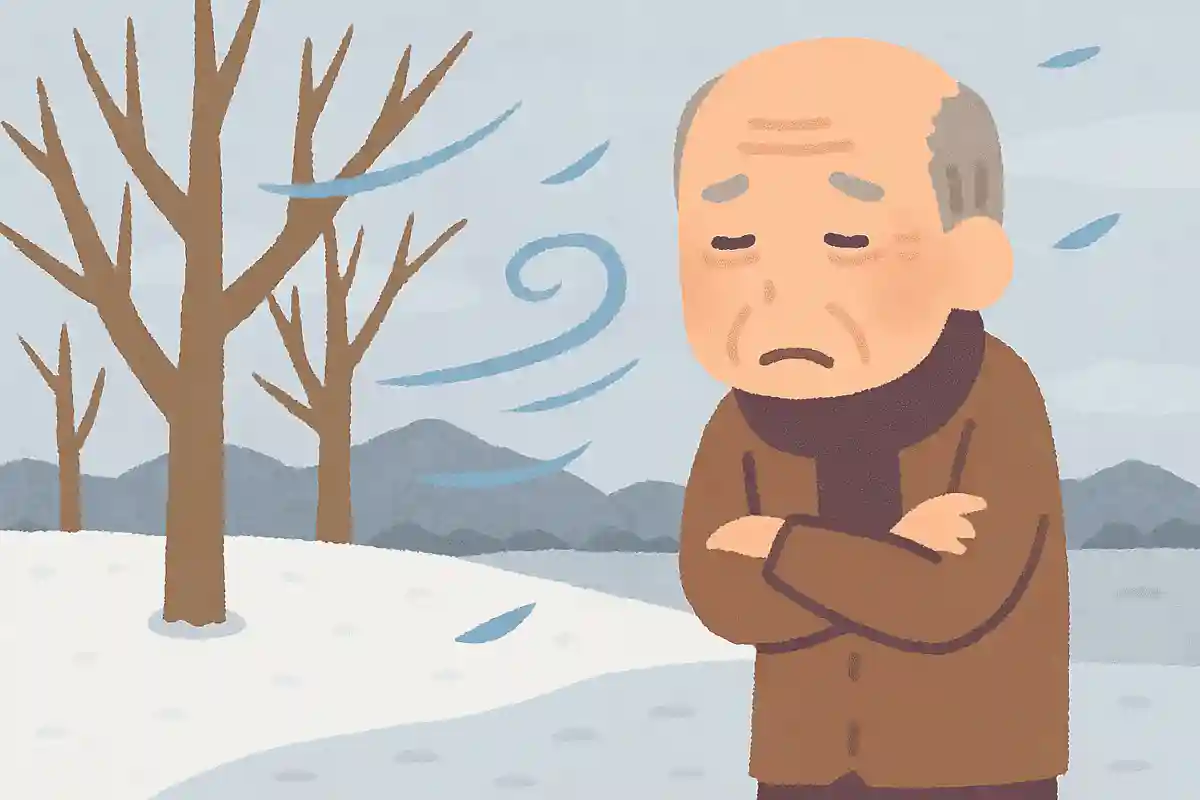
These days, we often get warm days even in winter.
But in the past, it seems that February in Japan more often felt bitterly cold.
The wind was icy, and the cold could cut to the bone even when bundled up.
Many older adults may have experienced winters like that.
Talking about winter or February could be a good conversation starter with seniors.
From there, some might look back on their childhood or memories of time spent with family.
You could have an enjoyable time chatting while composing haiku together.
There are branches halfway folded—the pussy willow.Hanamino Suzuki
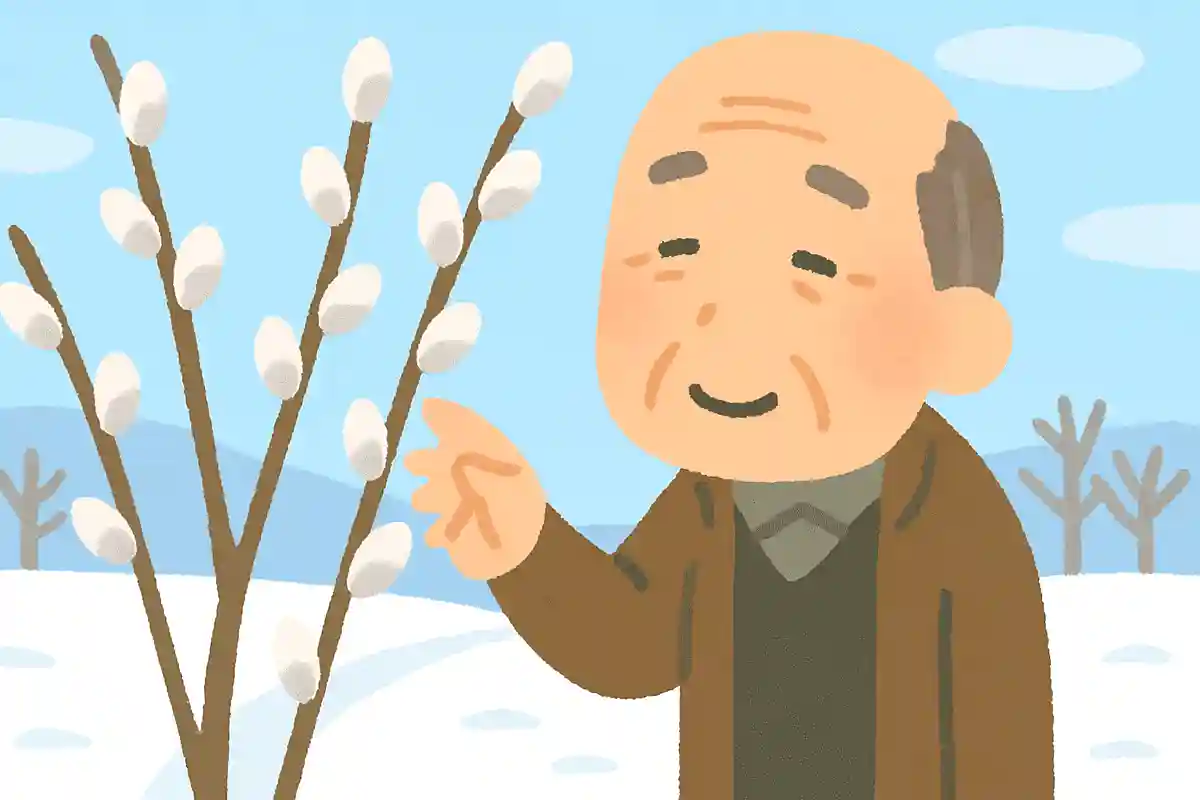
The seasonal word (kigo) in this verse is pussy willow—one of the kigo for early spring.
Pussy willow is a type of willow that often grows wild along the water.
Its flower buds are covered in distinctive white down, said to resemble a cat’s tail.
This verse describes the appearance of such pussy willows.
Their branches are slender and often snap when the wind is strong.
The poem conjures the willow’s unvarnished state, and for anyone familiar with pussy willows, it likely elicits a spontaneous “Exactly!”—a sense of empathy that also brings back fond memories of playing outdoors.