

[For Seniors] Fun Food Trivia Quizzes You'll Want to Share


When chatting with older adults, food often comes up as a topic, doesn’t it? Food is one of the subjects that both seniors and staff find easy to talk about.
So this time, we’d like to introduce some trivia quizzes about food.
Food-related topics that naturally expand conversations with seniors can also be used to facilitate communication.
You can use them as everyday conversation starters or as material for recreational activities.
Enjoy these food trivia quizzes we’ve gathered for you.
- A Food Quiz for Seniors to Make Eating More Enjoyable
- [For Seniors] Fun and Informative! Health Trivia Quiz
- [For Seniors] How many can you read? A comprehensive showcase of difficult food kanji
- [For Seniors] Introducing Trivia Quizzes and Fun Facts About December
- [For Seniors] Trivia Multiple-Choice Quiz
- [Brain Training] Lively Word Quiz for Seniors
- [For Seniors] Laugh-Out-Loud, Crowd-Pleasing! Fun Quiz
- [For Seniors] Fun and Lively! Recommended Quiz Questions
- [For Seniors] Brain Training! Recall Quiz Collection!
- [For Seniors] Recommended Trivia Quizzes & Fun Facts for November
- [For Seniors] Lively two-choice trivia quiz. Handy to know and tidbits you'll want to share with others
- [For Seniors] Boost Your Knowledge! Fun Trivia Quiz
- [For Seniors] Sports Trivia Quiz & Fun Facts. Easy and Entertaining
[For Seniors] Fun Food Trivia Quiz Collection You'll Want to Share (61–70)
Why is it that we don’t eat eel raw?

Eel has long been loved by the Japanese.
Dishes like unajū (eel over rice) and grilled kabayaki come to mind as delicious favorites.
However, you’ve probably never seen eel eaten raw.
Do you know why? It’s because eel blood is toxic, but the toxin is neutralized by heat.
As a guideline, heating at 60°C for 5 minutes makes it safe.
In recent years, processing techniques have advanced, making it easier to enjoy sashimi-style eel as well.
Take this opportunity to give it a try.

Autumn is when delicious new rice is harvested. What is the most widely produced rice variety in Japan?

Autumn is also the rice harvest season.
So here’s a question: Which rice variety is produced the most in Japan? The correct answer is Koshihikari.
It’s a famous variety that everyone knows.
There are three main reasons for this.
First, it’s resistant to cold.
Second, it’s delicious and highly popular.
Third, it’s suitable for long-term storage.
However, although Koshihikari may seem perfect, it actually has a weakness: it’s vulnerable to wind and disease.
When you can’t stop coughing, drinking a syrup made by soaking a certain vegetable in honey can calm it. What is that vegetable?
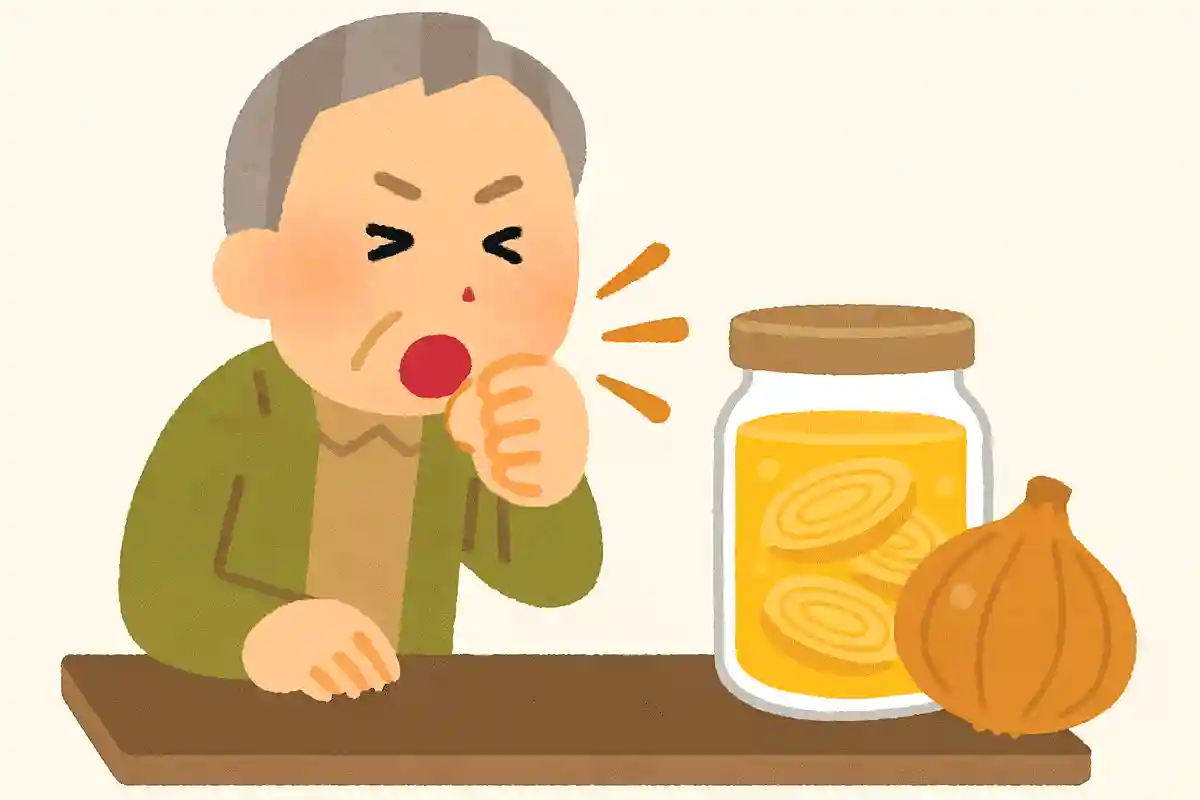
The correct answer is “daikon radish.” A compound found in daikon called isothiocyanate has anti-inflammatory effects, and honey contains an enzyme called glucose oxidase.
This enzyme reacts with oxygen in the air to produce hydrogen peroxide.
Hydrogen peroxide, also known as “oxydol,” has disinfectant properties—the same “oxydol” used to disinfect wounds.
Based on this, “honey daikon” appears to help soothe coughs by disinfecting the throat and reducing inflammation.
On a bunch of grapes, going along the stem in order of “top,” “middle,” and “bottom,” which part is the sweetest?

One of autumn’s seasonal flavors is grapes.
Many people love them, right? Here’s a quiz: “Which part of a bunch of grapes is the sweetest?” If you picture how grapes grow, you might guess it.
The correct answer is “the upper part near the stem.” Grapes start to ripen from the part closest to the stem, so the upper area becomes sweeter.
So when you eat them, if you start from the less sweet lower grapes and work your way up, you’ll likely enjoy them to the very last bite.
It could be a fun question to ask before serving grapes, too.
When is the expiration date for the ice cream?

Chilled and delicious ice cream.
Many of you probably eat it often.
Here’s a question: do you know when ice cream expires? If you’re near a freezer, try taking out some ice cream and checking.
There’s probably no expiration date shown.
That’s because, in fact, ice cream doesn’t have a best-before date.
So you can technically eat ice cream that’s several years old.
However, that doesn’t apply if it has warmed up at some point or been opened.
Therefore, it’s basically recommended to eat it while it’s still new.
What was asparagus originally meant for?
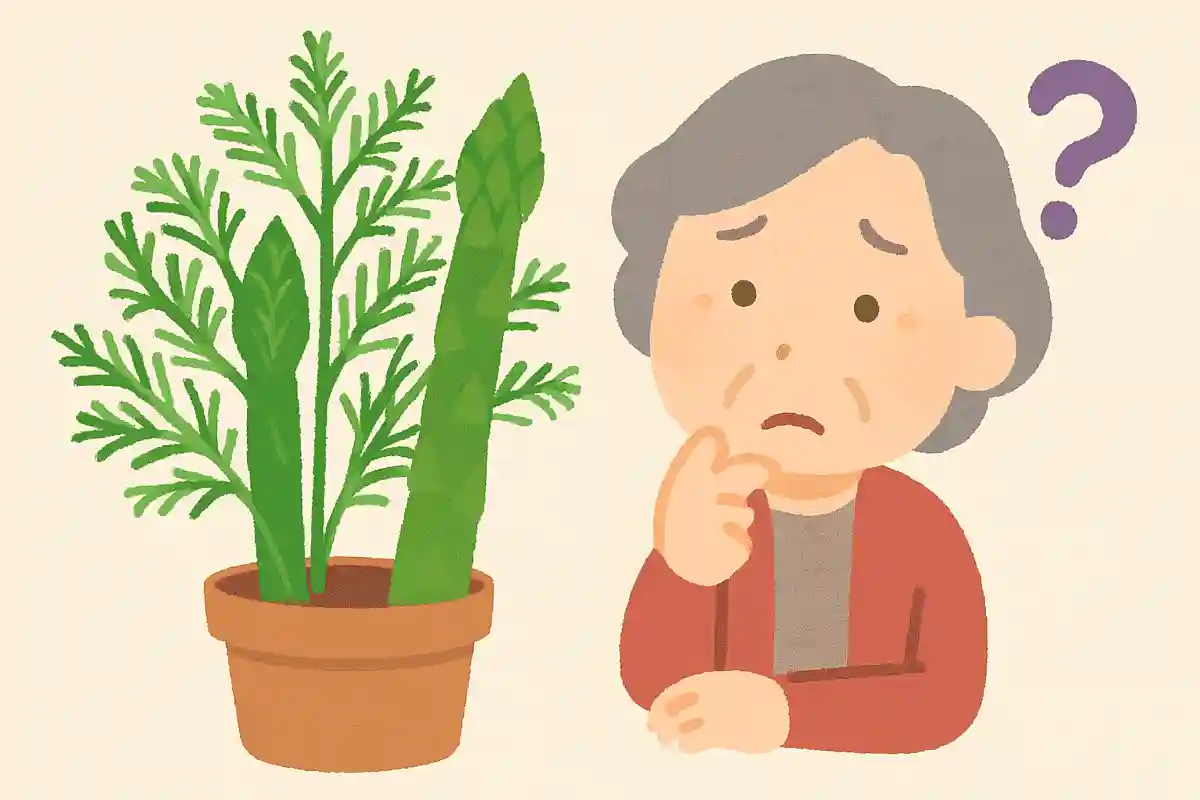
Asparagus has a slightly different form compared to other vegetables.
I’ve heard it takes at least three years from sowing the seeds to harvesting.
I’ve tried growing it a few times myself, but I never made it to harvest…
If you manage it properly, you can keep harvesting for about ten years.
Interestingly, asparagus was originally imported as an ornamental plant and only later became a food.
The curiosity of the person who thought, “Maybe I’ll try eating that plant that looks like a horsetail,” is pretty incredible, isn’t it?
There are three katakana characters hidden in the giraffe mark of Kirin Beer. What do the characters spell?

Kirin Beer, sold by the major beer manufacturer KIRIN.
On the cans and bottles of Kirin Beer, a mythical creature called a kirin is depicted.
So what are the three katakana characters hidden within the illustration of the kirin? When combined, these three characters form a word.
答えは――キリン!文字がとても小さく周りの線と馴染んでいるので一見わかりにくいですが、よく見ると「キリン」という語がはっきり見つかります。各文字は別々に配置されているので、ぜひ探してみてください!
