

[For Seniors] Fun Food Trivia Quizzes You'll Want to Share


When chatting with older adults, food often comes up as a topic, doesn’t it? Food is one of the subjects that both seniors and staff find easy to talk about.
So this time, we’d like to introduce some trivia quizzes about food.
Food-related topics that naturally expand conversations with seniors can also be used to facilitate communication.
You can use them as everyday conversation starters or as material for recreational activities.
Enjoy these food trivia quizzes we’ve gathered for you.
- A Food Quiz for Seniors to Make Eating More Enjoyable
- [For Seniors] Fun and Informative! Health Trivia Quiz
- [For Seniors] How many can you read? A comprehensive showcase of difficult food kanji
- [For Seniors] Introducing Trivia Quizzes and Fun Facts About December
- [For Seniors] Trivia Multiple-Choice Quiz
- [Brain Training] Lively Word Quiz for Seniors
- [For Seniors] Laugh-Out-Loud, Crowd-Pleasing! Fun Quiz
- [For Seniors] Fun and Lively! Recommended Quiz Questions
- [For Seniors] Brain Training! Recall Quiz Collection!
- [For Seniors] Recommended Trivia Quizzes & Fun Facts for November
- [For Seniors] Lively two-choice trivia quiz. Handy to know and tidbits you'll want to share with others
- [For Seniors] Boost Your Knowledge! Fun Trivia Quiz
- [For Seniors] Sports Trivia Quiz & Fun Facts. Easy and Entertaining
[For Seniors] Fun Food Trivia Quizzes You'll Want to Share (31–40)
Ohagi and botamochi are the same food, but which one is made in autumn?

Botamochi and ohagi are traditional Japanese sweets made by lightly pounding a mix of glutinous and non-glutinous rice into balls and wrapping them in sweet red bean paste.
The contents are the same, but which one is eaten in autumn? The answer is ohagi.
There are various theories, but the common one is that the names come from flowers that bloom in each season: the one eaten during the autumn equinoctial week (Higan) is called ohagi, after the autumn flower hagi (bush clover), and the one eaten during the spring Higan is called botamochi, after the spring flower botan (peony).
Incidentally, there are also seasonal names: “yofune” for summer and “kitamado” for winter.

There’s something that the autumn delicacy “sanma” (Pacific saury) doesn’t have. What is that something?
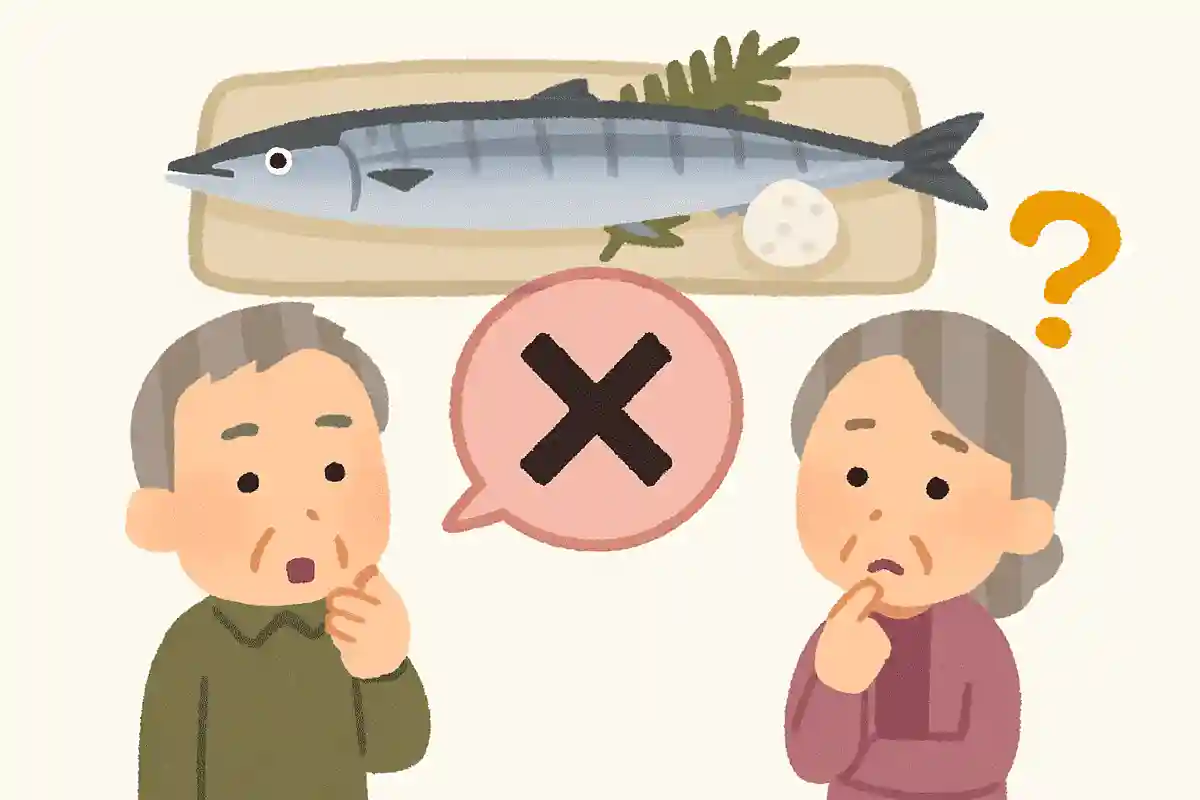
Autumn is also the season for Pacific saury, isn’t it? Just thinking about whether to grill it with salt or have it as sushi is exciting.
Here’s a little quiz: “There’s something that saury don’t have—what is it?” The hint is that it’s a body part.
Think it over.
The answer is “a stomach.” Saury don’t have a stomach, which means their waste is expelled quickly.
For that reason, saury can be grilled whole and eaten with the innards.
By the way, fish without a stomach are called agastric fish.

Is salmon a white-fleshed fish or a red-fleshed fish?

- egg white
- lean meat
See the answer
egg white
Because fish with red flesh are called akami (red meat) and those with white flesh are shiromi (white meat), many people will of course answer “red meat!” for salmon based on its appearance—making it a bit of a trick question. Salmon’s lateral muscles are actually composed of white muscle, and when they are fry their flesh is white, but it becomes redder as they grow. They contain astaxanthin—the same pigment found in shrimp and crabs—which makes them look red.

What is the vegetable that has the least nutritional value, as certified by Guinness?

When you think of vegetables, you usually picture them as sources of nutrition, so it’s a shock to hear that there’s a vegetable said to be so low in nutrients it was recognized by Guinness.
The idea isn’t that it lacks nutrients entirely, but that its calories are extremely low.
If you consider what vegetables are made of, you might get closer to the answer.
The answer is “cucumber.” Since it’s composed of about 95% water, it’s low in calories, which led to its reputation as a “vegetable with no nutrients.” In reality, it does contain potassium, dietary fiber, vitamins, and more, so it’s a good idea to learn cooking methods that can boost its nutritional value.

These days, “ganmodoki” is made with tofu, but in the past a different ingredient was used. What ingredient was it?

When you hear “ganmodoki,” most people only think of tofu, but what on earth was it originally made from? Here are some hints: it’s a food that’s still commonly eaten today, it’s made from a processed tuber, and it’s often used as a prop for test-of-courage events.
The answer is konnyaku (konjac)! It was originally eaten as part of shojin ryori (Buddhist vegetarian cuisine), and through adding various ingredients and experimenting with seasonings, it eventually evolved into the tofu-based ganmodoki we know today.

[For Seniors] Fun Food Trivia Quiz Collection You’ll Want to Share (41–50)
Which fruit is produced the most in the world?

Because we eat them so routinely, we rarely stop to think about which fruits are produced the most.
Here’s a hint: fruits have many uses.
It might help to think beyond eating them fresh.
The answer is grapes—an understandable result given how widely wine is enjoyed around the world.
Globally, grapes top the production list, but if you look only at Japan, the outcome is different.
It could be interesting to research that as well.
Where in Japan did nagashi-somen (flowing somen noodles) originate?
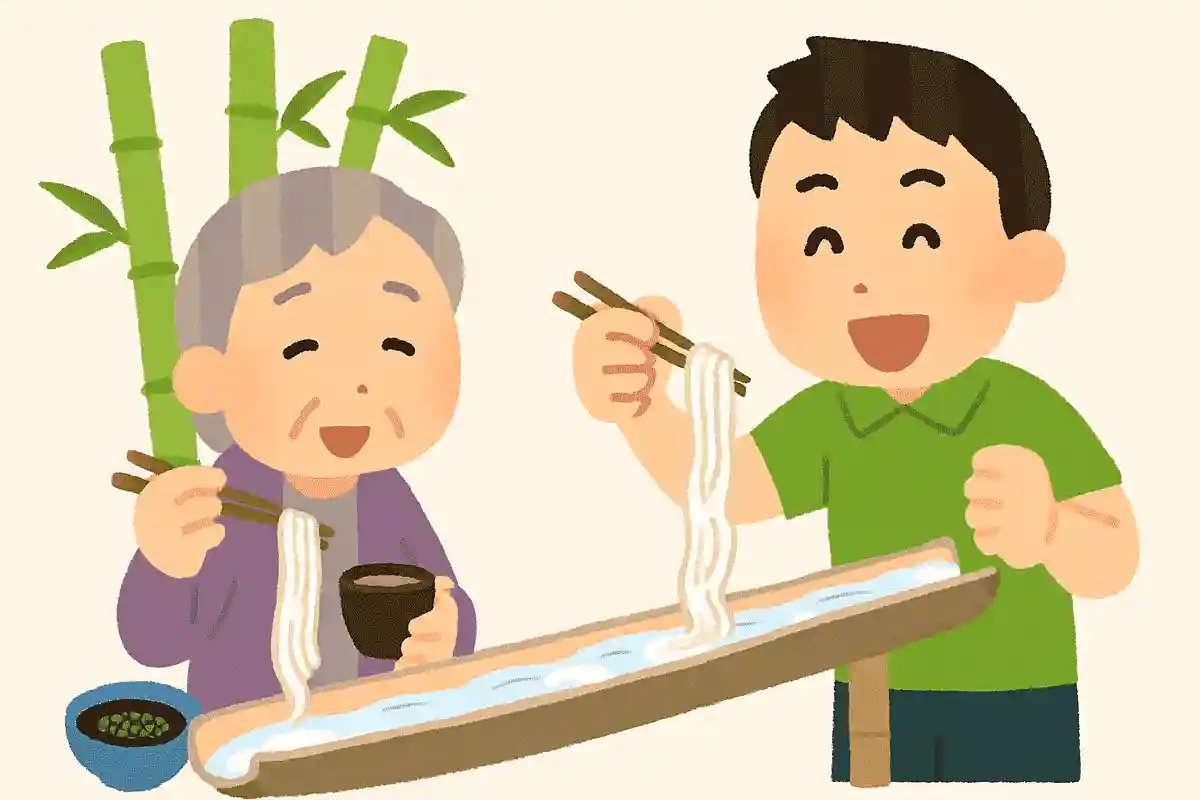
Speaking of summer, somen noodles are an essential food, aren’t they? They’re easy to eat even when the heat kills your appetite, and when served cold they help cool your overheated body.
There’s also nagashi-somen, where water and noodles are sent flowing down a split bamboo chute—a big summer tradition.
It’s said to have originated in Kyushu, beginning around the mid-1950s in Takachiho, Miyazaki Prefecture.
Using bamboo conveys a refreshing feel, but since preparation is a lot of work, people often substitute other materials instead.