

Challenging tongue twisters: Introducing high-difficulty phrases and sentences!

Tongue twisters exist in every country.
I think everyone in Japan has been familiar with them since childhood.
This time, I’ve picked out only the especially difficult tongue twisters.
You’ll find not only long, complicated ones, but also very short tongue twisters that are surprisingly hard to say.
Although tongue twisters might seem like they’re just for kids, adults can enjoy them too at parties or drinking gatherings.
If you practice in advance, you might even become the center of attention in those situations.
Now then, please sit back and enjoy!
- Tongue twisters that will make you laugh out loud! Super funny
- [Diction Training] A Collection of Tongue Twisters to Improve Articulation
- A collection of long tongue twisters. Also recommended for practicing announcements and narration.
- Nagoya dialect tongue twisters are exquisite! A fun collection where your tongue gets tied in knots with regional dialects
- Challenge together! A roundup of word games for adults
- “Chau chau, anta” — a Kansai-dialect tongue twister. A phrase only Kansai folks can say.
- Bursting into laughter! A roundup of Hakata dialect tongue twisters
- [Recreation] Challenge! A roundup of tongue twisters recommended for elementary school students
- [Challenging and Fun!] Quizzes & Riddles for Adults
- Chinese tongue twisters: A collection of rao kou ling helpful for learning Chinese
- Perfect for pronunciation practice! A collection of English tongue twisters.
- [Trick Quiz] Quiz Questions That Excite Everyone from Kids to Adults
- Get Caught? Or Not!? Simple Ways to Kill Time During Class
Difficult Tongue Twisters: Introducing High-Difficulty Phrases and Sentences! (41–50)
Say: “Apologize to Aya and Aya, apologize to Aya and your parents.”
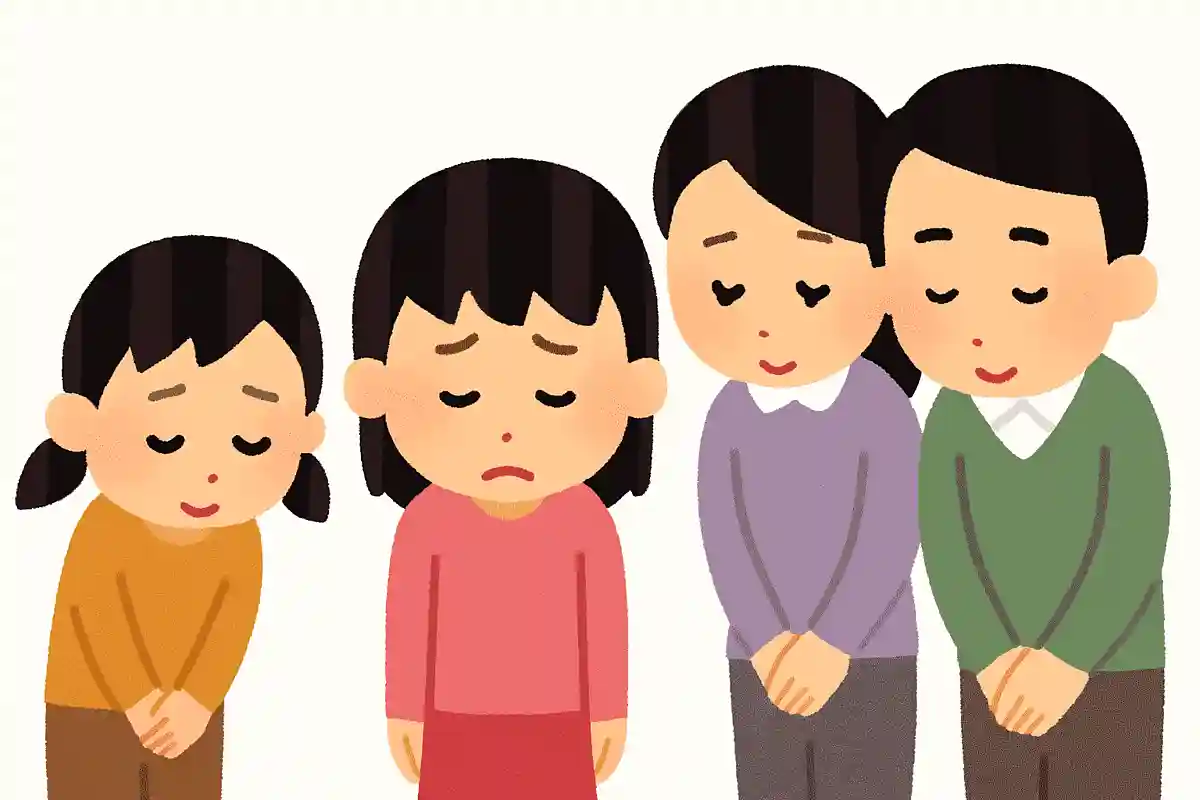
A tongue twister in dialogue style: “Apologize to Aya, and tell her to apologize to her parents.” There are several versions of this tongue twister, such as “Apologize to Aya, and tell her to apologize to the greengrocer,” or “Tell the greengrocer that Aya is going to the bathhouse with her parents.” All versions rhyme on ‘Aya’ (o-aya) and make the sentences complex in a similar way.
Even without small kana or voiced sounds, it’s still difficult—a rare type of tongue twister.
Give it a try!

Difficult tongue twisters. Introducing high-difficulty phrases and sentences! (51–60)
I heard Kayō Yamamoto used to go to this high school.

There’s a relatively short and easy tongue twister: “Koko no kōkō ni Yamamoto Kayo ga kayottottarashii ken ne.” Yamamoto Kayo is a local TV personality active mainly in Fukuoka and beloved by locals.
In the tongue twister, it means “It seems Kayo Yamamoto used to attend this high school.” It’s a tongue twister that really reflects Fukuoka, especially the Hakata dialect.
If it feels hard, try taking a quick breath at the ‘ga’ part.
In the wide corridor of a Roman prison, a sixty-six-year-old man wanders nervously, holding a candle.

The tongue twister that goes, “In the wide corridor of a Roman jail, sixty-six old men wander nervously with candles,” is an unusual and rather long one that’s pretty hard to memorize! I mean, even the first half—“the wide corridor of a Roman jail”—is hard to picture, right? (lol) And then it says “sixty-six old men wander nervously with candles,” but what on earth are those elderly men doing walking around with candles inside a jail…? It really makes you wonder.
As a tongue twister, the repeated ‘ro’ sounds make it quite a challenge!

Tokyo Patent Approval Bureau

One famous tongue twister is “Tokyo Patent Approval Bureau.” The tricky part is that similar-sounding words—tōkyō, tokkyo (patent), and kyoka kyoku (approval bureau)—come one after another.
People especially tend to get mixed up between “Tokyo” and “patent.” And even if you get through “Tokyo patent,” the “approval bureau” that follows is hard to say! By the way, the Tokyo Patent Approval Bureau is a fictional government agency; in reality, patents are filed with the Japan Patent Office.
Keep practicing, and try to master it!
Ultimate luxury aircraft at a deserted Kyushu airport

This passage contains many words starting with the K sound, so many people might stumble over the latter half with “kyūkyoku kōkyū kōkūki” (ultimate luxury aircraft).
The first half, “kūkyona Kyūshū kūkō” (empty Kyushu airport), is still easier to say, but the shift from kōkyū to kōkūki is particularly tricky.
If you try to rush through it, your mouth won’t keep up, so be mindful of your speed and deliberately shape each word with your lips and tongue.
There’s a “no” in the middle of the sentence, so it’s helpful to imagine taking a brief pause there.
Once you can do that, practice saying the whole thing in one breath.

Pencils and sharpened points

There’s a tongue twister that uses expressions unique to the Nagoya dialect.
It goes: “Kondon toki wa tokin-tokin no enpitsu motte kan to kan.
Teka chanto kezutto kan to kan tte itto kan to kan.” The first thing that catches your attention is “tokin-tokin,” right? This word describes a pencil tip that’s sharpened to a fine point.
In the tongue twister, it’s basically saying, “Next time, I have to bring a pencil.
Or rather, I really need to make sure it’s properly sharpened, and I should say so too.” Because it includes unfamiliar dialect words, you could say the difficulty level is on the higher side.
There are many months in which we gaze at the moon, but the moon we gaze at this month is the moon.
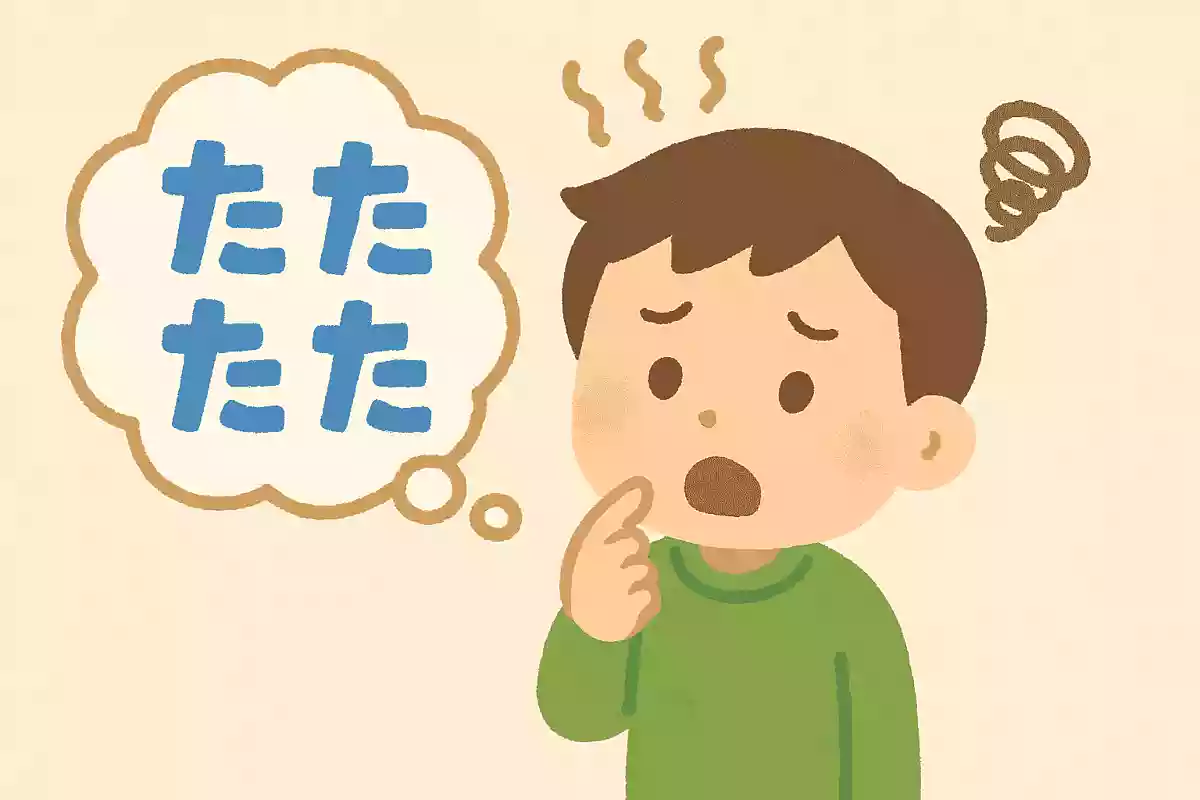
“Naka” and “kana”—these two similar sounds can really trip you up in the tongue twister: ‘Kono ko nakanaka katakana kakenakatta na, nkanakatta kana?’ When you actually try saying it out loud, you end up making mistakes like ‘Kono ko nakanaka kanakana…’ or ‘kanakanakatta kana…’ over and over, and it really makes you want to get stubborn about nailing it! That sweet spot where it feels like you can say it but you just can’t is the best part, right? It’s also fun if you set up the first line as the parent saying, ‘___,’ and then add the son’s line afterward: ‘I couldn’t write katakana, but I didn’t cry much, you know.’