

[For Seniors] Ideal for Dementia Prevention: Easy-to-Practice Reminiscence Therapy Topics


In recent years, “reminiscence therapy” has been drawing attention as a way to help prevent dementia in older adults.
Reminiscence therapy is a type of treatment that activates the brain by recalling and talking about one’s past and earlier experiences.
It is believed to help prevent dementia and slow its progression, and is being adopted in elder care facilities such as day service centers.
There are many themes related to the past that can be used when conducting reminiscence therapy.
So this time, we’ll introduce themes that are useful for reminiscence therapy and can be frequently used in caregiving settings.
Please feel free to use them as a reference.
- [For Seniors] Brain Training! Recall Quiz Collection!
- [For Seniors] Conversation starters that help you chat: engaging questions and topics to spark lively talks
- [For Seniors] Fun and Engaging Brain-Training Recreation
- Recreation Activities Effective for Long-Term Care Prevention for Seniors
- [Brain Training for Seniors] Recommended Hand-Play Recreation for Dementia Prevention
- Fun, engaging topics for conversations with older adults!
- Conversations Made Easy! A Collection of Topics That Elderly People Enjoy
- [For Seniors] Great for Brain Training! Question Card Ideas
- [For Seniors] Recommended Even for People with Dementia! Simple Recreational Activities
- [For Seniors] January Trivia Quiz & Fun Facts. Brain training with quizzes about New Year and winter.
- Hand games that liven things up for seniors—also great brain training
- [For Seniors] Recommended Brain Training! Classic Riddles
- Fun Brain Training! Memory Games for Seniors
[For Seniors] Ideal for Dementia Prevention: Easy-to-Practice Reminiscence Therapy Ideas (11–20)
Memories of school life
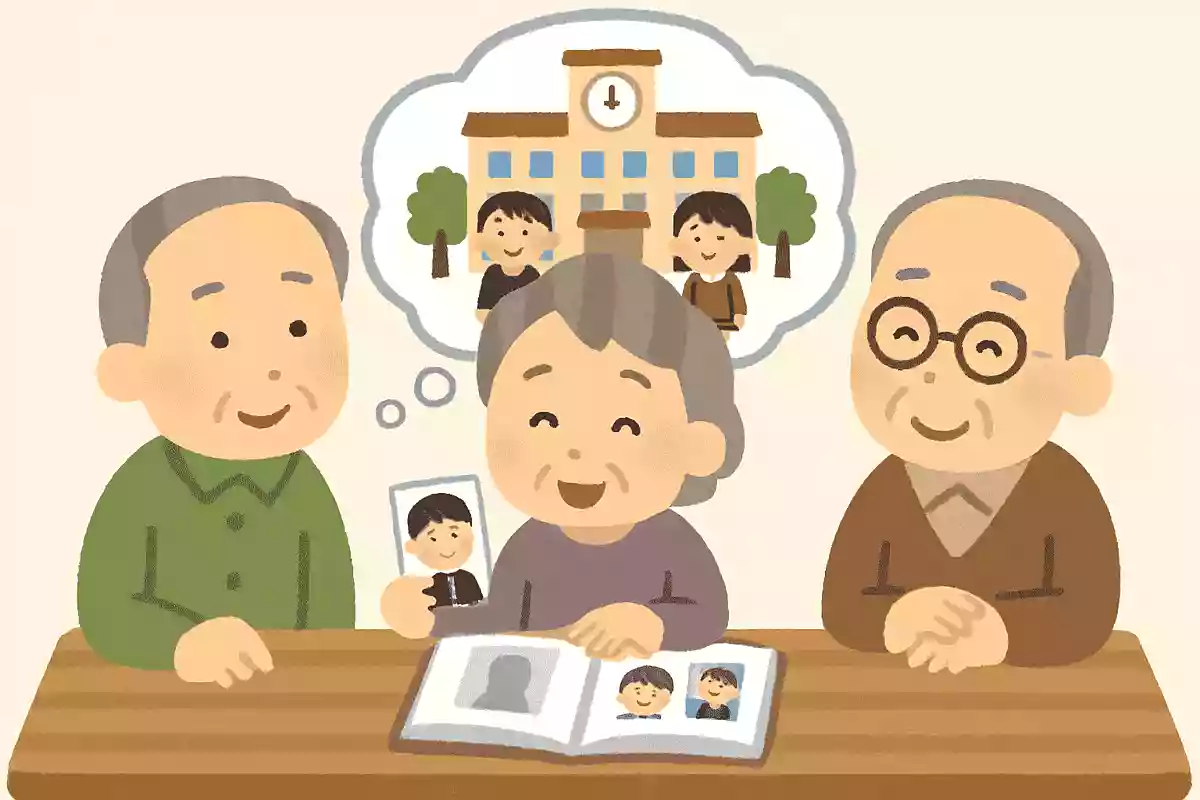
There are some experiences from our school days—like elementary and junior high—that we can no longer have once we become adults.
Older adults, too, likely have memories from their student years.
Some may recall school events like sports days or class trips, or the times they played with friends.
Speaking of school days, the topic of “what you loved” is one we can’t forget.
That “something” might have been a teacher, or it might have been school lunch.
It’s a theme that could lead to lively conversations, such as talking about a classmate you liked.
Reminiscence therapy is one approach that helps stimulate the brain, and it also provides a chance to start conversations with others.
Please make use of it to promote communication as well.

Friendships from my school days
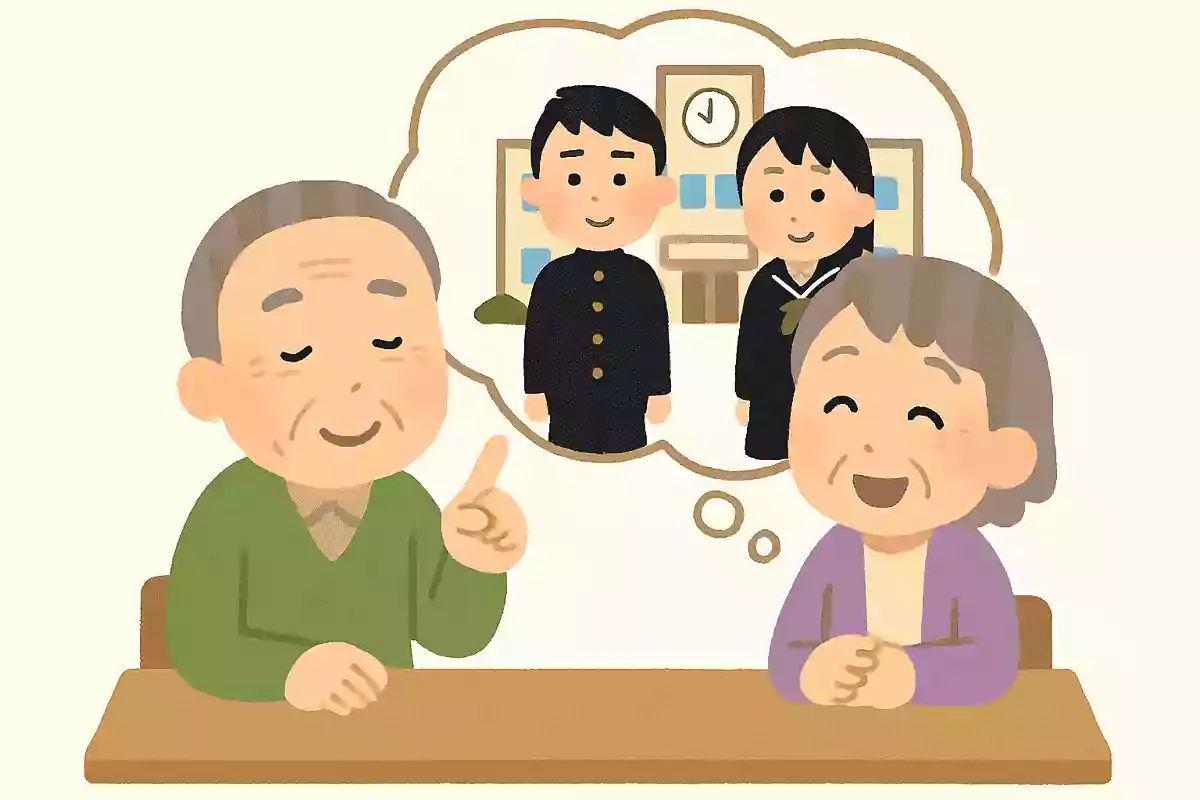
Ask older adults about fun memories, like times they laughed with friends during their school days.
When we say “friends from school days,” that could mean classmates from the same school, or peers from the neighborhood who went to different schools.
Asking what kind of friends they were can help stimulate the brain as they recall details.
It also tends to open up the conversation.
Speaking of school days, topics like “first love” may bring a warm smile to their faces.
Reminiscing about those nostalgic, youthful memories can leave older adults feeling refreshed.
Looking back on the past and interacting with others can also help promote emotional stability.
Travel Memories
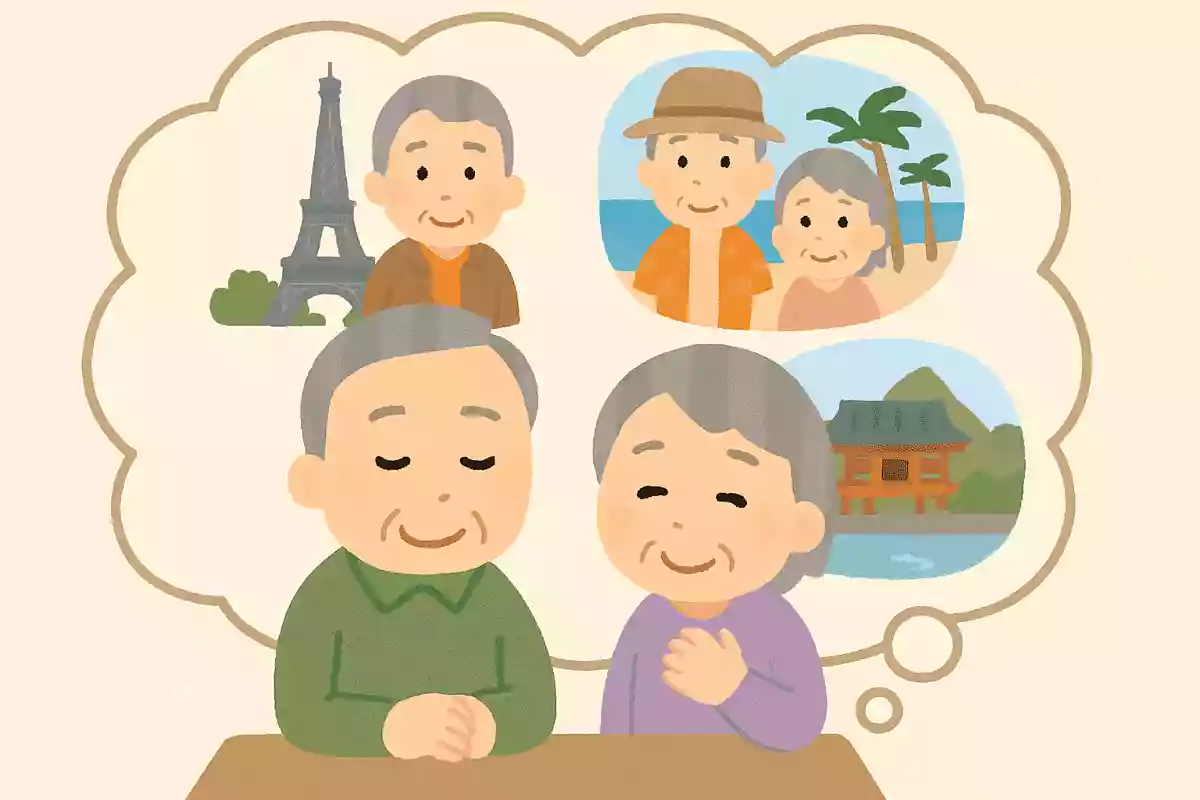
Many older adults probably like traveling, don’t they? The real pleasure of travel is going somewhere different and experiencing things you can’t in everyday life.
It likely brings back memories of trips you took with your family as a child, or journeys you made with your own family after getting married.
Before asking someone to share their stories, it might be helpful to research the places they visited.
Bringing along photos from those trips can make it easier to look back and talk about the past.
What’s more, themes like “travel memories” seem to be easy for older adults to talk about and participate in.
What kind of work were you doing?
This is a conversation theme that brings on a wave of nostalgia as you share the work experiences you’ve built up over many years.
Because work takes up such a large part of our lives, the memories attached to it run deep.
People will likely talk about moments when they felt a sense of fulfillment, times they overcame difficulties, and memories with coworkers.
If someone has worked in the same field, you’ll find common ground; if they’ve done something different, you’ll think, “I didn’t know there was a job like that,” and become curious.
It’s also a great idea to talk about how your appreciation for work changes after retirement.
By sharing your own experiences, you get to know each other’s values, and it can turn into a lively, enjoyable conversation.

The house I lived in when I was little

How about “the house you lived in when you were little” as a conversation topic with older adults? Most people have at least one story about a memorable home from their childhood.
They might recall things like the marks on a pillar where they measured their height with their brothers and sisters in May, or the warm family time spent gathered around the dinner table.
When talking about those nostalgic days, older adults will likely smile softly as they share.
Speaking about the past can help them reflect on their life and feel more positive about who they are now.
Be sure to take your time and really listen to their stories.
Old entertainment
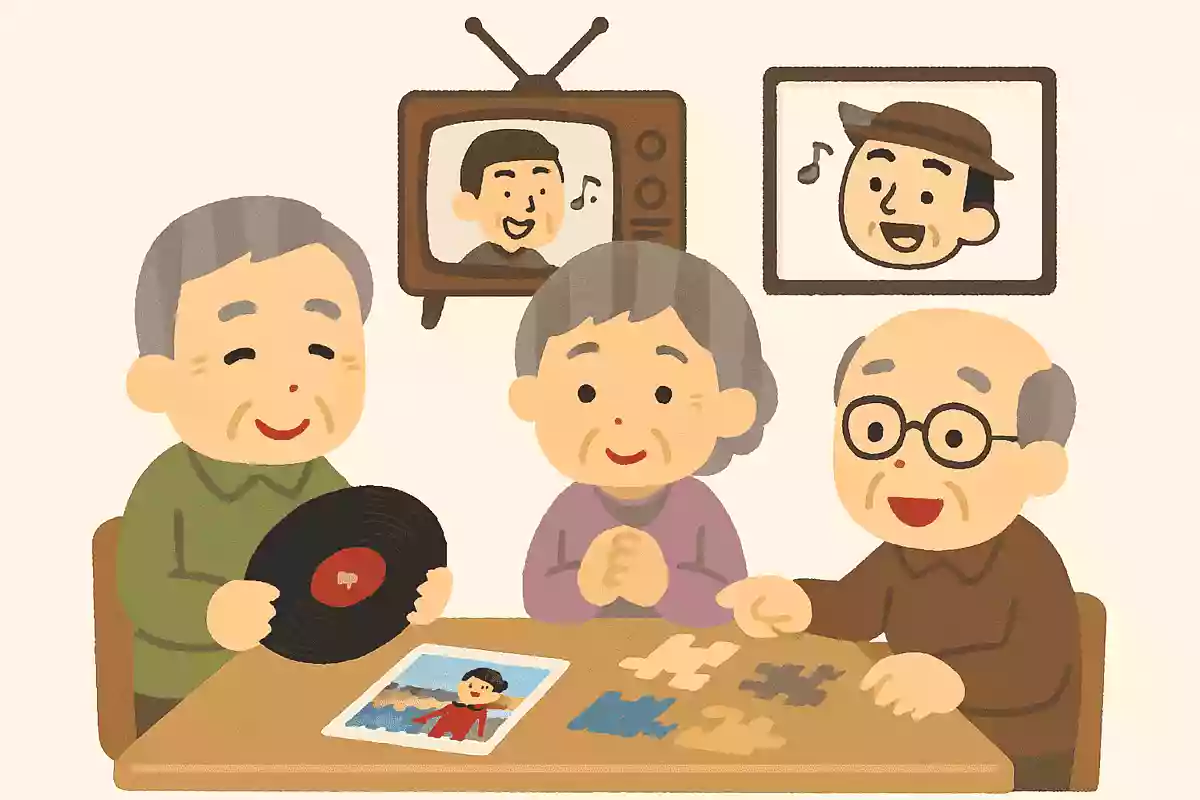
For many older adults, things like movies and sports may be nostalgic forms of entertainment.
It seems that many seniors used to gather at coffee shops to sing together and enjoy watching films.
As for movies, I’ve heard that back then, once you bought a ticket, you could watch as many films as you wanted until you left the theater.
It feels like many of these kinds of entertainments no longer remain in Japan today.
One reason they’ve declined is that many pastimes of that era were designed to spend time luxuriously, which no longer fits modern lifestyles.
Perhaps spending time lavishly was itself part of the enjoyment.
By all means, try asking older people about the wonderful times they spent in the past.
[For Seniors] Ideal for Dementia Prevention: Easy-to-Practice Reminiscence Therapy Topics (21–30)
Something that makes me itch to tell others
The knowledge and experiences we gain over a long life naturally make us want to share them with someone.
Talking about things we’ve learned or life lessons—topics you feel like teaching others—can liven up a conversation.
Sharing things you’ve been eager to tell someone or little nuggets of trivia will spark interest in listeners.
The joy of discovering something new makes your own experiences feel even more valuable.
By discussing questions and curiosities, a lively back-and-forth develops, helping older adults enjoy conversations together.
It’s an idea that expands enjoyment by sharing knowledge, allowing everyone to learn from one another.