

[For Seniors] Ideal for Dementia Prevention: Easy-to-Practice Reminiscence Therapy Topics


In recent years, “reminiscence therapy” has been drawing attention as a way to help prevent dementia in older adults.
Reminiscence therapy is a type of treatment that activates the brain by recalling and talking about one’s past and earlier experiences.
It is believed to help prevent dementia and slow its progression, and is being adopted in elder care facilities such as day service centers.
There are many themes related to the past that can be used when conducting reminiscence therapy.
So this time, we’ll introduce themes that are useful for reminiscence therapy and can be frequently used in caregiving settings.
Please feel free to use them as a reference.
- [For Seniors] Brain Training! Recall Quiz Collection!
- [For Seniors] Conversation starters that help you chat: engaging questions and topics to spark lively talks
- [For Seniors] Fun and Engaging Brain-Training Recreation
- Recreation Activities Effective for Long-Term Care Prevention for Seniors
- [Brain Training for Seniors] Recommended Hand-Play Recreation for Dementia Prevention
- Fun, engaging topics for conversations with older adults!
- Conversations Made Easy! A Collection of Topics That Elderly People Enjoy
- [For Seniors] Great for Brain Training! Question Card Ideas
- [For Seniors] Recommended Even for People with Dementia! Simple Recreational Activities
- [For Seniors] January Trivia Quiz & Fun Facts. Brain training with quizzes about New Year and winter.
- Hand games that liven things up for seniors—also great brain training
- [For Seniors] Recommended Brain Training! Classic Riddles
- Fun Brain Training! Memory Games for Seniors
[For Seniors] Ideal for Dementia Prevention: Easy-to-Practice Reminiscence Therapy Topics (21–30)
What subject were you good at in school?
Not only older adults, but many people probably feel nostalgic about their school days.
A question about a subject you were good at might bring back memories of your teachers, your friends, and what life was like back then.
In your student years, you likely had experiences you can’t quite have as an adult, along with memories of days spent with friends.
Questions like these can also spark lively conversations.
By recalling and talking about those memories—and by listening to others’ stories for inspiration—you can stimulate your brain.
Remembering the energetic version of yourself from that time may also help you reconnect with your true self.
Please make good use of these questions.

An embarrassing story
Embarrassing moments that everyone has experienced at least once are one of the best themes for livening up a conversation.
Those times when you couldn’t help but blush, or episodes that seem funny in hindsight, easily draw empathy from listeners and help get the conversation going.
Sharing stories like “It was tough back then, but now it’s a good memory” can create a warm, relaxed atmosphere.
Tales of mishaps or clumsy mistakes are things we can enjoy talking about more as we get older.
By sharing and laughing together about embarrassing experiences, you can build a stronger sense of closeness.

[For Seniors] Ideal for Dementia Prevention: Easy-to-Practice Reminiscence Therapy Topics (31–40)
Places I went to recently
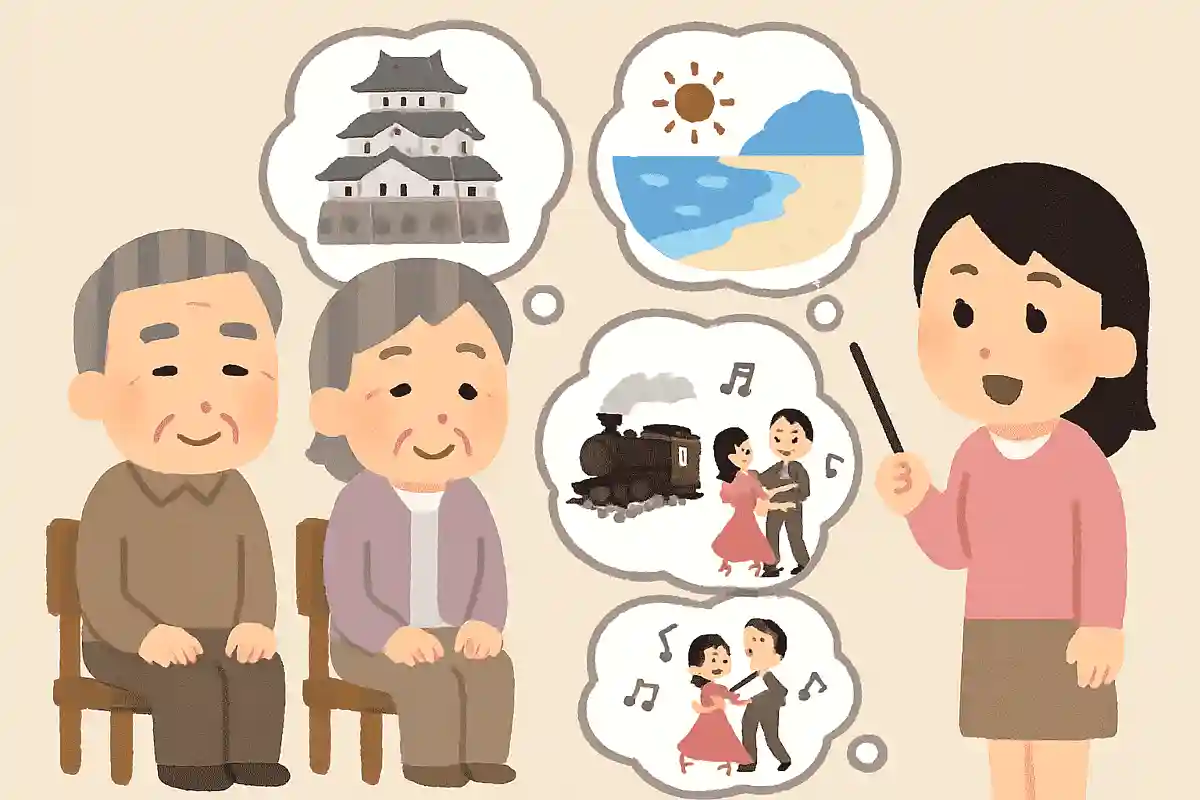
When it comes to topics that help older adults bond and make new discoveries, a great one is places they’ve visited recently.
Looking back on where they’ve been—nearby parks, walking paths, or travel destinations—naturally opens up the conversation.
Sharing discoveries and experiences from those visits makes it easier for others to take interest.
Hearing about where participants have gone lately might even give people ideas for new outings.
Recalling enjoyable moments and memorable scenery from their trips creates a warm atmosphere and can be the spark that brings everyone closer together.
Future joys
Some older adults may now have more free time as their children become independent and may be enjoying their current lives.
For those who have been working, some may have reached retirement and feel hopeful about the time ahead.
Let’s ask older adults what they are looking forward to in the future.
Thinking about present joys can also lead to reflecting on and summarizing one’s life so far.
With more free time, they may also have thoughts about the current times.
They may share feelings of anxiety or concerns as well.
In such cases, please have staff provide support.
Understanding their anxieties and concerns can help us deliver higher-quality services.
Life after retirement
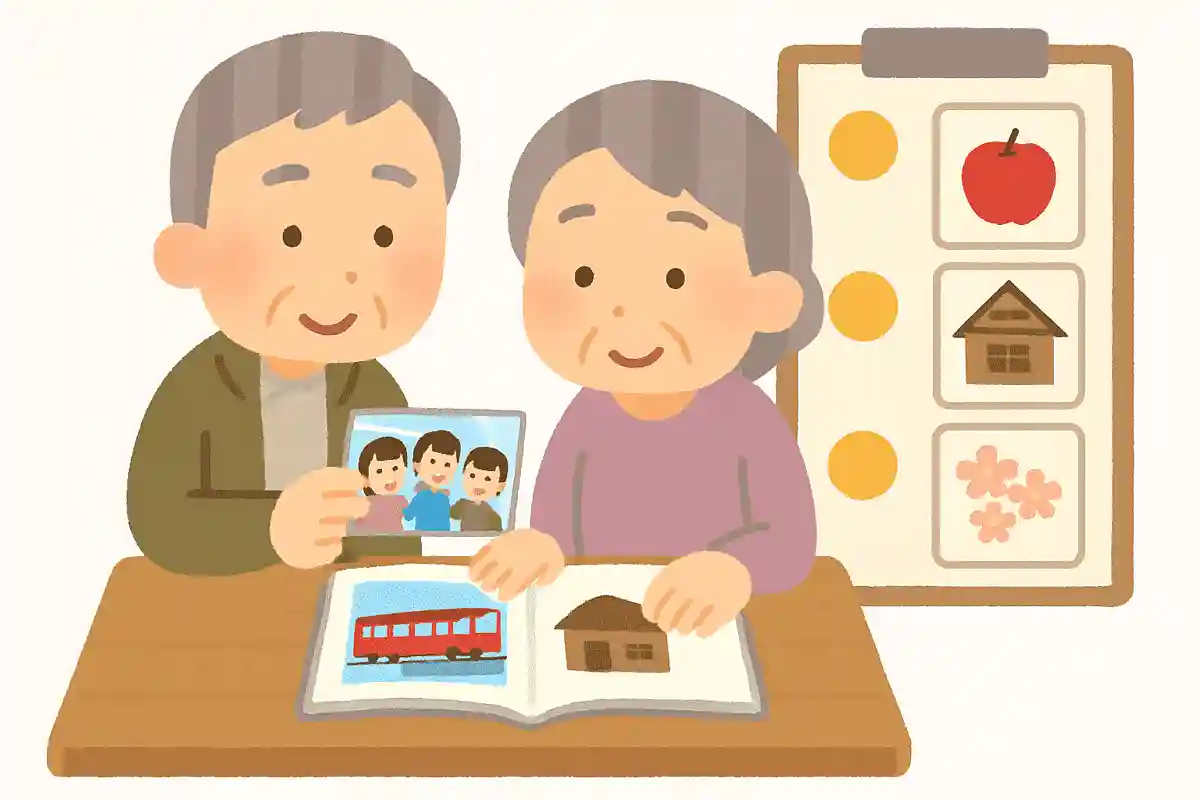
There are likely many elderly people who have supported Japan’s economy for many years.
Now that they’ve reached the age of retirement, let’s ask them about their lives after finishing work.
You might hear family stories, like the birth of a grandchild.
It’s also a good idea to ask about things they couldn’t do while they were working; conversations can naturally expand into their hobbies.
On the other hand, some may feel lonely now that the jobs they held for so long have come to an end.
Please make sure facility staff provide support so that conversations don’t end on a gloomy note.
home environment
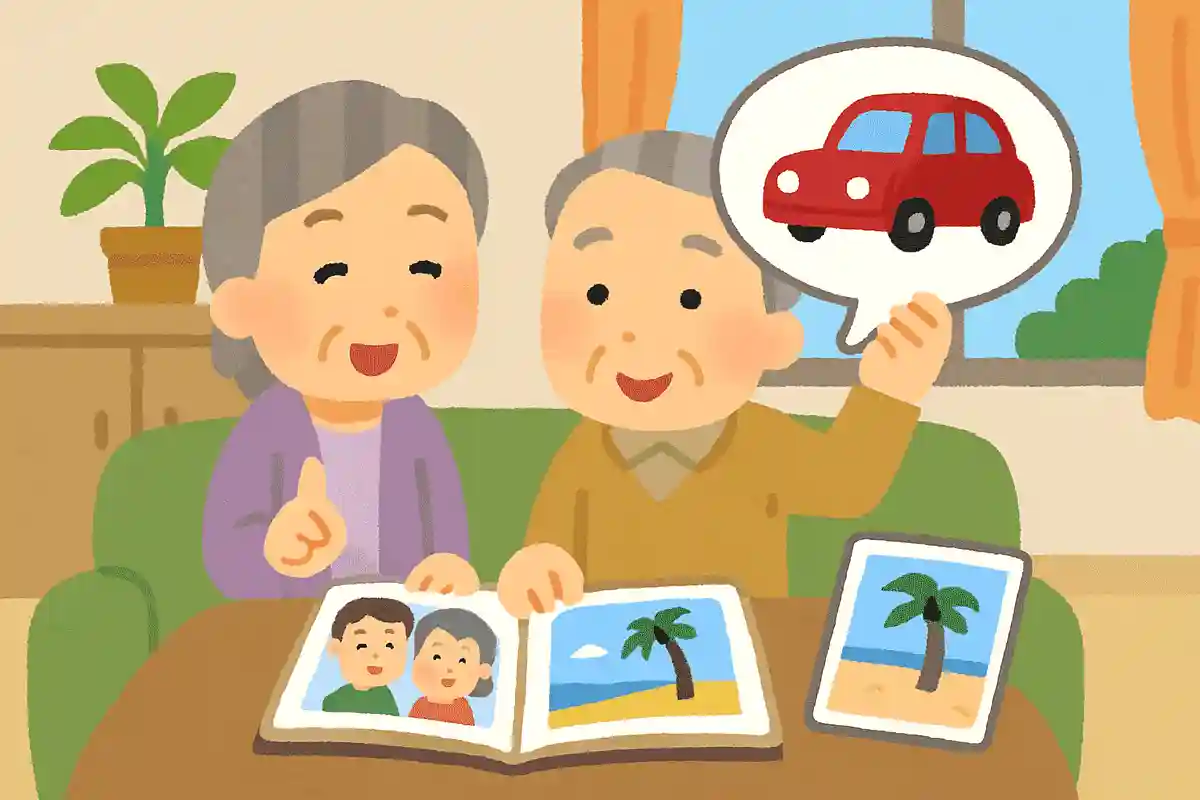
Let’s ask older adults about their families and circumstances when they were young.
Reflecting on their home environment may help them recall family-related memories.
Depending on the era, some may have lived through very difficult times.
However, having someone to talk to allows them to share how they overcame those hardships together.
Of course, they likely also have many enjoyable stories about their families and the regions where they lived.
As opportunities to talk increase, it can also help promote communication.
People with dementia often carry some degree of anxiety.
Talking with others can contribute to emotional stability.
Hobbies
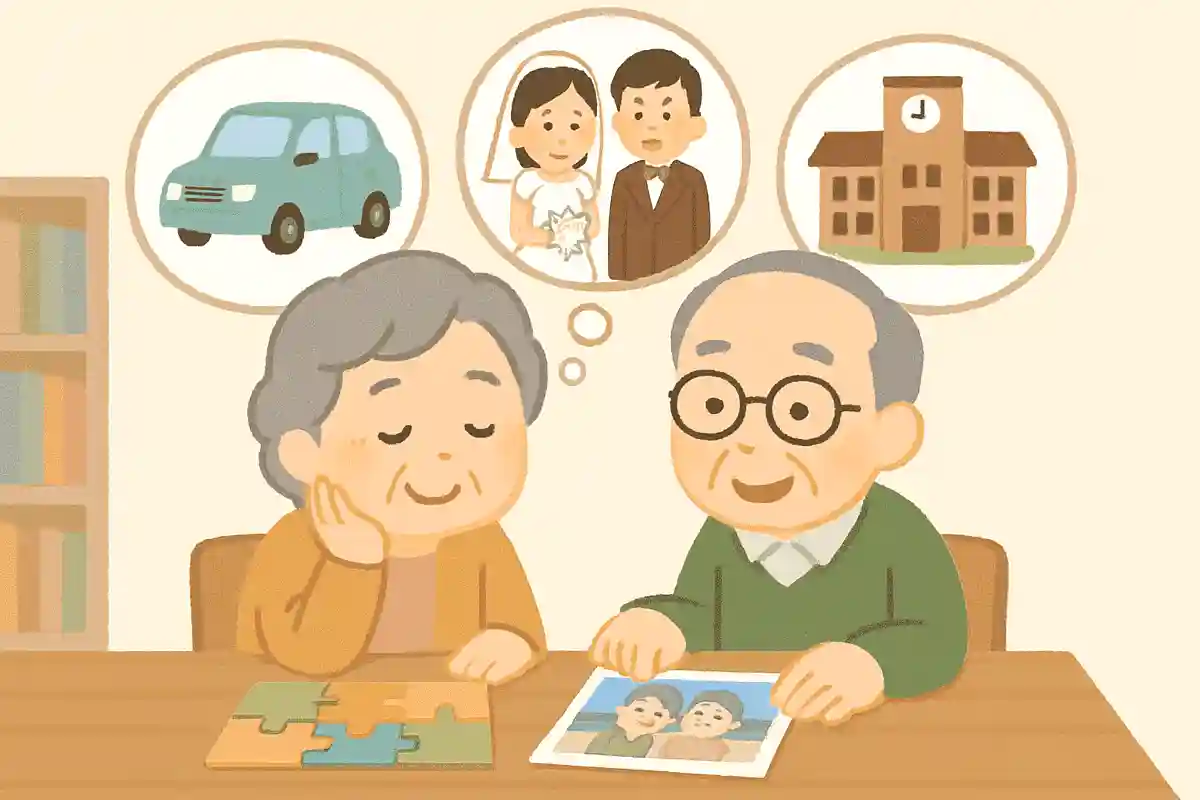
If the theme is “hobbies,” it might be easier for older adults to talk.
Many seniors have hobbies like gardening or reading.
When it’s something you enjoy, it’s easier to chat about, right? Of course, it’s also fine to talk about things you used to enjoy and engaged in.
This theme is also recommended in care facilities as a group reminiscence activity by gathering a few people with the same hobby.
It’s said that many older adults feel anxious.
By sharing common topics like shared hobbies, opportunities for interaction can expand and it can help promote emotional stability.