

[For Seniors] Spring Haiku. Spring Activity

Spring is a season that makes us feel new beginnings.
Warm sunshine and colorful flowers come to mind, don’t they?
It’s also a time when we naturally feel like going outside.
Why not enjoy the arrival of spring through haiku?
Haiku is a uniquely Japanese art that expresses seasonal scenery and feelings in a 5-7-5 rhythm.
Especially for older adults, weaving words while reminiscing about the past can help stimulate the brain.
Why not challenge yourself to joyfully compose haiku while feeling the beauty of spring?
- [For Seniors] Haiku for March: Enjoying a Spring Moment with Famous Verses
- [For seniors] April haiku. Exciting
- [For Seniors] Winter Haiku: Introducing Beautiful Masterpieces by Famous Haiku Poets
- [For Seniors] Spring Songs You'll Want to Hum: Feel the Season with Nostalgic Classics
- [For Seniors] Introducing Whiteboard Activities That Liven Up Spring!
- Spring Event Quiz for Seniors to Enjoy in March
- [For Seniors] Making a March Calendar: Introducing Spring-Themed Motifs and Arrangements
- [For Seniors] Classic spring songs to sing in April: A heartwarming moment with nostalgic children’s songs and kayōkyoku (Japanese popular songs)
- [For Seniors] Interesting spring haiku: introducing verses with striking kigo and unique expressions
- [For seniors] Classic spring kigo: beautiful words that evoke the season
- [For Seniors] Haiku Introductions for May: A Fun Recreation Activity
- [For Seniors] Fun Spring Recreational Activities: A Collection of Games and Play Ideas
- [For Seniors] Haiku for February: A Collection of Famous Verses Depicting the Transition from Winter to Spring
[For Seniors] Spring Haiku. Spring Recreation (31–40)
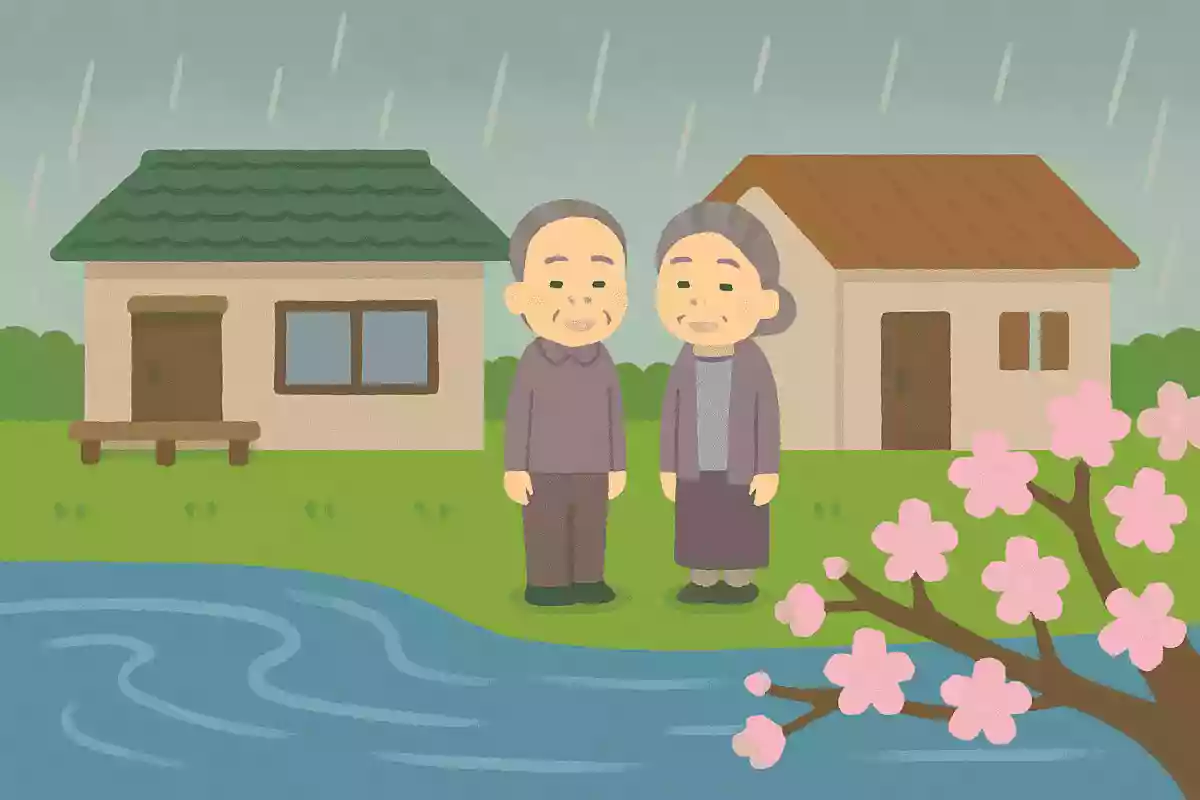
In the early-summer rain, before the great river, two houses.
Yosa Buson was a haiku poet and literati painter active in the mid-Edo period.
It is said that he held deep admiration and respect for Matsuo Basho and traveled through the Tohoku and Kanto regions to actually retrace the journey of The Narrow Road to the Deep North.
The meaning of this verse is that the long May rains continue to fall, the river swells with force, and the greatly enlarged river rushes along violently.
By the riverbank stand two small houses, nestled close together.
It seems to impress upon us that, in the face of the intensifying fury of nature, even a house feels helpless and forlorn.
There are also famous haiku by Matsuo Basho that use samidare—the early-summer rains—as a seasonal word, so it can be enjoyable to compare them.

Gathering the early-summer rains, the Mogami River runs swift.

Matsuo Basho was a haikai poet who was active in the early Edo period.
At the age of 46, as known from The Narrow Road to the Deep North, he traveled from the Tohoku region through Hokuriku to around present-day Gifu Prefecture, composing poems that captured his feelings and the landscapes he encountered.
This verse describes the Mogami River, which flows through what is now Yamagata Prefecture and is considered one of Japan’s three fastest-flowing rivers.
It conveys how, due to continuous rains in May, water poured into the Mogami River, making its current extremely swift and turbulent.
One can almost see the natural scenery shifting with the seasons.
Magoroku engraves the sword’s inscription—how fitting for Boys’ Day.
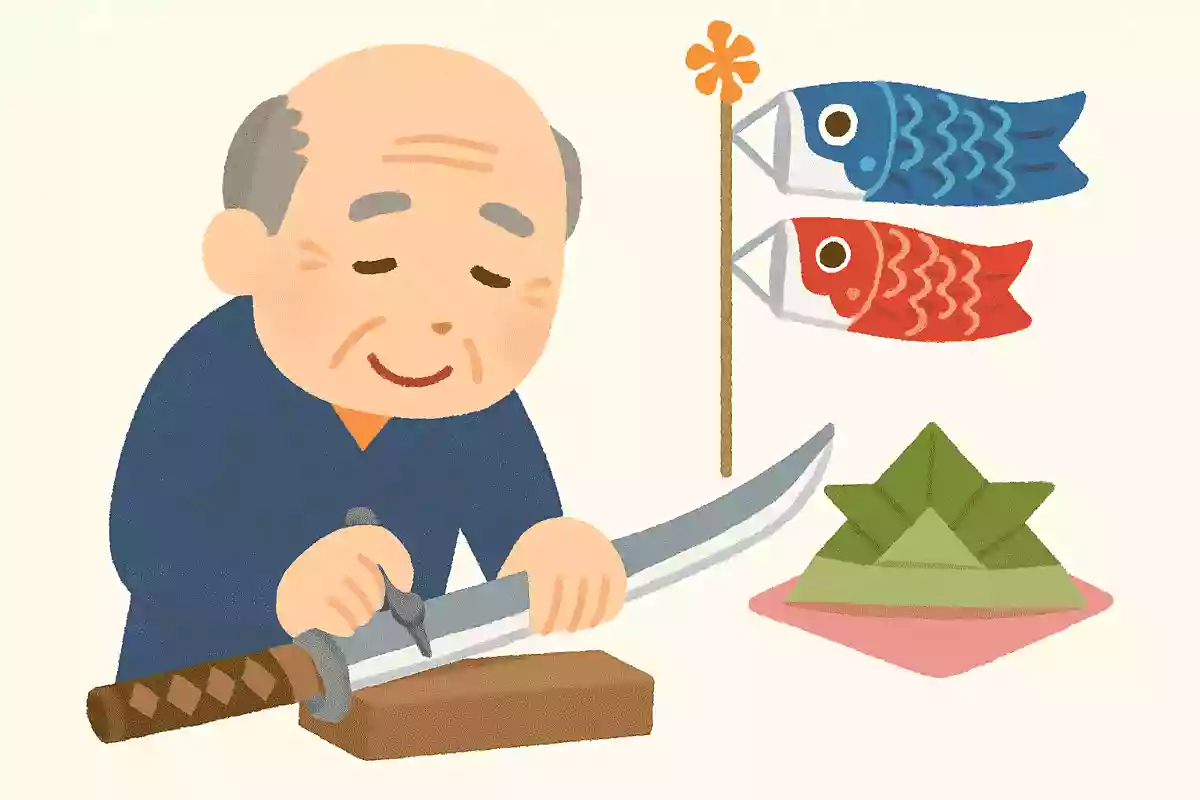
Some families display helmets, swords, and bows and arrows for Tango no Sekku (Boys’ Day), don’t they? The tachi (long sword) that appears in the haiku by Tagawa Horo—“Magoroku engraves his name on the tachi—how fitting for Tango”—has a proper meaning when displayed together with a helmet.
We tend to associate a tachi with an exceptionally sharp blade, but it isn’t displayed as a weapon.
There’s a tradition that evil spirits dislike shiny things, so a beautifully gleaming tachi serves as a talisman to ward them off and protect the household.
It’s a fun bit of trivia you might share with older folks who have grandchildren at home.
By the way, the ‘Magoroku’ in the haiku refers to Magoroku Kanemoto, a swordsmith lineage continuing from the Muromachi period to the present.
The mei is the maker’s signature.

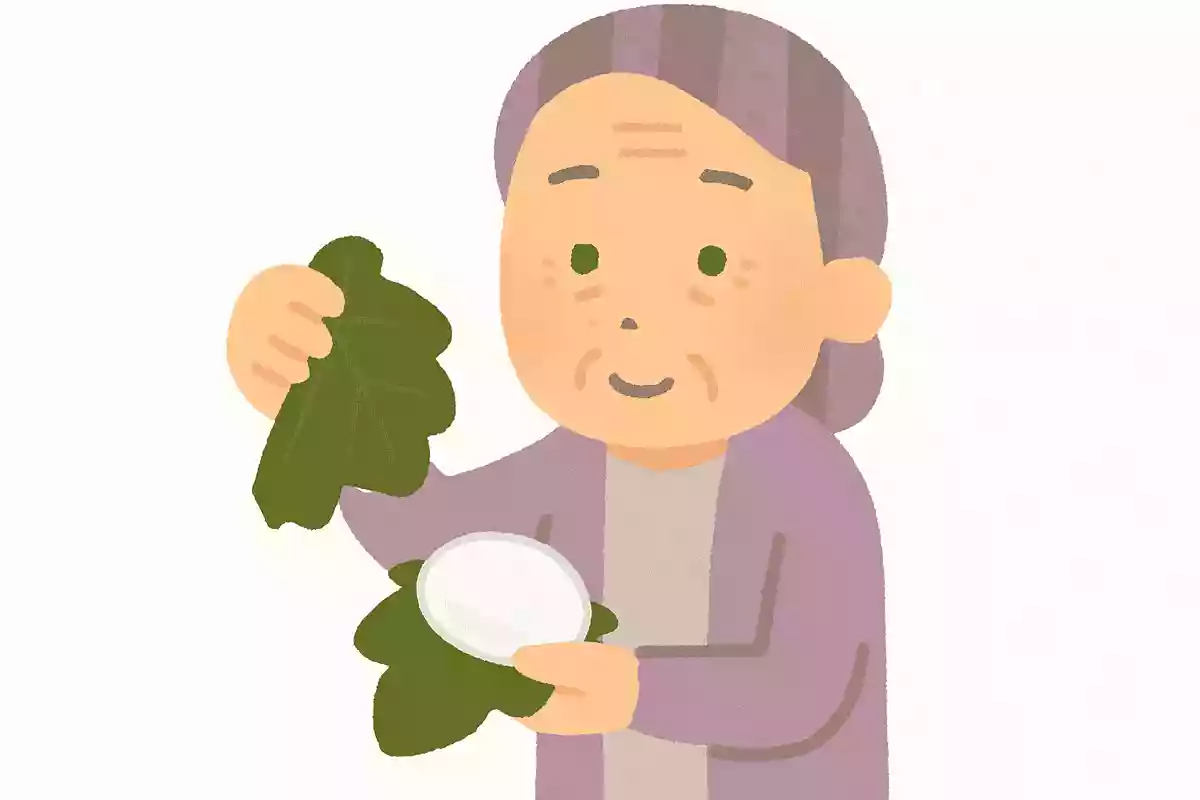
A kashiwa-mochi, its oak-leaf wrapper parting—opened alone.
May 5 is Tango no Sekku, the Boys’ Festival.
There is a custom of eating kashiwa mochi on this day, and it is said to have started in the mid-Edo period.
The oak leaves used for kashiwa mochi do not fall until new buds appear.
Because of this, the new buds are seen as children and the old leaves as parents, and kashiwa mochi came to be eaten as a good-luck charm signifying the prosperity of one’s descendants.
In Seishi Yamaguchi’s haiku, “Folded skin— the kashiwa mochi leaf opens by itself,” he describes how the folded oak leaf opens on its own after the mochi has been eaten.
From this haiku, you can glimpse a small scene from everyday life in May.
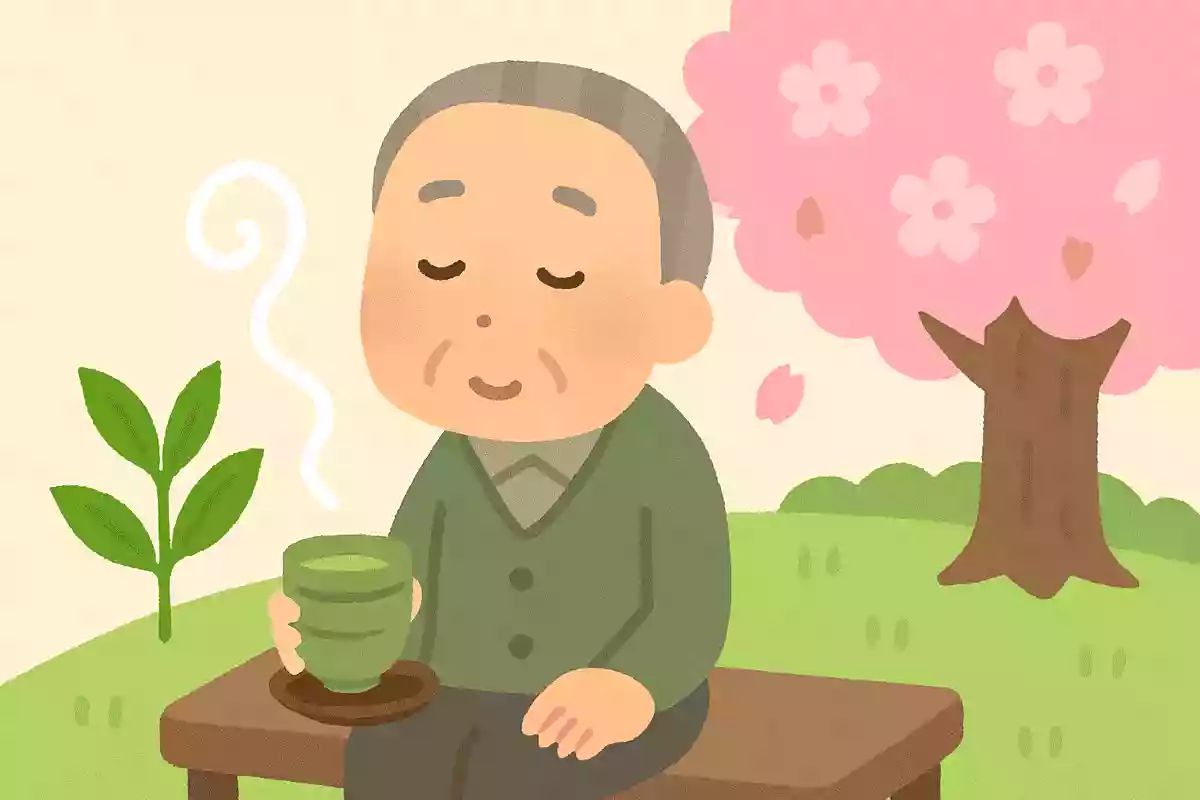
The scent of new tea—my midday drowsiness has turned.
Kobayashi Issa was a haiku poet active in the late Edo period.
He wrote about everyday moments and the emotions shown by common people, crafting haiku that used familiar language and onomatopoeia.
His style seems to have resonated with readers’ hearts, inviting empathy.
“The fragrance of new tea turns my midday drowsiness” is a haiku perfect for the season of fresh tea in May.
May is also the peak time for picking new tea leaves.
After lunch, it’s easy to feel sleepy in the afternoon, isn’t it? But from this haiku, we can sense that the aroma of the new tea has chased that drowsiness away.
[For Seniors] Spring Haiku. Spring Recreation (41–50)
A lone cherry tree in leaf—how lonely—before the temple hall.
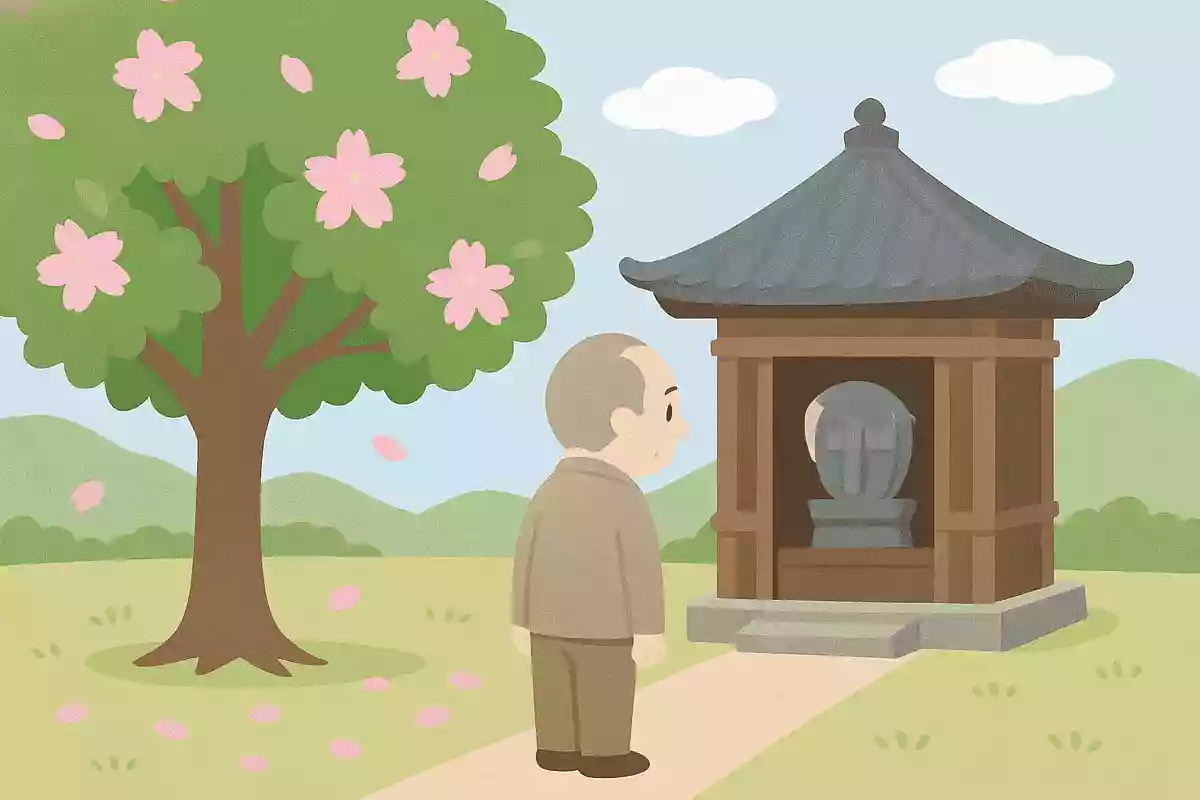
Santō Kigi was a haiku poet of the mid-Edo period.
In the Shimabara pleasure quarter of Kyoto, he established the Fuyā-an (Sleepless Hermitage), where he taught courtesans haikai and calligraphy, contributing to the revitalization of the entertainment district.
He later joined his close friend Yosa Buson in forming the Sankasha.
The hazakura described in this verse is a summer seasonal word, expressing a sense of regret that the cherry blossoms in front of the hall have fallen and the trees have become “leaf-cherry.” Yet even if the scene seems lonely after the delicate petals have dropped, there is also an aspect in which the fresh, vigorous green leaves convey a sense of clarity and strength.
Perhaps the Japanese feeling for cherry blossoms is indeed something special.
Cherry leaves now— a traveler who stays two nights in Nara
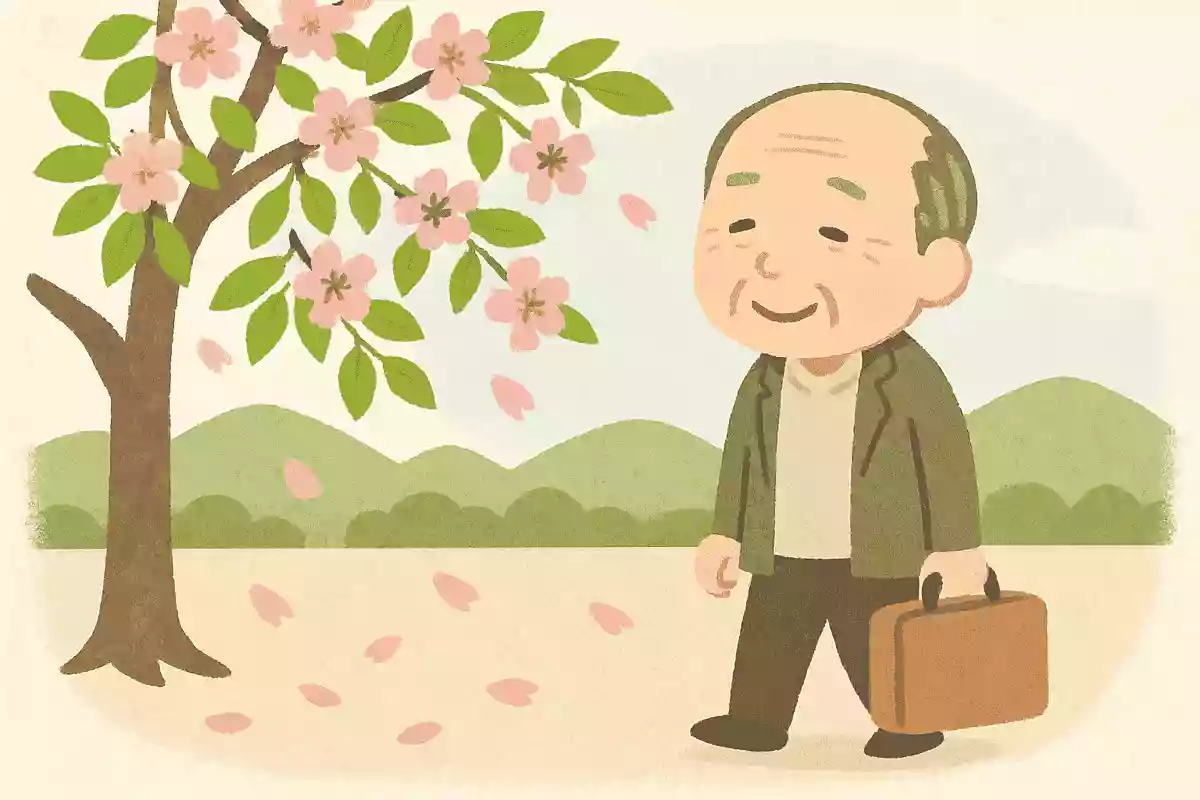
This haiku was composed by Yosa Buson.
He was a haiku poet of the mid-Edo period, and many older people have likely heard his name at least once.
The sight of flowers beginning to fall and fresh green leaves emerging has a beauty different from that of cherry blossoms in full bloom.
From the fresh green of the cherry tree, one can feel both the strong vitality that the leaves will grow even larger and a certain refined charm.
Unlike the peak season for cherry blossoms, the hazakura period—when the trees are leafing out—is not crowded.
That makes it possible to enjoy hazakura at a leisurely pace.
The haiku reminds us that there are beautiful landscapes appropriate to each season.