

Masterpieces by Franz Schubert: Sparkling classical works left by the King of Song. Recommended classical music.


Franz Schubert, the Austrian composer hailed as the “King of Song” for leaving behind more than 600 lieder, including masterpieces such as Erlkönig and Ave Maria.
Schubert is known not only for his many celebrated songs, but also for his wide-ranging output in solo piano works, symphonies, and chamber music.
In this article, we’ve handpicked Schubert’s most popular pieces as well as hidden gems beloved by devoted classical-music aficionados.
We present a selection of sparkling works infused with the spirit of a musician who composed throughout his life.
- Robert Schumann | Introduction to his famous and representative works
- [Masterpiece Classics] A special showcase of gem-like masterpieces so beautiful they’ll move you to tears
- A poignant classic masterpiece. Recommended classical music.
- Cool classical masterpieces. Recommended classical music.
- Pick up Beethoven’s famous and representative works!
- Mendelssohn’s Masterpieces | Popular Classical Music
- Johann Strauss II | Introducing Famous and Classic Pieces
- Masterpieces by Gustav Mahler. Popular classical music.
- A masterpiece by Franz Liszt. Popular classical music.
- Masterpieces of the Romantic Era: A sweeping introduction to soul-stirring, celebrated gems!
- Classical Masterpieces: Recommended Works You Should Hear at Least Once
- Carl Maria von Weber Popular Song Rankings [2026]
- [Haydn] Pick up famous and representative pieces!
Masterpieces by Franz Schubert: Sparkling Classical Works Left by the King of Song. Recommended Classical Music (71–80)
Four Impromptus, Op. 142, D. 935 No. 1 in F minorFranz Schubert

Schubert’s late solo piano work, Four Impromptus Op.
142.
No.
1 is cast in sonata form without a development section.
The opening, in a minor key and beginning with a sudden descending figure, conveys the piece’s unease and darkness.
However, the middle section modulates to the major and drastically changes the mood, creating a dreamlike atmosphere as if a single ray of light were pouring into the darkness.
The anxious main theme from the opening then returns, and the piece ultimately sinks back into sadness, yet overall it remains a calm and beautiful work.

Four Impromptus, Op. 90, D. 899 No. 1 in C minorFranz Schubert
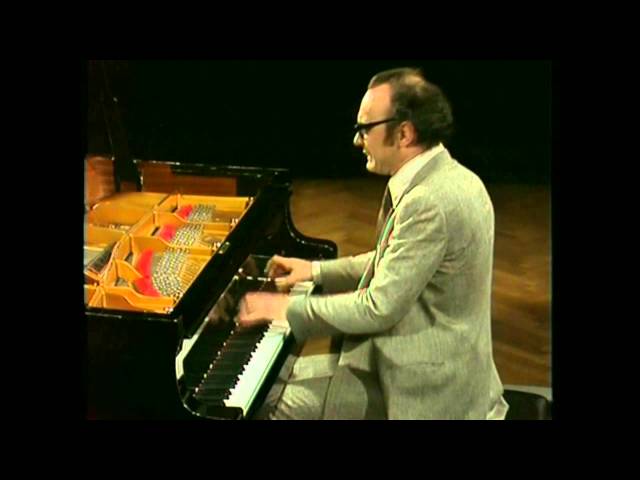
Composed in 1827 by Franz Schubert, a Viennese-born Austrian composer, this work is distinguished by its profound emotional expression and meticulous structure.
It possesses a majestic yet introspective atmosphere, with resonant, weighty harmonies and strikingly beautiful melodies.
Richly imbued with Schubert’s characteristic lyricism, it serves as an important bridge between the Classical and Romantic eras and remains beloved by many pianists today.
It’s a highly recommended piece not only for those interested in classical music, but also for any music fan seeking a beautiful, heart-stirring melody.
Four Impromptus, Op. 90, D. 899 No. 3 in G-flat majorFranz Schubert

Franz Schubert’s Four Impromptus, Op.
90, are piano solos composed in the final period of his life.
Among them, No.
3 is a very gentle and beautiful piece.
Perhaps because it was written a year before his death, its melody carries a certain poignancy, as if he had suddenly become aware of his own mortality.
A beautiful tune unfolds over the ceaseless right-hand arpeggios, moving calmly forward like a softly flowing brook.
Schubert adored Vienna.
When you listen to this piece, doesn’t it somehow evoke the Danube winding through Vienna’s forests and streets?
Wanderer’s Nightsong II, D 768Franz Schubert

Franz Schubert, the king of song, left behind more than 600 lieder.
This work is a serene song based on a poem by Goethe, depicting the stillness of mountain peaks, trees, and little birds, and is regarded as symbolizing peace in life and the quiet after death.
Schubert’s delicate music beautifully expresses the poem’s inner tranquility.
Composed in 1822 and published in 1827, the piece has continued to be loved by many for its beauty and simplicity.
It’s recommended not only for those interested in classical music but also for anyone seeking calm and peace of mind.
Mass No. 6 in E-flat major, D 950, No. 6 “Agnus Dei”Franz Schubert

Schubert’s Mass No.
6, completed in the year of his death by composer Franz Schubert, who was active in early 19th-century Vienna, includes the movement Agnus Dei.
Its progression—from a dark tonality gradually toward brightness—conveys an atmosphere that seems to reflect the composer’s state of mind as he faced death.
Schubert’s uniquely beautiful melodies intertwine with the prayerful words pleading for God’s mercy, and the work’s profound spirituality and musical beauty stand out.
It is a highly recommended piece not only for those familiar with classical music, but also for anyone seeking music that resonates deeply with the heart.
Symphony No. 2 in B-flat majorFranz Schubert
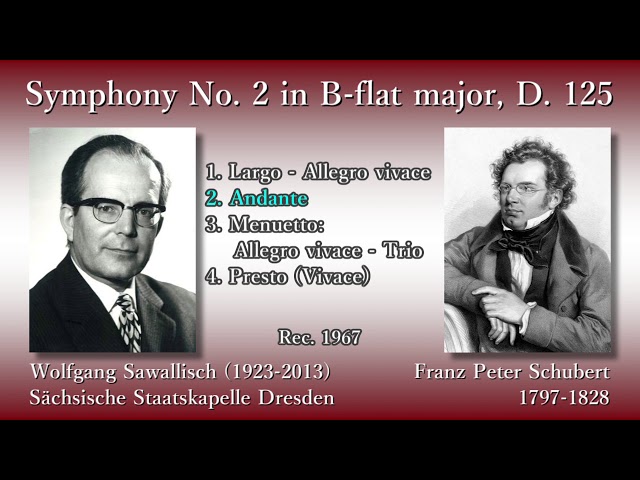
Composed between 1814 and 1815, when Schubert was 17 to 18 years old.
Though it shows some instability, it is a work that demonstrates Schubert’s prodigious talent in completing such a piece as a teenager, and it conveys a youthful brilliance and a sense of hope for the future.
Symphony No. 3 in D major, D 200Franz Schubert
Composed in 1815, it is a symphony in D major.
It consists of four movements, all written in a major key.
As it is still an early symphony, there are many passages reminiscent of Haydn; nevertheless, Schubert’s individuality is beginning to emerge, and it is said that the Allegretto of the second movement uses the 14th-century German folk song “Maria’s Lullaby” as its theme.