

Masterpieces by Franz Schubert: Sparkling classical works left by the King of Song. Recommended classical music.


Franz Schubert, the Austrian composer hailed as the “King of Song” for leaving behind more than 600 lieder, including masterpieces such as Erlkönig and Ave Maria.
Schubert is known not only for his many celebrated songs, but also for his wide-ranging output in solo piano works, symphonies, and chamber music.
In this article, we’ve handpicked Schubert’s most popular pieces as well as hidden gems beloved by devoted classical-music aficionados.
We present a selection of sparkling works infused with the spirit of a musician who composed throughout his life.
- Robert Schumann | Introduction to his famous and representative works
- [Masterpiece Classics] A special showcase of gem-like masterpieces so beautiful they’ll move you to tears
- A poignant classic masterpiece. Recommended classical music.
- Cool classical masterpieces. Recommended classical music.
- Pick up Beethoven’s famous and representative works!
- Mendelssohn’s Masterpieces | Popular Classical Music
- Johann Strauss II | Introducing Famous and Classic Pieces
- Masterpieces by Gustav Mahler. Popular classical music.
- A masterpiece by Franz Liszt. Popular classical music.
- Masterpieces of the Romantic Era: A sweeping introduction to soul-stirring, celebrated gems!
- Classical Masterpieces: Recommended Works You Should Hear at Least Once
- Carl Maria von Weber Popular Song Rankings [2026]
- [Haydn] Pick up famous and representative pieces!
Masterpieces by Franz Schubert: Exquisite classical works left by the King of Song. Recommended classical music (21–30)
Piano Sonata No. 21 in B-flat major, D. 960Franz Schubert
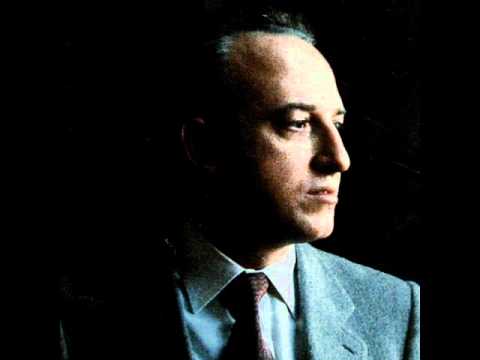
This is a four-movement piano sonata composed by the popular and highly regarded Austrian composer Franz Schubert.
While Schubert often wrote in a classical style, in his later years he began composing piano sonatas imbued with romanticism and rich emotion, influencing composers such as Robert Schumann and Johannes Brahms.
Though illness limited his life to just 31 years, Schubert left over a thousand works, and this piece conveys a purified, sublime beauty that seems to reflect an awareness of death at the time of its composition.
Wild Rose D257Franz Schubert

It is a work published in 1821.
This song sets to music Goethe’s poem “Heidenröslein” (“Wild Rose”), written around 1799.
It is said that the poem reflects Goethe’s remorse for betraying the daughter of a pastor with whom he had fallen in love and for breaking her heart.
In fact, not only Schubert but also many other composers—such as Beethoven, Schumann, and Brahms—set this poem to music.
Among them, Schubert’s Heidenröslein is especially beloved for its bright, charming, and approachable character.
Piano Sonata No. 20 in A major, D. 959Franz Schubert

Following Nos.
18 and 19, this is one of the most popular of Austrian composer Franz Schubert’s piano sonatas.
Composed in 1828, during Schubert’s brief 31-year life, it is the second of the three piano sonatas he wrote in a single burst just two months before his death, despite his declining health.
Written in A major, it conveys a singing brightness.
Only the second movement is in a minor key—specifically F-sharp minor—beginning with a simple, desolate character.
However, partway through it expands into a fierce, wide-ranging development that provides striking contrast.
Though a beautiful piano sonata, it also contains numerous intense passages that seem to reflect an awareness of approaching death; this balance has made it a favored repertoire piece among pianists to this day.
It is a Schubert piano sonata you will want to listen to through to the end.
Piano Quintet in A major, Op. 114, D. 667 “Trout”Franz Schubert

It carries the subtitle “The Trout.” This stems from the fourth movement being a set of variations on Schubert’s song “Die Forelle” (The Trout).
While the usual instrumentation for a piano quintet is piano, two violins, viola, and cello, Schubert’s scoring is different: piano, violin (one), viola, cello, and double bass.
All five movements are written in major keys.
Fantasia in C major, Op. 15, D. 760 “Wanderer”Franz Schubert

Composed in 1822 and published the following year, 1823, this work is commonly known as the “Wanderer Fantasy” or simply the “Wanderer.” Unlike many of Schubert’s pieces, which feature bright and gentle melodies, it is unusual in its quite intense sections and its demand for advanced technique.
There is even an anecdote that Schubert himself could not master it and exclaimed, “Let the devil play a piece like this!”
String Quintet in C major, D 956Franz Schubert

This is a famous piece by Franz Schubert written for an unusual instrumentation.
String ensembles are often scored for two violins, viola, and cello, but in this piece there are two cellos and one viola.
Unlike the standard Mozart or Brahms configuration of two violas and one cello, this results in a richer, lower-register texture.
The second movement is also written in a major key, and despite its serene character, it has been performed at solemn occasions—for example, at the funeral of the renowned conductor Karl Böhm.
It is said that the pianist Arthur Rubinstein also wished for this second movement to be played at his own funeral.
Fantasia in C major, D.760 “Wanderer”Franz Schubert

The Fantasia in C major, D 760 “Wanderer,” is a piano piece composed by Franz Schubert and published in 1822, commonly known as the “Wanderer Fantasy.” There is an anecdote that Schubert himself, frustrated at being unable to play the piece well, remarked, “Let the devil play such a piece.”