Franz Schubert, the Austrian composer hailed as the “King of Song” for leaving behind more than 600 lieder, including masterpieces such as Erlkönig and Ave Maria.
Schubert is known not only for his many celebrated songs, but also for his wide-ranging output in solo piano works, symphonies, and chamber music.
In this article, we’ve handpicked Schubert’s most popular pieces as well as hidden gems beloved by devoted classical-music aficionados.
We present a selection of sparkling works infused with the spirit of a musician who composed throughout his life.
Franz Schubert’s Masterpieces: Exquisite Classical Works Left by the King of Song. Recommended Classical Music (1–10)
Erlkönig Op. 1 D328Franz Schubert
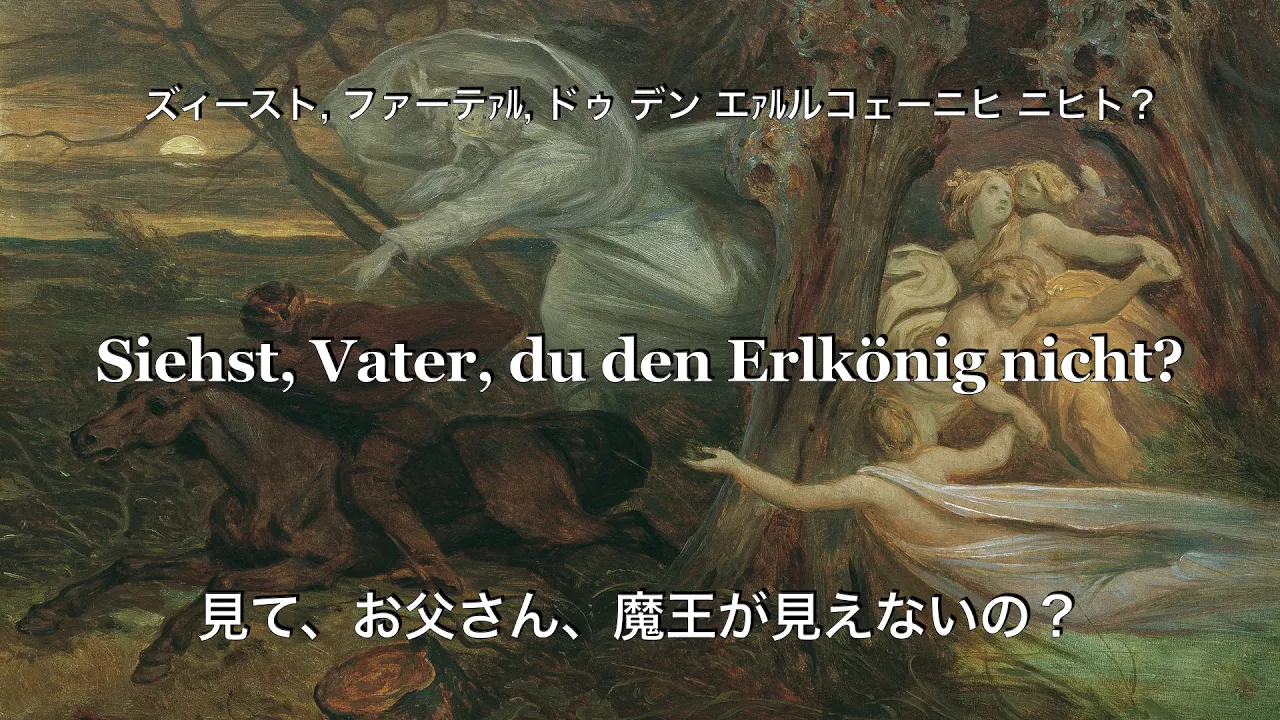
The Demon King [Schubert Version] (Erlkönig) [With Lyrics, Japanese Translation, and Katakana]
Erlkönig is an art song composed by Schubert when he was 18.
Inspired by the poem Erlkönig by the German poet Goethe, he set it to music.
It’s a famous piece that even appears in junior high school music textbooks, so many of you have likely heard it.
A father, cradling his ailing son, gallops through the night on horseback, while the Erlking persistently whispers demonic temptations; in the end, the son dies.
The piano’s repeated notes evoke the horse’s gallop and the mounting anxiety and fear of the father and child.
Be sure to listen while reading a parallel translation of the lyrics.
Ellen’s Song No. 3, Op. 52-6, D.839 (Ave Maria)Franz Schubert
Classical Masterpiece: Schubert – “Ave Maria” (Ellen’s Song No. 3)
This is one of Schubert’s very late songs, composed in 1825.
It is beloved as one of the world’s three great Ave Maria pieces and is also known as “Schubert’s Ave Maria.” Among Schubert’s songs, it is one of the most popular works.
Because the lyrics include the words “Ave Maria,” it is often mistaken for a religious piece; however, it was originally set to the German translation of Walter Scott’s poem The Lady of the Lake and is one of the songs from the song cycle of the same name.
Moments Musicaux, Op. 94, D. 780, No. 3 in F minorFranz Schubert
Schubert / Moments Musicaux No. 3 in F minor, D 780, Op. 94 / Performance: Akira Imai
Moments Musicaux is a collection of six piano pieces composed between 1823 and 1828 and published in 1828.
Among them, No.
3 is particularly famous; it had already been included in another collection published in 1823 under the title “Air Russe (Russian-style Song).” Today, it is a very popular piece frequently used in commercials and other media, so many people have likely heard it.
Piano Sonata No. 21 in B-flat major, D. 960 – I. Molto moderatoFranz Schubert
Schubert: Piano Sonata No. 21 in B-flat major, D 960 – I. Movement / Akira Imai
Opening with a serene melody, this work is a masterpiece Franz Schubert left in September 1828.
The distinctive atmosphere created by the gentle opening theme and the bass trills draws the listener into the depths of the music.
In the development of the melody, three different keys are handled with remarkable skill, producing a wealth of expression and color.
Although an instrumental piece, it possesses a narrative expressiveness, seamlessly blending contrasting elements such as tranquility and unease, brightness and shadow.
Compared to orchestral works or operas, its structure is relatively accessible, making it an ideal piece for those wishing to experience the charm of classical music.
Piano Quintet in A major, Op. 114, D. 667 “Trout” — IV. Theme and Variations: AndantinoFranz Schubert
Piano Quintet in A major, Op. 114, D. 667 “The Trout” — Fourth Movement: Theme and Variations…
A chamber music masterpiece performed by the uniquely scored ensemble of piano, violin, viola, cello, and double bass.
Composed in 1819 at the request of a wealthy local mining engineer, this work captivates with its bright, sprightly melodies and colorful variations.
In five variations, it vividly depicts a tale of a trout swimming in a clear stream and the crafty fisherman trying to catch it.
Conversational interplay that deftly draws out each instrument’s character, along with tonal shifts from minor to major, grips the listener’s heart.
A familiar classic also known from JR East’s Joban Line Iwaki Station departure melody and TV Asahi’s “Matsuko & Ariyoshi’s Angry New Party.” A piece I can wholeheartedly recommend to anyone interested in chamber music or piano music.
Symphony No. 7 “Unfinished” in B minor, Movement I: Allegro moderatoFranz Schubert
Schubert Symphony No. 7 “Unfinished” in B minor, Movement I
Beginning with a mysterious low-string introduction, this masterpiece by Franz Schubert features a plaintive theme sung by oboe and clarinet that pierces the heart.
Composed starting in 1822 as a token of gratitude for an honorary diploma from the Graz Music Society, it has continued to captivate audiences with its profound emotion and distinctive structure.
Employing the uncommon key of B minor, its beautiful melodies, woven from exquisitely balanced orchestral sonorities, leave a deep impression on listeners.
It played a central role in the 1933 film “Unfinished Symphony” and has been used in the Japanese tokusatsu drama “Ultraman 80,” among other appearances, ensuring its allure lives on in many forms.
From quiet meditation to a grand climax, it is a recommended piece for music lovers who wish to savor a rich range of emotional expression.
Symphony No. 7 “Unfinished” in B minor, Movement II: Andante con motoFranz Schubert
Schubert: Symphony No. 7 “Unfinished” in B minor, Second Movement
Comprising only two movements, this work is distinguished by a majestic orchestral sonority that leaves a profound lyricism and serene afterglow.
Begun in 1822 as a token of gratitude to the Graz Music Society, its slow movement features a gentle theme ushered in by the soft timbres of horn and bassoon.
The melody—where sweet repose intertwines with solitary anguish—deeply moves the listener.
Since its Vienna premiere in December 1865, the piece has been cherished by many music lovers for its inward emotional expression, achieved through deft shifts in harmony and dialogues between instruments.
It is a recommended choice for those who wish to immerse themselves in a calm, meditative atmosphere or savor the richly expressive world of Romantic music.