

Masterpieces by Franz Schubert: Sparkling classical works left by the King of Song. Recommended classical music.


Franz Schubert, the Austrian composer hailed as the “King of Song” for leaving behind more than 600 lieder, including masterpieces such as Erlkönig and Ave Maria.
Schubert is known not only for his many celebrated songs, but also for his wide-ranging output in solo piano works, symphonies, and chamber music.
In this article, we’ve handpicked Schubert’s most popular pieces as well as hidden gems beloved by devoted classical-music aficionados.
We present a selection of sparkling works infused with the spirit of a musician who composed throughout his life.
- Robert Schumann | Introduction to his famous and representative works
- [Masterpiece Classics] A special showcase of gem-like masterpieces so beautiful they’ll move you to tears
- A poignant classic masterpiece. Recommended classical music.
- Cool classical masterpieces. Recommended classical music.
- Pick up Beethoven’s famous and representative works!
- Mendelssohn’s Masterpieces | Popular Classical Music
- Johann Strauss II | Introducing Famous and Classic Pieces
- Masterpieces by Gustav Mahler. Popular classical music.
- A masterpiece by Franz Liszt. Popular classical music.
- Masterpieces of the Romantic Era: A sweeping introduction to soul-stirring, celebrated gems!
- Classical Masterpieces: Recommended Works You Should Hear at Least Once
- Carl Maria von Weber Popular Song Rankings [2026]
- [Haydn] Pick up famous and representative pieces!
Franz Schubert’s Masterpieces: Exquisite Classical Works Left by the King of Lieder. Recommended Classical Music (41–50)
Swan Song D957/965a No. 4 “Serenade”Franz Schubert

Composed in 1828, it is commonly known as Schubert’s Serenade.
This piece is the fourth song in Schubert’s song cycle Schwanengesang and is one of the most famous among his lieder.
Schwanengesang consists of 14 songs set to poems by three poets—Rellstab, Heine, and Seidl.
This song, Serenade, is based on a poem by Rellstab.
To Music, Op. 88 No. 4, D 547Franz Schubert
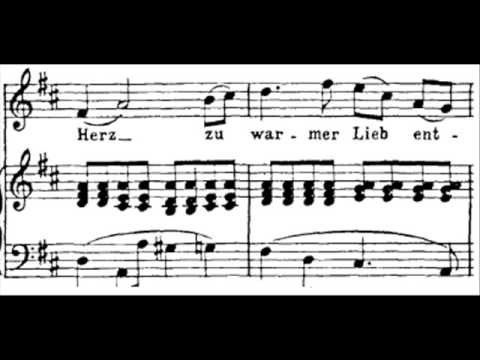
Composed in 1817, it is a song with piano accompaniment.
It sets to music a poem by his friend Ritter von Schober.
In D major and cut time (2/2), the music is written with clarity, yet it employs effects that make the voice and piano sound as if they are in dialogue.
It is regarded as a masterpiece that directly expresses Schubert’s love and gratitude for music.
Wanderer FantasyFranz Schubert

Franz Schubert, a great composer who represents Romantic music.
While many great composers are often blessed with instrumental talent from a young age, Schubert could hardly be called a virtuoso.
Even so, he did write highly virtuosic works, and among them the most famous is the Wanderer Fantasy.
It is said that even Schubert himself found this piece difficult to play and would often grumble, “Let the devil play a piece like this.”

Military March No. 1Franz Schubert

From its bold, fanfare-like opening, a grand world for piano four hands unfolds.
Inheriting Vienna’s illustrious military-band tradition, powerful and brilliant melodies intertwine with sparkling harmonies in exquisite balance.
Franz Schubert composed this work in 1822 with performances among friends in mind.
Frequently chosen as background music for films and documentaries, it captivates with the tension and dynamic expression of two pianos in dialogue.
Performed by four hands in perfect sync, it is a highly recommended piece for pianists seeking a richer musical experience.
Moments Musicaux No. 3Franz Schubert

Although this piece has been used as a railway departure melody, many people are surprisingly unfamiliar with it.
Schubert, often called the King of Song, also displayed remarkable originality in his solo piano works, and this piece is one that represents that very Schubert.
Three Military Marches, D.733 Op.51 No. 1Franz Schubert

Franz Schubert’s masterpiece Three Military Marches, frequently performed by orchestras and wind ensembles, is a collection notable for its dazzling, RPG-like melodies accompanied by fanfare figures.
Among them, the especially recommended piece is the first of the Three Military Marches.
As the opening work of the set, it is in 2/4 time and D major, and its brilliant melody exudes a sense of uplift, evoking the beginning of an adventure or journey.
Impromptus, Op. 90 No. 3 in G-flat majorFranz Schubert

Four Impromptus, Op.
90 No.
3, created by Franz Schubert, a leading composer of the Romantic era.
It is a work marked by a gentle yet deeply expressive melody.
Schubert’s characteristically broad, flowing melodic lines and the ceaseless arpeggiated accompaniment invite the listener into a peaceful, contented state.
In the middle section, repeated modulations drive an adventurous exploration of harmony, adding depth and variety to the musical character.
Possessing the qualities of a “song” that needs no words, this impromptu, like Schubert’s lieder, is a masterpiece filled with rich expressiveness and beauty.