

[For Seniors] Summer Haiku: Ideas to Feel the Season

Summer is a season that brings back nostalgic memories for many older adults.
Why not casually capture a moment of summer in a haiku?
Haiku is a uniquely Japanese form of poetry made with just 17 sounds.
The key is not to overthink it—simply and honestly express the seasonal scenery before you and the feelings that arise in your heart.
By setting it to the rhythm of 5-7-5, the scene comes across even more vividly.
In this article, we introduce simple and approachable haiku with a summer theme.
We hope you’ll enjoy the fun of infusing words with the spirit of the season.
- Recommended summer songs for people in their 90s: A collection of Showa-era summer tunes [2026]
- [For Seniors] Exciting Summer Wall Decoration Ideas
- [For Seniors] Haiku Selections for July: Ideas to Feel the Summer
- [For Seniors] June Haiku Showcase: Ideas to Feel Summer
- [For Seniors] Summer kigo: A list of famous seasonal words to enjoy while savoring their elegance
- [Elderly] Haiku with the theme of August: Introducing famous verses
- [For Seniors] Interesting spring haiku: introducing verses with striking kigo and unique expressions
- [For Seniors] Famous Haiku for December: Masterpieces Depicting Winter Scenes and Year-End Moments, Plus Tips on How to Compose Them
- [For Seniors] Chuckle-Worthy Silver Senryu: Tips for Writing Them Humorously and Example Verses
- [For Seniors] Haiku Introductions for May: A Fun Recreation Activity
- [For Seniors] Spring Haiku. Spring Activity
- [For Seniors] Haiku for September: Introducing Verses Perfect for Autumn
- [For Seniors] Handmade Summer Greeting Cards: A Collection of Lovely Summer Motifs
[For Seniors] Summer Haiku: Ideas to Feel Summer (11–20)
Eighth month of the lunar calendar—looking up at a rainbow, guardian of the late riceDakotsu Iida
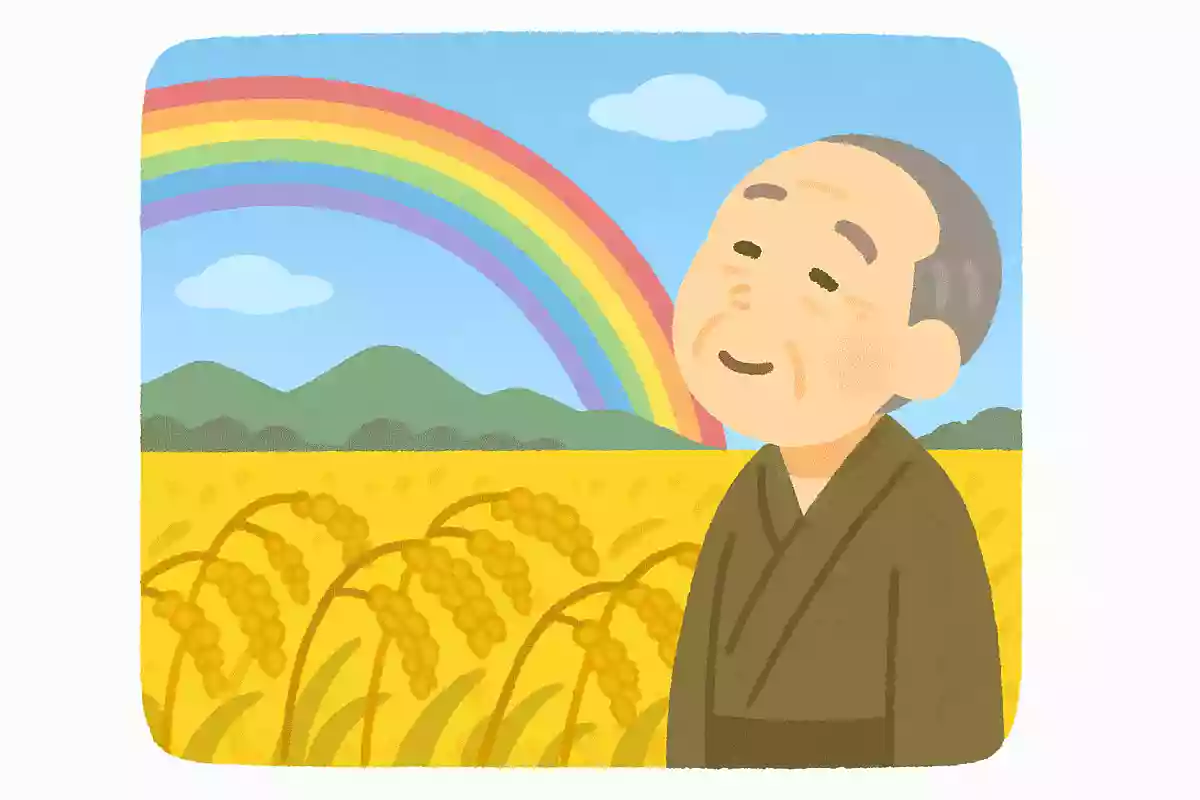
Takotsu Iida grew up in an environment where he was exposed to many literary works and haiku from childhood.
This is said to have formed the foundation of the haiku he would later compose.
His haiku, many of which follow the traditional practice of depicting nature, were highly acclaimed as carrying on the style dating back to Matsuo Bashō.
Except for his student years, he spent his entire life in his birthplace of Yamanashi.
As a result, he often wrote poems that depict the rich natural scenery of satoyama and fields.
From the poem “In the lunar August, gazing up at a rainbow, guardian of the late rice,” we can sense the scene of autumn when the rice is ripening, with someone keeping watch to protect the paddies from birds and beasts, as well as the presence and demeanor of the watcher.

How beautiful—the Milky Way seen through a hole in the shoji.

This haiku is said to have been composed by Kobayashi Issa on the night of Tanabata while he was bedridden.
No longer able to walk about freely, Issa happened one night to look up at the sky through a tear in the shoji paper, and there he saw the Milky Way shining.
The image of Issa, moved by the beauty of the Milky Way seen through the hole in the shoji, and the contrast between the vast celestial river and the narrow, limited view through that small opening, both enhance the haiku’s appeal.
It can also be seen as an expression of Issa’s resolve, even in the midst of illness, to perceive the beauty of the wide world through the smallest of gaps.

In this transient world, my wife is pure—like the summer moon.
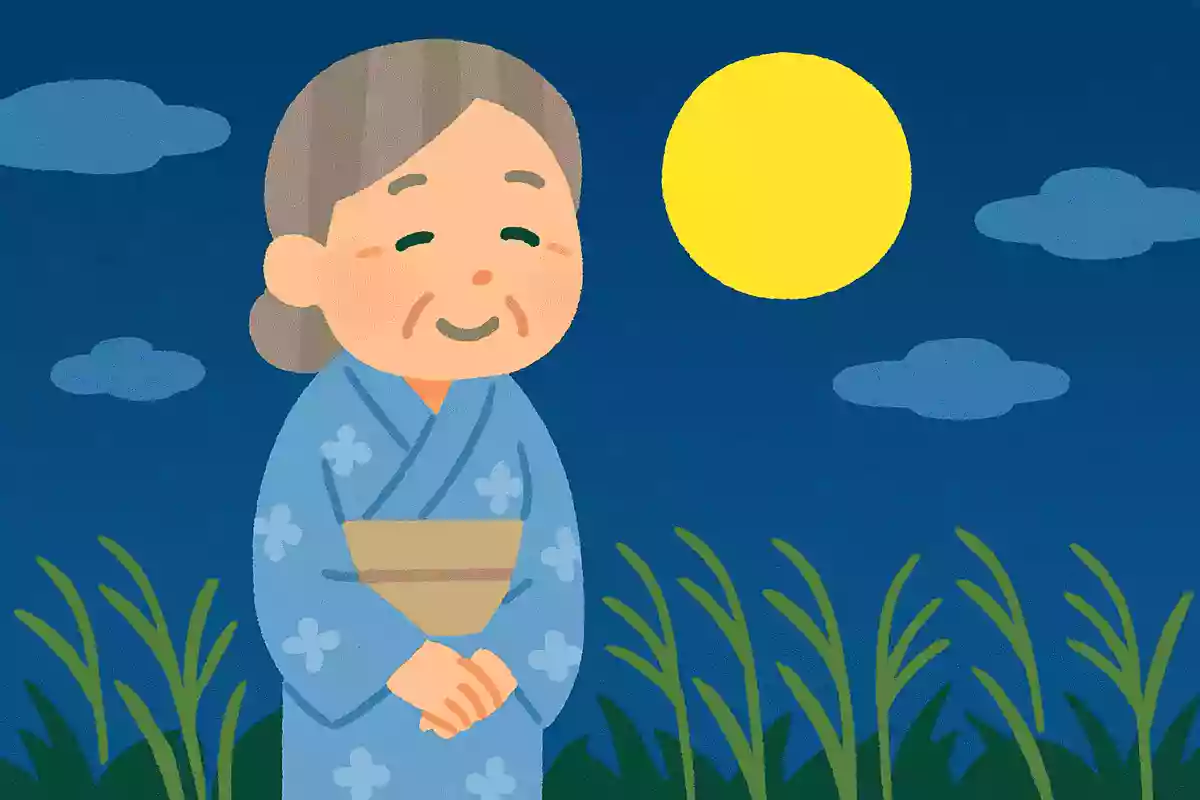
Genseki Hara was a haiku poet from Shimane Prefecture who was active from the Meiji to the Showa era.
This verse overlays the brightness of the summer moon with the purity of his wife.
“Utsushi yo ni” means “in this present world,” and “tsuma wa kiyokeshi” means “my wife is pure and beautiful.” “Summer moon” is a seasonal word (kigo) that symbolizes the beauty of the moon shining in a clear night sky.
Hara was a poet who delicately depicted the beauty of nature and human emotion.
In this poem, his deep affection for his wife harmonizes with the quiet radiance of the summer moon, unfolding a calm and gentle scene.
So delightful, and yet in the end so sad—such is the cormorant-fishing boat.

Ukai is a traditional fishing method that uses cormorants to catch river fish such as sweetfish (ayu).
The sight of torchlight illuminating the boats floating in the dark night is strikingly picturesque.
It is said that Bashō composed this haiku after witnessing ukai on the Nagara River in Gifu Prefecture.
Rendered in a modern way, the poem means: “Watching ukai is deeply engaging and evocative, yet afterward a sadness wells up.” It is a celebrated haiku that captures, in just sixteen characters, a shift in feeling from being moved to becoming wistful—the loneliness when something so captivating ends, and the pathos of the cormorants ceaselessly catching fish at their master’s command.
Do they gather, or do they scatter—fireflies over the river?

Natsume Soseki is a novelist famous for works such as I Am a Cat and one of the great masters of modern Japanese literature.
Deeply influenced by Masaoka Shiki, whom he met during his university years, Soseki studied haiku.
In this poem, expressions like “katamaru ya” (“they cluster”) and “chiru ya” (“they scatter”) evoke fireflies that seem to gather into a single mass of light, only to burst apart in the next moment.
This fleeting, delicate beauty unfolds over a night river, capturing a single instant on a summer night—a poem that superbly renders nature in words.
If I turn my palm, the dance goes on

Speaking of summer, it’s Bon Odori.
It’s a richly evocative festival that fits both the lunar and the solar calendar seasons.
The circle of dancers moves gently, and the moment palms flip outward, the dance suddenly comes alive.
You can almost see the little children in their yukata.
The way the feet move, the turn of the palms—letting your gaze linger on such details is exactly the joy of haiku’s close-up.
The author of this verse, Aono Seihō, was known—sharing the same initial S—alongside Yamaguchi Seishi, Takano Sujū, and Mizuhara Shūōshi as one of the “Four S of Hototogisu.” He studied under Takahama Kyoshi.
[For Seniors] Summer Haiku: Ideas to Feel the Summer (21–30)
Tanabata—meeting someone while my hair is still wet.
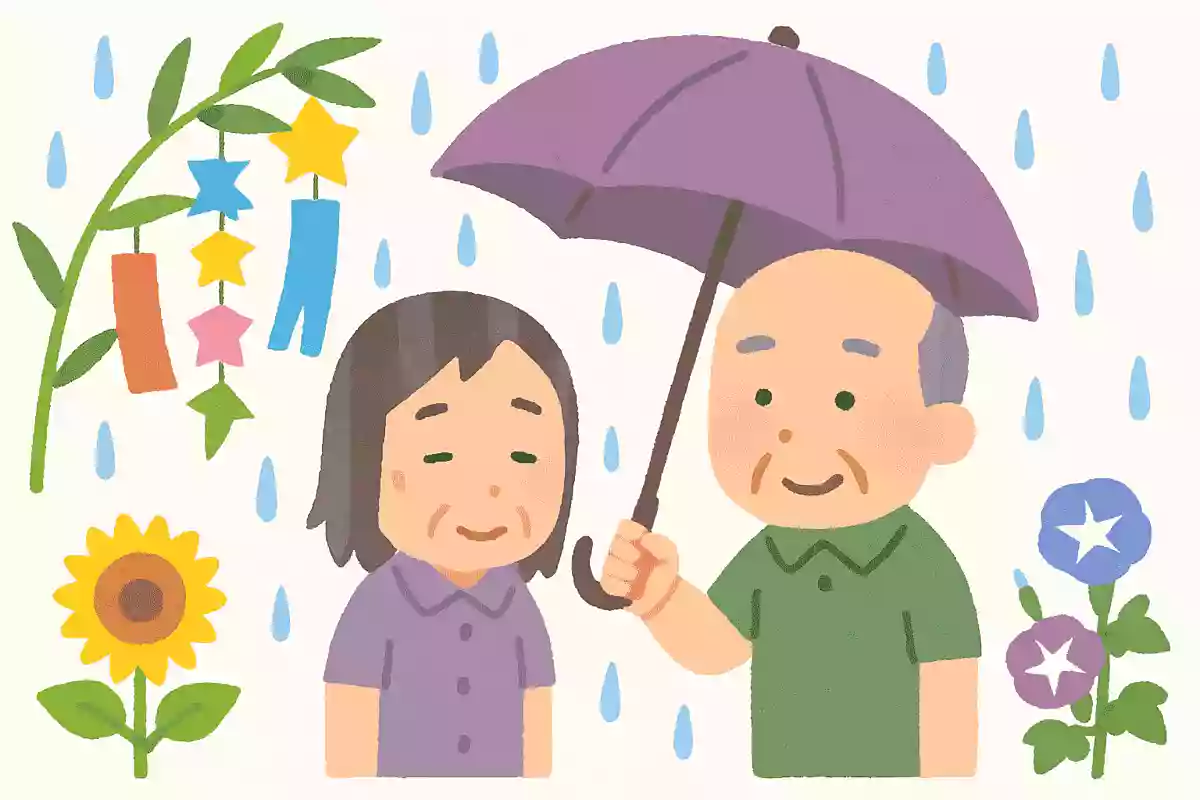
Whether it was for the Tanabata festival or not, this verse conveys the lively rush of summer: taking a bath earlier than usual and hurriedly getting ready to go out.
The word used is only “person,” but could the other party be the man she secretly longs for? If we read it as a poem of a faint romance, it’s positively heart-fluttering.
Takako Hashimoto began composing haiku under Hisa Jo Sugita, and later studied with Kyoshi and Seishi.
Her poem that lends a modern hue to a classically elegant scene—“When the summer lightning comes from the north, I look to the north”—remains beloved today.