

[For Seniors] Summer Haiku: Ideas to Feel the Season

Summer is a season that brings back nostalgic memories for many older adults.
Why not casually capture a moment of summer in a haiku?
Haiku is a uniquely Japanese form of poetry made with just 17 sounds.
The key is not to overthink it—simply and honestly express the seasonal scenery before you and the feelings that arise in your heart.
By setting it to the rhythm of 5-7-5, the scene comes across even more vividly.
In this article, we introduce simple and approachable haiku with a summer theme.
We hope you’ll enjoy the fun of infusing words with the spirit of the season.
- Recommended summer songs for people in their 90s: A collection of Showa-era summer tunes [2026]
- [For Seniors] Exciting Summer Wall Decoration Ideas
- [For Seniors] Haiku Selections for July: Ideas to Feel the Summer
- [For Seniors] June Haiku Showcase: Ideas to Feel Summer
- [For Seniors] Summer kigo: A list of famous seasonal words to enjoy while savoring their elegance
- [Elderly] Haiku with the theme of August: Introducing famous verses
- [For Seniors] Interesting spring haiku: introducing verses with striking kigo and unique expressions
- [For Seniors] Famous Haiku for December: Masterpieces Depicting Winter Scenes and Year-End Moments, Plus Tips on How to Compose Them
- [For Seniors] Chuckle-Worthy Silver Senryu: Tips for Writing Them Humorously and Example Verses
- [For Seniors] Haiku Introductions for May: A Fun Recreation Activity
- [For Seniors] Spring Haiku. Spring Activity
- [For Seniors] Haiku for September: Introducing Verses Perfect for Autumn
- [For Seniors] Handmade Summer Greeting Cards: A Collection of Lovely Summer Motifs
[For Seniors] Summer Haiku: Ideas to Feel the Summer (21–30)
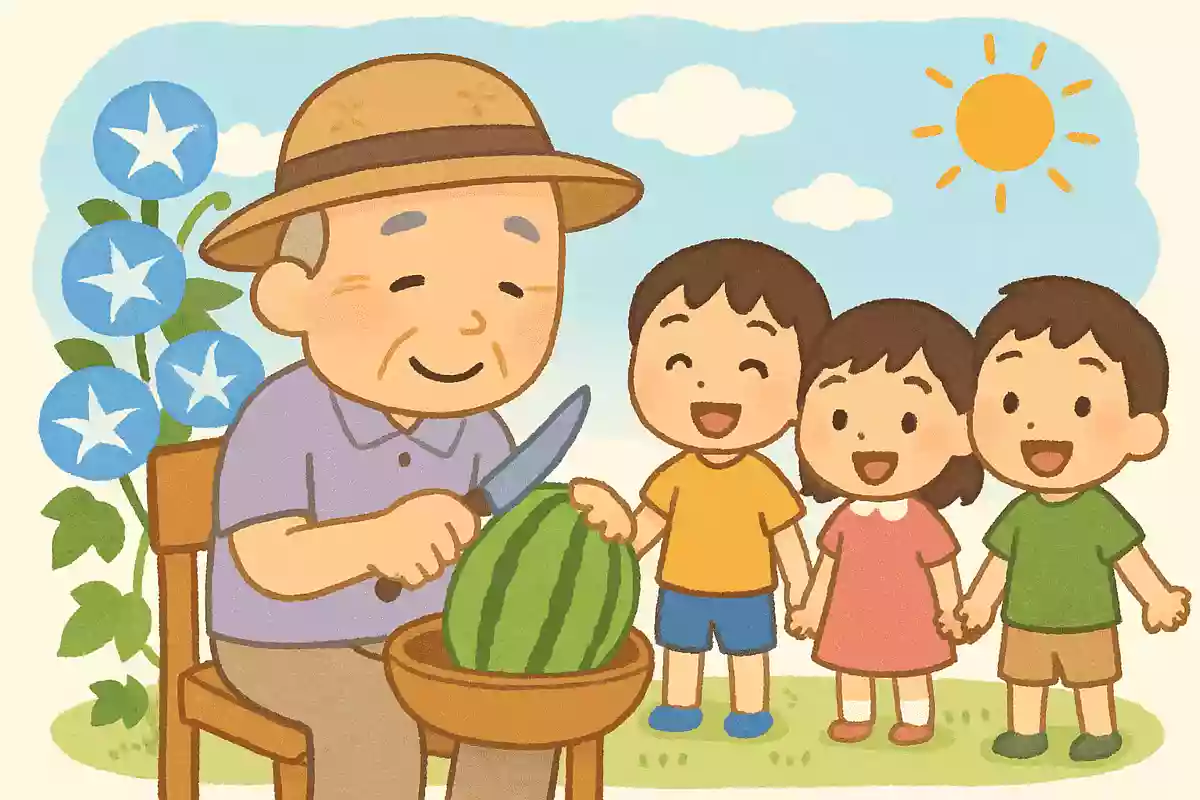
Children, the daylilies have bloomed—let’s peel a melon.
Matsuo Basho is one of the greatest haikai masters in Japanese history and is known worldwide.
From Basho’s haiku, “Children, the bindweed blooms—let’s peel the melons,” we can picture lively children.
It feels as if Basho is calling out to the children who have been eagerly awaiting the time when the daytime bindweed blooms.
From a snapshot of everyday life, we sense the seasons through nature and plants, and Basho’s gentleness comes through.
You can almost imagine the children’s delighted faces as they eat the melons.

How splendid—the sunlight on fresh green leaves

Matsuo Bashō was active in the early Edo period and is one of Japan’s greatest haikai poets, known worldwide in later generations as the “saint of haiku.” This verse was composed in The Narrow Road to the Deep North, expressing the brilliance of sunlight and the beauty of young leaves that glow a vivid green as they receive that light, as well as their shimmering radiance.
The word “atarafuto” conveys the meaning of “precious” or “sacred.” While traveling, Bashō may have used this expression after feeling the beauty of the season of budding greenery he saw in Nikkō, the powerful light of the sun that illuminated it, and the grandeur and vitality of nature.

[For Seniors] Summer Haiku: Ideas that Evoke Summer (31–40)
Faintly, through the blue of the paper screen—ah, May.
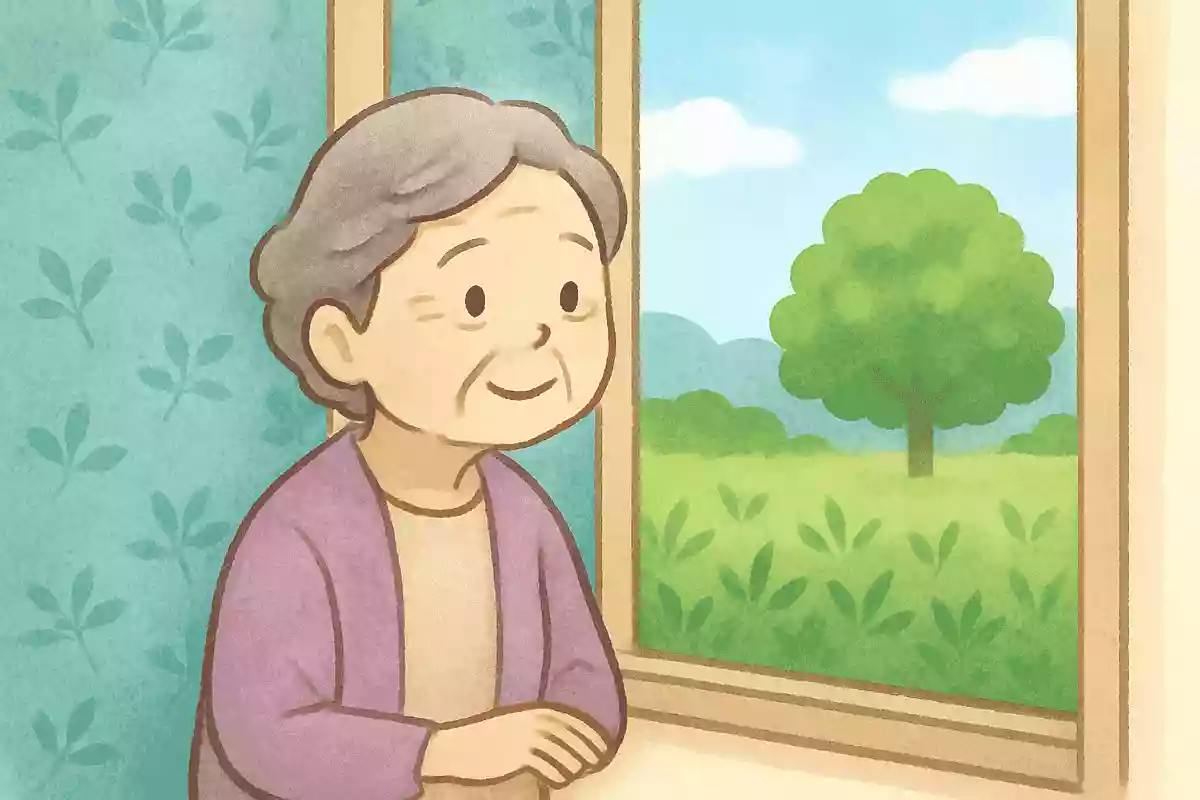
These words evoke the gentle, clear air of early summer.
In this haiku by Seishi Yamaguchi, the faint fresh greenery glimpsed beyond the sliding door conveys the refreshing mood of May.
As a recreational activity for seniors, after appreciating this haiku, it would be perfect to actually go outdoors to enjoy the new green leaves, or to express one’s own May scenery through origami or watercolor painting.
Spending time engaging with nature while expanding the imagination also helps refresh both body and mind.
If you display the created works in a small exhibition, conversations among participants will naturally blossom, and everyone can share a lovely time feeling the changing of the seasons together.

In the early-summer rain, before the great river, two houses.

Yosa Buson was a haiku poet and literati painter active in the mid-Edo period.
It is said that he held deep admiration and respect for Matsuo Basho and traveled through the Tohoku and Kanto regions to actually retrace the journey of The Narrow Road to the Deep North.
The meaning of this verse is that the long May rains continue to fall, the river swells with force, and the greatly enlarged river rushes along violently.
By the riverbank stand two small houses, nestled close together.
It seems to impress upon us that, in the face of the intensifying fury of nature, even a house feels helpless and forlorn.
There are also famous haiku by Matsuo Basho that use samidare—the early-summer rains—as a seasonal word, so it can be enjoyable to compare them.
Leaving some rain still to fall—Hikaridō

It is a verse from The Narrow Road to the Deep North, said to have been composed when Bashō visited the Konjikidō (Golden Hall) at Chūson-ji during his travels in the Tōhoku region.
Samidare refers to what we now call the rainy season.
Although we think of the rainy season as occurring in June, in the old lunar calendar it corresponds to the fifth month, which is why it bears that name.
Rain can be a blessing, but it also brings floods, disrupts transportation, and causes things to rot or mold from the humidity.
In this poem, despite the long, unending rain, the Golden Hall alone shines as if no rain were falling.
Today, the Konjikidō at Chūson-ji is registered as a World Heritage site.
Visiting during the rainy season and sharing in Bashō’s feelings would be a delightful experience.
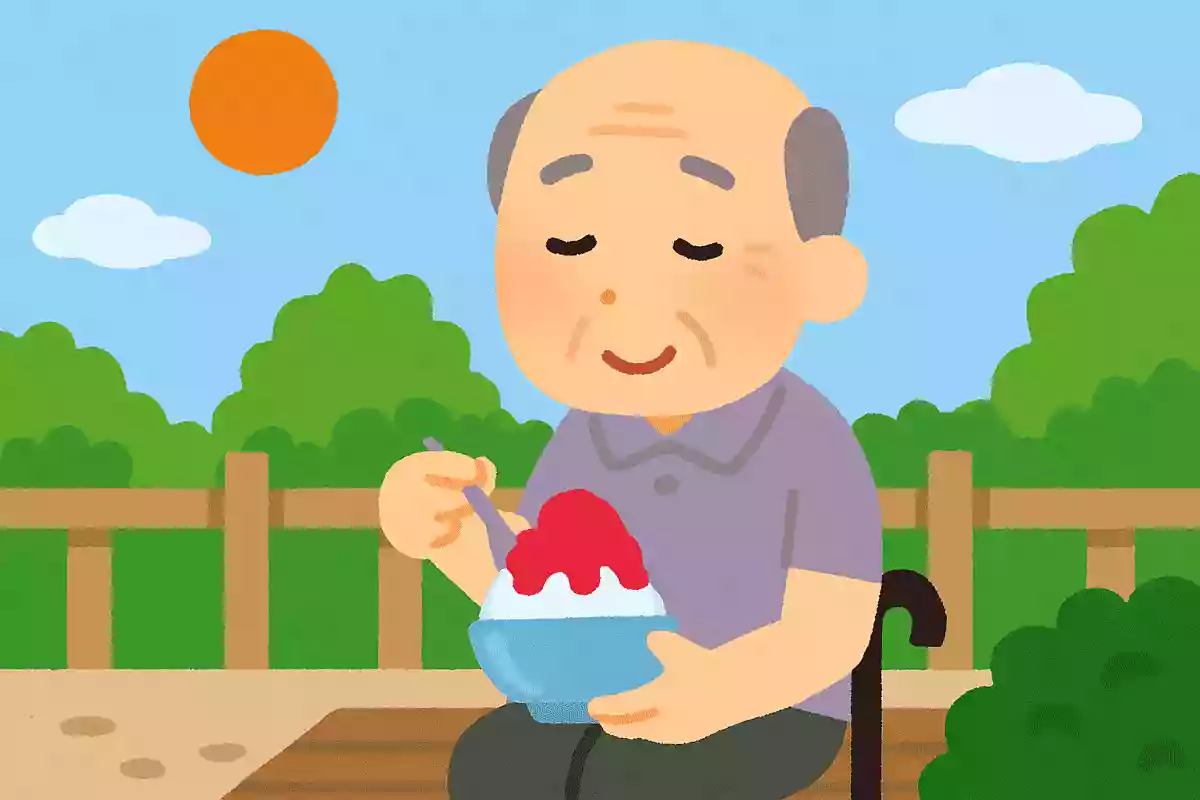
June parting—one bowl of shaved ice between us
Sodao Nakamura was born in China in 1901 and, in Japan, studied what is known as national literature.
He learned haiku under Kyoshi Takahama and later became the first president of the Haiku Poets Association, contributing to the development of the haiku world.
This verse means that on a day in June, they parted in a hurry without even having time to share a drink, and instead ate ice cream together.
Imagining two men, not drinking sake but busily licking ice cream, makes the scene seem a little comical, doesn’t it?
In great Edo— even dogs get a taste of the first bonito.

Kobayashi Issa is one of the leading haikai poets of the Edo period, who established his own distinctive style known as the Issa manner.
In the Edo period, “hatsumono,” the first produce of the season, was highly prized; there was even a saying that eating it would extend one’s life by seventy-five days.
Among these, bonito (katsuo) was seen as a lucky charm—the word sounding like “to win”—and the first bonito of the season was so popular that people said, “Eat it even if you have to pawn your wife.” From this poem, we can glimpse how everyone in Edo was swept up in the fervor for the first bonito, and how its deliciousness was such that even dogs would eat it.