

[For Seniors] Summer Haiku: Ideas to Feel the Season

Summer is a season that brings back nostalgic memories for many older adults.
Why not casually capture a moment of summer in a haiku?
Haiku is a uniquely Japanese form of poetry made with just 17 sounds.
The key is not to overthink it—simply and honestly express the seasonal scenery before you and the feelings that arise in your heart.
By setting it to the rhythm of 5-7-5, the scene comes across even more vividly.
In this article, we introduce simple and approachable haiku with a summer theme.
We hope you’ll enjoy the fun of infusing words with the spirit of the season.
- Recommended summer songs for people in their 90s: A collection of Showa-era summer tunes [2026]
- [For Seniors] Exciting Summer Wall Decoration Ideas
- [For Seniors] Haiku Selections for July: Ideas to Feel the Summer
- [For Seniors] June Haiku Showcase: Ideas to Feel Summer
- [For Seniors] Summer kigo: A list of famous seasonal words to enjoy while savoring their elegance
- [Elderly] Haiku with the theme of August: Introducing famous verses
- [For Seniors] Interesting spring haiku: introducing verses with striking kigo and unique expressions
- [For Seniors] Famous Haiku for December: Masterpieces Depicting Winter Scenes and Year-End Moments, Plus Tips on How to Compose Them
- [For Seniors] Chuckle-Worthy Silver Senryu: Tips for Writing Them Humorously and Example Verses
- [For Seniors] Haiku Introductions for May: A Fun Recreation Activity
- [For Seniors] Spring Haiku. Spring Activity
- [For Seniors] Haiku for September: Introducing Verses Perfect for Autumn
- [For Seniors] Handmade Summer Greeting Cards: A Collection of Lovely Summer Motifs
[For Seniors] Summer Haiku: Ideas that Capture Summer (41–50)
Summer grasses— all that remains of soldiers’ dreams.

Of course, this is the famous haiku by Matsuo Bashō that everyone knows and even appears in school textbooks.
Even those who aren’t especially interested in haiku probably know this verse.
When I was a student, I memorized it without thinking, wondering why the character for “soldier” is read as tsuwamono.
The place where this haiku was composed is Hiraizumi in the Tohoku region.
Perhaps Bashō was reflecting there on the end of the splendor of the Northern Fujiwara clan.
How many summers have passed since their downfall, and how many times have the summer grasses waved in the wind? It’s a verse that moves you deeply, even if you weren’t Bashō standing on that very ground.
From the temple gate, great rain drips—summer moon.
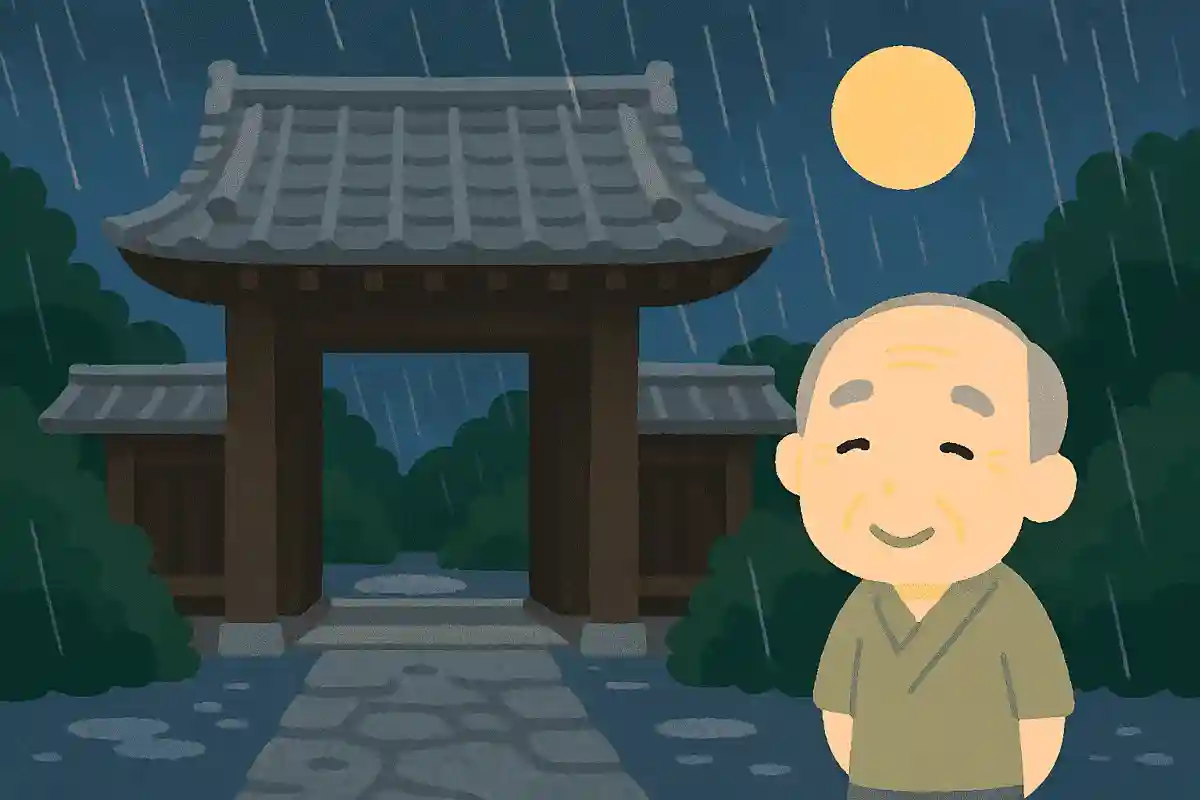
Summer often evokes an image of bright, sunny days, but it’s also a season of heavy rain.
Here is a haiku by Kobayashi Issa that straightforwardly depicts a scene of a strong summer downpour.
It portrays heavy rain falling on a temple gate, followed by the sight of the summer moon—contrasting the intensity of the rain with the calm, luminous landscape that comes after.
Even when the rain pours, given time the moon appears, inviting us to reflect on the changes in the scene.
It also seems to suggest that nature’s beauty arises precisely because it is always changing.

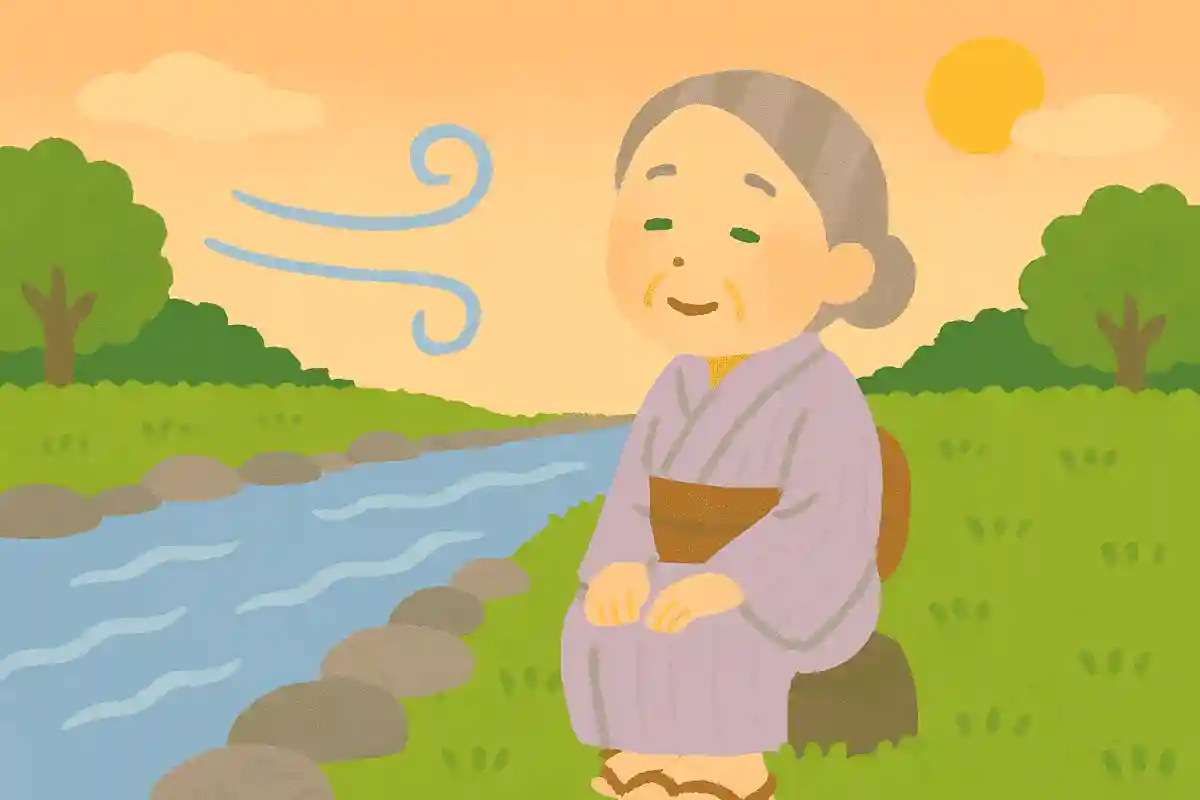
River breeze— in a pale persimmon robe, enjoying the evening cool
In recent summers, temperatures exceeding 40°C have become far from unusual.
There are many cities known for their heat, and Kyoto seems sweltering as well.
This haiku is said to have been composed in the summer of Genroku 3 (1690).
Back then, with air conditioning nowhere near as advanced as it is today, the kawadoko riverside platforms were likely the go-to way to cool off in Kyoto.
This verse is often paired with collage images of people enjoying the cool of the evening on the Shijo riverbank.
Evening strolls in clothing dyed with persimmon—the trend of the time?—paint a picture of cutting-edge fashion.
It’s a poem that makes the river breeze feel all the more refreshing.
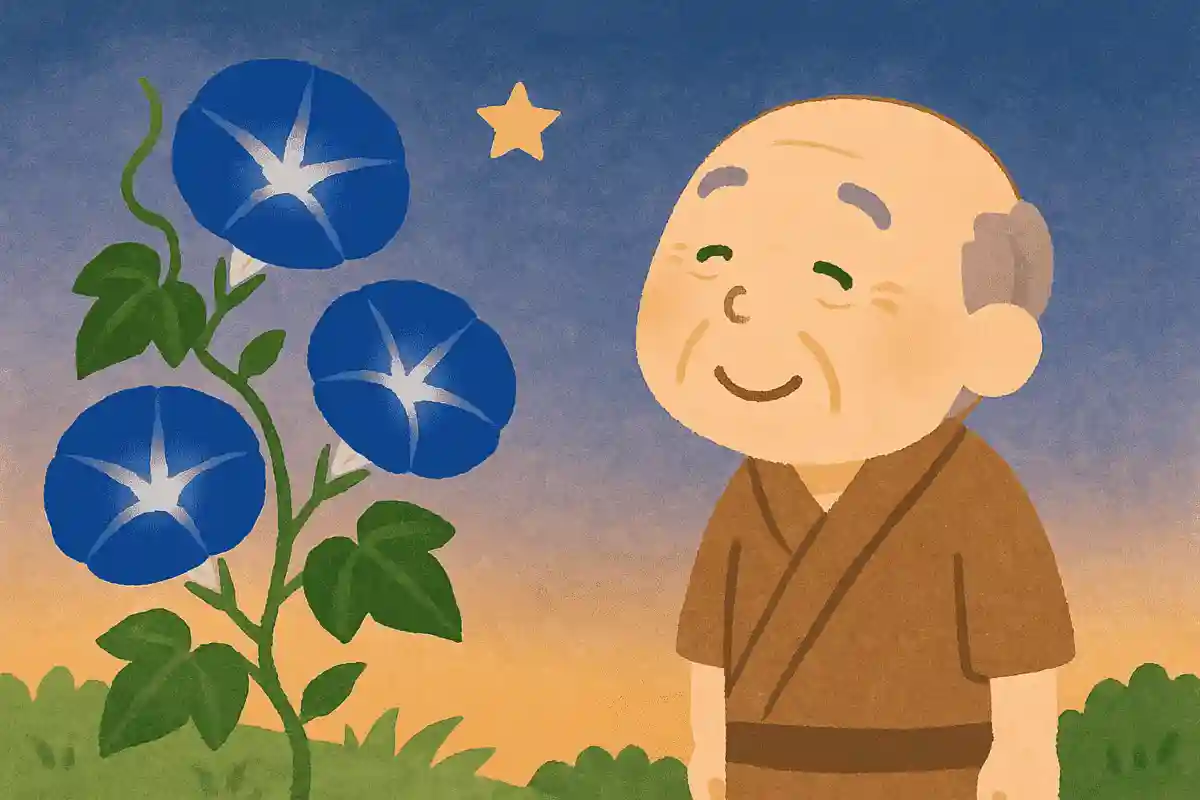
At dawn—indigo morning glories, and a single star
Kyoshi Takahama, a master of the Hototogisu school who advocated “objective description” and “singing of flowers and birds.” His real name was Kiyoshi, and he playfully reshaped it into “Kyoshi.” Even in a pen name, you can sense a bit of wit.
Now, about this haiku by Kyoshi: when the morning glories have already begun to open, the dawn sky still shows stars, perhaps because it’s so early.
It can be read as finding charm in the sudden duet of stars and flowers.
How do you interpret it? The navy blue morning glories, contrasted with the dimness of early dawn, make the verse all the more striking.
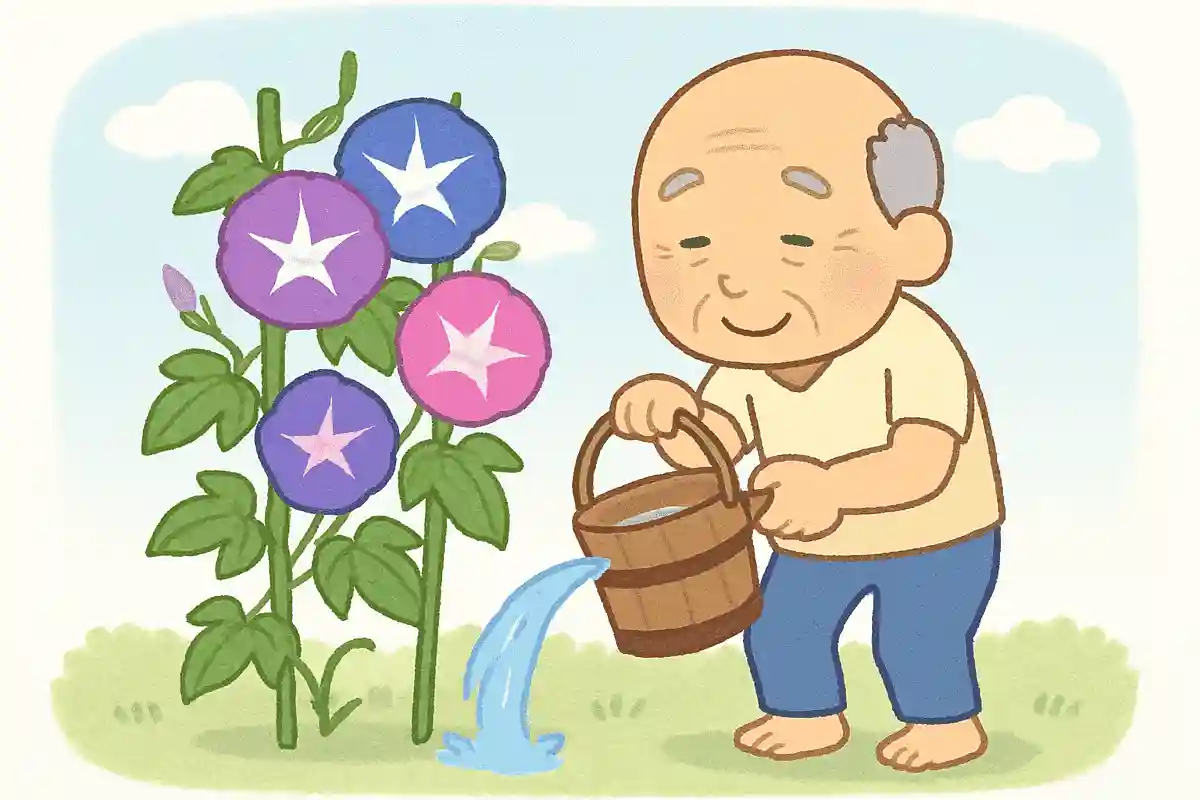
By the morning glories, the well-bucket’s taken—so I beg some water.
Anyone from Hakusan City in Ishikawa Prefecture knows Kaga Chiyojo.
She composed many haiku about morning glories, and the morning glory has even been chosen as the city flower of Hakusan.
At Shokoji Temple in Hakusan, there is the Iho-kan, a museum housing Chiyojo’s personal effects.
If this haiku piques your interest, please visit.
The haiku’s content is easy to understand and approachable: when she went to draw water, a morning glory vine had twined around the dipper’s handle; since it would be a pity to cut the flower, she went to fetch water from the neighbor instead.
Wouldn’t it be wonderful to compose such a lovely haiku?
The cool breeze came, winding and bending

In the sweltering summer, we all try in some way to find coolness, and many people probably feel saved by the occasional breeze.
This haiku by Kobayashi Issa contemplates not only the path of the cool wind that blows through such a summer, but also the lives of the people it touches.
It describes the cool breeze as arriving by a winding route, which in turn evokes the unique layout of Edo and hints at how hard it was to live there.
Even though the wind twists and turns, it still reaches you—this also conveys a sense of the wind’s vigor.
Green leaves to the eyes, mountain cuckoo, first bonito of the season

I often see it written as “me ni aoba” to fit the 5-7 rhythm, but it seems the correct form is “me ni wa aoba.” With green leaves, the lesser cuckoo, and the first bonito of the season all overlapping, it’s a verse where the focus could easily blur; yet the energy of the final word, “hatsu-gatsuo,” resounds almost like a cutting word.
Sodo Yamaguchi was a haiku poet from the Edo period, born in Yamanashi Prefecture.
There are three monuments related to Sodo in his home region of Yamanashi, so it’s a great recommendation for those who want to take a haiku-themed trip.
If possible, just like this haiku, early summer with its fine season would be ideal.