

![[For Seniors] Summer Haiku: Ideas to Feel the Season](https://media.ragnet.co.jp/img/1200__png__https://www.studiorag.com/files/2025/06/b8730adc32c43c6053204d36bca004cb.webp)

Summer is a season that brings back nostalgic memories for many older adults.
Why not casually capture a moment of summer in a haiku?
Haiku is a uniquely Japanese form of poetry made with just 17 sounds.
The key is not to overthink it—simply and honestly express the seasonal scenery before you and the feelings that arise in your heart.
By setting it to the rhythm of 5-7-5, the scene comes across even more vividly.
In this article, we introduce simple and approachable haiku with a summer theme.
We hope you’ll enjoy the fun of infusing words with the spirit of the season.
- Recommended summer songs for people in their 90s: A collection of Showa-era summer tunes [2026]
- [For Seniors] Exciting Summer Wall Decoration Ideas
- [For Seniors] Haiku Selections for July: Ideas to Feel the Summer
- [For Seniors] June Haiku Showcase: Ideas to Feel Summer
- [For Seniors] Summer kigo: A list of famous seasonal words to enjoy while savoring their elegance
- [Elderly] Haiku with the theme of August: Introducing famous verses
- [For Seniors] Interesting spring haiku: introducing verses with striking kigo and unique expressions
- [For Seniors] Famous Haiku for December: Masterpieces Depicting Winter Scenes and Year-End Moments, Plus Tips on How to Compose Them
- [For Seniors] Chuckle-Worthy Silver Senryu: Tips for Writing Them Humorously and Example Verses
- [For Seniors] Haiku Introductions for May: A Fun Recreation Activity
- [For Seniors] Spring Haiku. Spring Activity
- [For Seniors] Haiku for September: Introducing Verses Perfect for Autumn
- [For Seniors] Handmade Summer Greeting Cards: A Collection of Lovely Summer Motifs
[For Seniors] Summer Haiku. Ideas that feel like summer (1–10)
Written in large characters: it has been composed as a summer mountain.Fusei Tomiyasu

When you look up at the mountain in summer, the character for “big” suddenly catches your eye.
No one has spoken it aloud, and yet the mountain’s shape naturally reads that way.
In this verse, such an unassuming moment quietly breathes.
Not the bustle of the fire festival, but the character that floats in the calm time before or after it.
Fusei gently receives this with “yomarekeri”—‘it is read,’ softly accepted.
Without forceful narration, the scene before you turns into words.
It is a single verse that evokes such a tranquil time.

The rough sea— the Milky Way lies across Sado.Matsuo Bashō
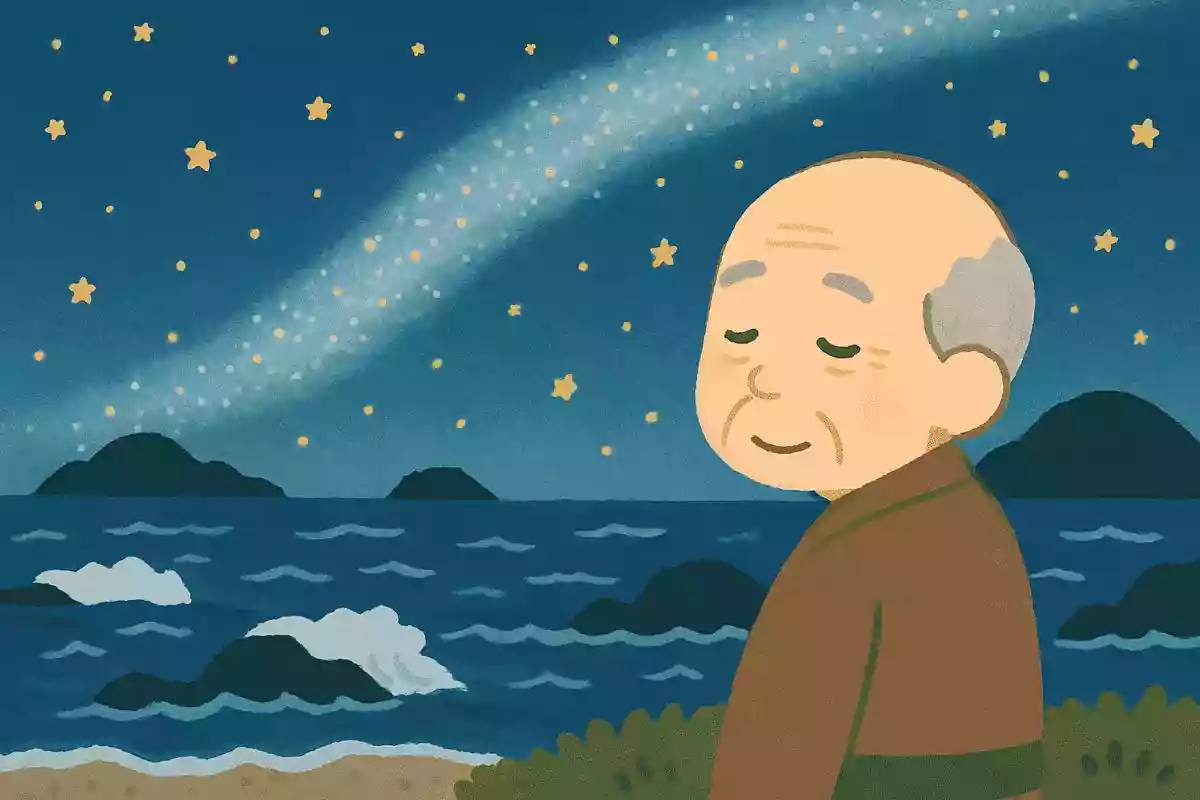
On his journey, Matsuo Bashō beheld Sado Island floating at the edge of the sea and the Milky Way spanning the night sky.
Placing those two alongside “the rough waves” within a single verse suddenly expands the scale from nature to the cosmos.
The island of Sado, steeped in isolation, overlaps with the traveler’s solitude and life’s transience, while the Milky Way arching across the night feels both fragile and solemn.
Though no showy words are used, the poem has a grandeur that seems to fill the field of vision from end to end.
You can almost sense the quiet gaze from the place where he listened to the sound of the waves and looked up at the night sky.
It is a traveler’s verse, read in surrender to nature.
Bonfires burn; far from the fireworks, a moored boat.Yosa Buson
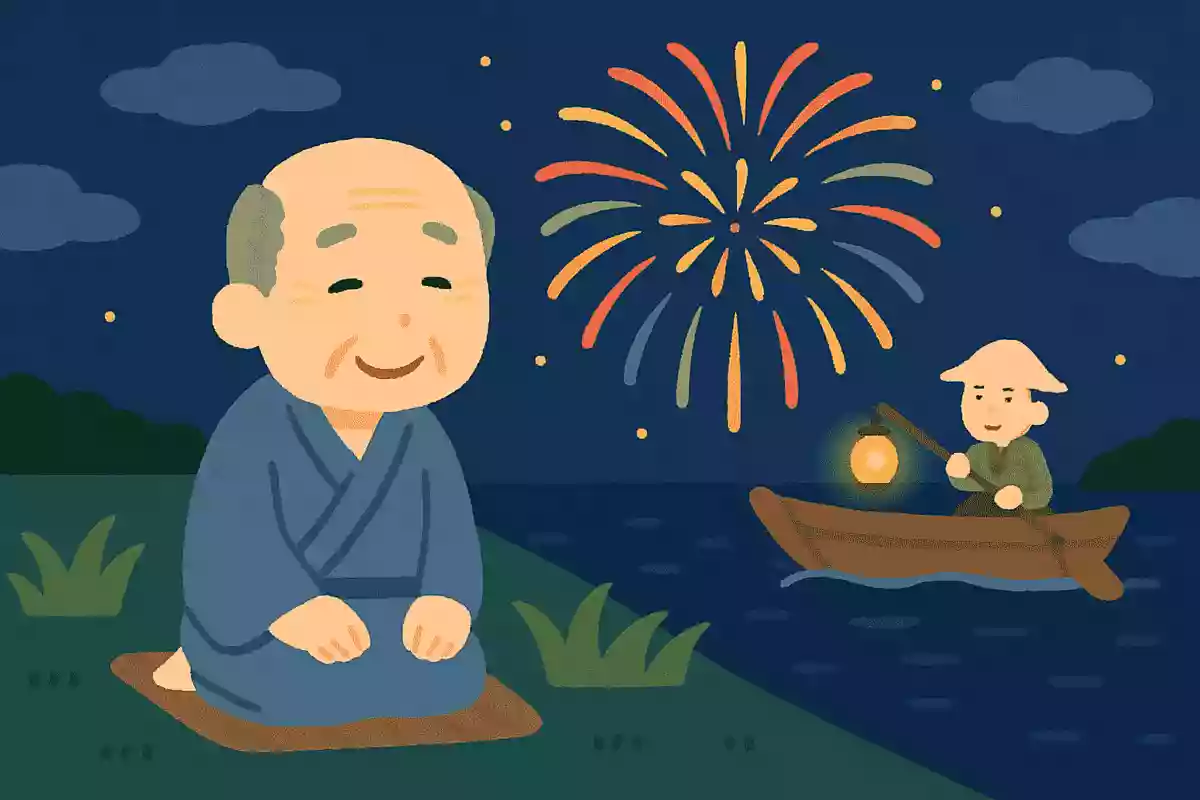
A verse I would like to present as one that resonates with older adults is Yosa Buson’s: “Fires burning—/ a moored boat afar/ from the fireworks.” At dusk, with distant fireworks in the background, there is the warmth of a bonfire and a boat quietly at anchor.
In this poem, a hush contrasts with the bustle of summer, revealing a scenic beauty one comes to feel more keenly with age.
The seasonal word “fireworks” symbolizes fleeting, momentary brilliance, gently accompanying those who look back on life.
This single verse softly speaks of the particular wistfulness and elegance of August.
August—night clouds reflected in the pond.Mantarō Kubota

Mantaro Kubota was born in Asakusa, Tokyo, and is said to have written many haiku that use clear, straightforward language to depict downtown life.
He was also one of the haiku poets active from the late Meiji period through Showa.
His haiku often convey a quietly moving, lingering flavor.
Kubota himself reportedly described his haiku as “lyrical improvisations rooted in everyday life.” Haiku in August are sometimes composed with a sense of autumn approaching.
The poem “August—night clouds reflected in the pond” may likewise have been written to capture the transition from summer to autumn.

How beautiful—the Bon Festival people within the moon.Gyotai Kato
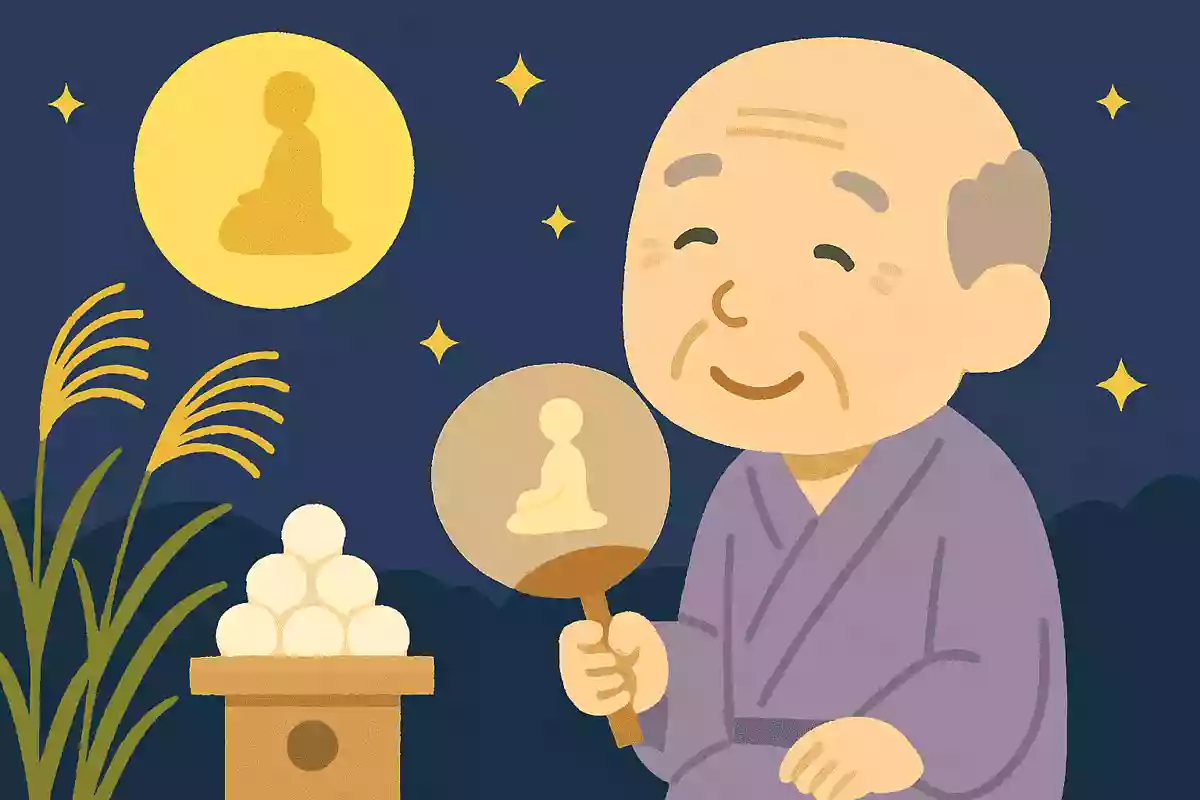
This verse captures a moment during Obon, looking up at the moon and remembering the departed.
“The people of Obon” likely refers to the spirits who return with the welcoming fires.
In the full moon, their features seem to appear.
A fantastical and beautiful scene unfolds.
The straightforward exclamation “how beautiful” conveys not only loneliness but also a sense of joy at being able to meet again.
For older people, it may overlap with a quiet time of recalling those they once spent days with, making it a line that deeply touches the heart.
Under the moonlight, a gentle Obon atmosphere drifts—one where hearts connect without words.
Crickets chirping—the torchlight goes ahead, bearing the loadTakarai Kikaku
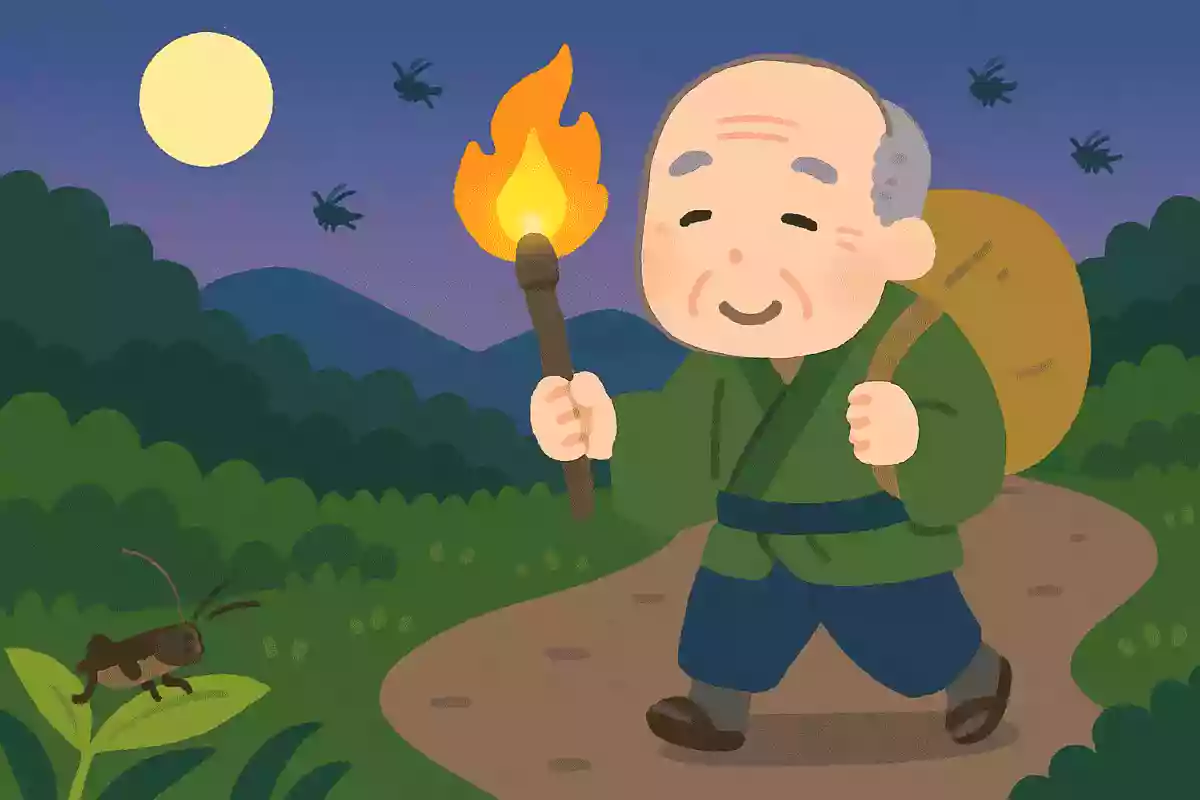
This passage depicts a dreamlike scene woven from the chirping of bell crickets, which herald the beginning of autumn, and the light of torches used for the send-off fire.
The phrase “ni wa sete” can be read as evoking the image of someone walking with a burden on their back, as if carrying the spirit of the departed to the other world.
As the insects’ sounds resound, the torch flames flicker, and you can picture people moving quietly forward.
It is a verse that stirs the heart not with liveliness but with modesty, and it possesses a refinement best savored by those who have grown older.
The bell crickets’ song seems to gently awaken memories of bygone times and of those we have lost.
At home, poignant and plain, the Bon lanterns.Fusei Tomiyasu
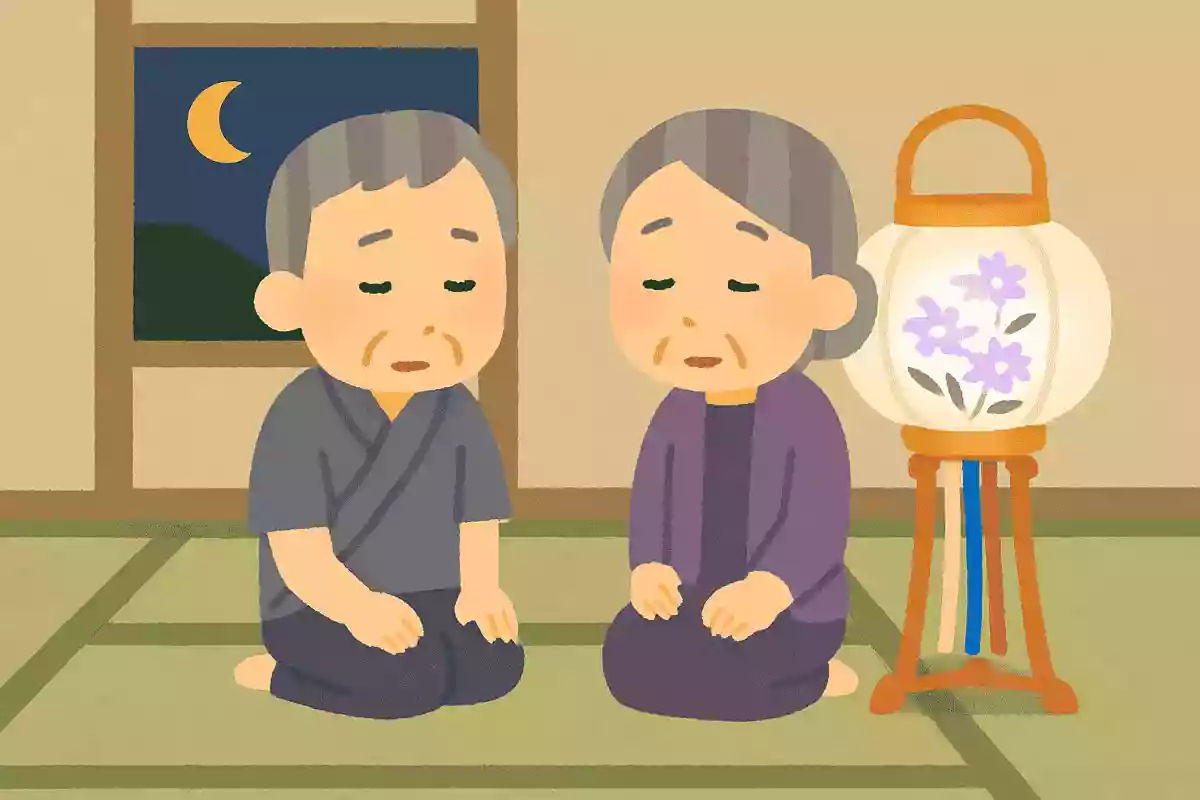
The “Bon lanterns” depicted in this verse are the lanterns offered before graves, appearing at the important moments of sending off and welcoming ancestors.
The expression “aware arawani” captures the instant when feelings long kept deep within the heart suddenly come to light, and it will resonate especially with those of advanced years.
Amid lively customs, there is also a quietly kindled time for prayer.
It is a gentle verse, one that seems to invite dialogue with ancestors—and with oneself—within a space swathed in the flicker of light and shadow.
It is a work to be savored not only as a seasonal scene, but as a verse that touches the depths of the heart.