

[For Seniors] Summer Haiku: Ideas to Feel the Season

Summer is a season that brings back nostalgic memories for many older adults.
Why not casually capture a moment of summer in a haiku?
Haiku is a uniquely Japanese form of poetry made with just 17 sounds.
The key is not to overthink it—simply and honestly express the seasonal scenery before you and the feelings that arise in your heart.
By setting it to the rhythm of 5-7-5, the scene comes across even more vividly.
In this article, we introduce simple and approachable haiku with a summer theme.
We hope you’ll enjoy the fun of infusing words with the spirit of the season.
- Recommended summer songs for people in their 90s: A collection of Showa-era summer tunes [2026]
- [For Seniors] Exciting Summer Wall Decoration Ideas
- [For Seniors] Haiku Selections for July: Ideas to Feel the Summer
- [For Seniors] June Haiku Showcase: Ideas to Feel Summer
- [For Seniors] Summer kigo: A list of famous seasonal words to enjoy while savoring their elegance
- [Elderly] Haiku with the theme of August: Introducing famous verses
- [For Seniors] Interesting spring haiku: introducing verses with striking kigo and unique expressions
- [For Seniors] Famous Haiku for December: Masterpieces Depicting Winter Scenes and Year-End Moments, Plus Tips on How to Compose Them
- [For Seniors] Chuckle-Worthy Silver Senryu: Tips for Writing Them Humorously and Example Verses
- [For Seniors] Haiku Introductions for May: A Fun Recreation Activity
- [For Seniors] Spring Haiku. Spring Activity
- [For Seniors] Haiku for September: Introducing Verses Perfect for Autumn
- [For Seniors] Handmade Summer Greeting Cards: A Collection of Lovely Summer Motifs
[For Seniors] Summer Haiku: Ideas that Evoke Summer (31–40)
Bright in one direction, dark in another—the rainy season sky

Kyoshi Takahama was a haiku poet from Ehime Prefecture who was active from the Meiji through the Showa periods.
He studied haiku as a disciple of his fellow Ehime native, Masaoka Shiki.
He excelled at depicting scenes he witnessed firsthand and left many works on the theme of nature.
This poem portrays a scene at dawn: the sky is beginning to brighten, yet in another direction a gloomy, rainy-season sky spreads out.
It’s an image that you can probably picture easily.
It’s also said to serve as a metaphor: even when signs of something good seem to appear, from another point of view there can still be a darker side.

Above the waterfall, water appeared—and then it fell.

Godo Yahan was a haiku poet from Osaka who was active from the Meiji through the Showa eras, and he is also known as the brother of Tokuzo Goto, a Noh performer of the Kita school and a Living National Treasure, and Minoru Kita, the 15th head of the Kita school.
Water does not stay in one place; it is always flowing.
From the top of the waterfall, water constantly appears and falls, and the basin below is full of water that is also in motion.
When you watch for a long time, the scene looks the same, yet the water flowing past is not the same water you saw a moment ago.
Even so, the waterfall keeps flowing.
This expresses a waterfall that continues to change while remaining there.
By shifting our perspective, it becomes something that prompts reflection.
Gathering droplets on hydrangeas—the morning sun.
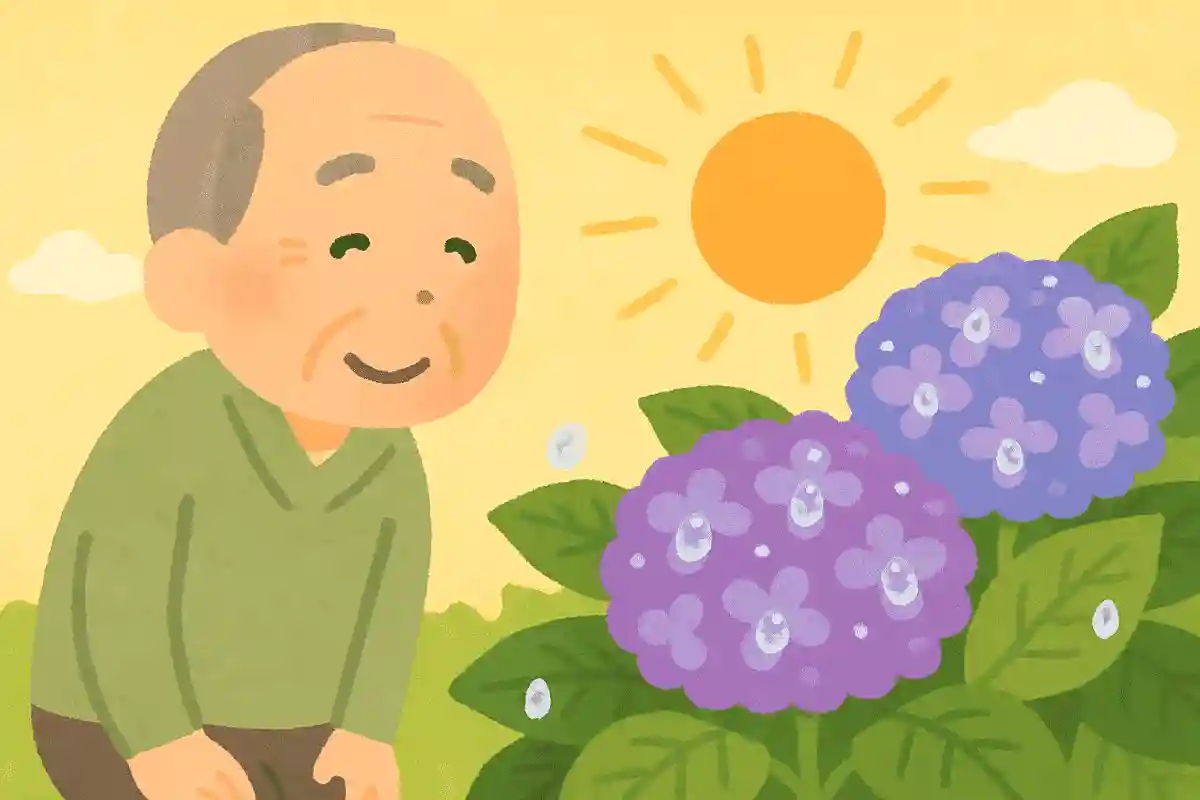
Chiyojo of Kaga was born around 1703 in what is now Hakusan, Ishikawa Prefecture.
It is said that from a young age she was familiar with haikai poetry and associated with poets in places like the port town of Motoyoshi.
This verse describes a morning after rain, with hydrangeas—purple and blue—blooming in the garden.
As the morning sun shines in, the dewdrops on the hydrangeas catch the light and sparkle beautifully.
Even in an era without the abundance of entertainment we have today, people then may have had a refined sensibility that allowed them to feel, enjoy, and express the beauty brought about by nature’s harmony.
A lone cherry tree in leaf—how lonely—before the temple hall.
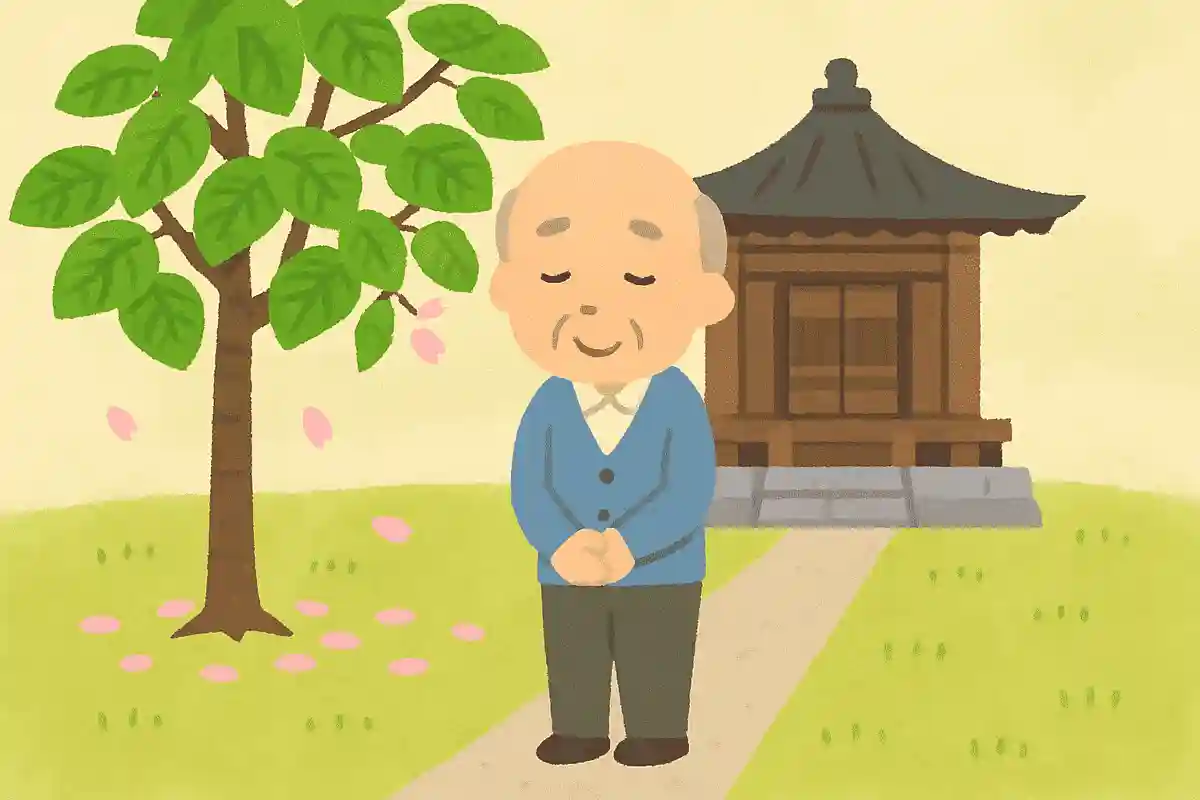
Santō Kigi was a haiku poet of the mid-Edo period.
In the Shimabara pleasure quarter of Kyoto, he established the Fuyā-an (Sleepless Hermitage), where he taught courtesans haikai and calligraphy, contributing to the revitalization of the entertainment district.
He later joined his close friend Yosa Buson in forming the Sankasha.
The hazakura described in this verse is a summer seasonal word, expressing a sense of regret that the cherry blossoms in front of the hall have fallen and the trees have become “leaf-cherry.” Yet even if the scene seems lonely after the delicate petals have dropped, there is also an aspect in which the fresh, vigorous green leaves convey a sense of clarity and strength.
Perhaps the Japanese feeling for cherry blossoms is indeed something special.
Licking the spoon — how the children delight — summer ice

In the sweltering summer, we crave something cold—shaved ice is a classic example.
This haiku by Seishi Yamaguchi depicts the endearing sight of a child eating shaved ice.
It portrays the child licking the spoon with each bite, conveying the simple joy of the treat.
Because it straightforwardly describes what is seen, each word makes it easy to picture the scene—another appealing point.

[For Seniors] Summer Haiku: Ideas that Capture Summer (41–50)
Gathering the early-summer rains, the Mogami River runs swift.

Around May, which can be considered the beginning of summer, we tend to imagine the rain gradually growing heavier, and that rain brings changes to the environment.
This is a haiku by Matsuo Bashō that depicts the May rain and the changes it brings to the Mogami River, where the rainwater ultimately flows.
When it rains, the volume of water flowing into the river increases, and as a result, the current becomes faster—that is what the poem expresses.
While explaining the cause of the strengthened flow, it also portrays the force of the current as something powerful, as if it had gathered the rain.
The entering moon—its traces at the four corners of the desk.
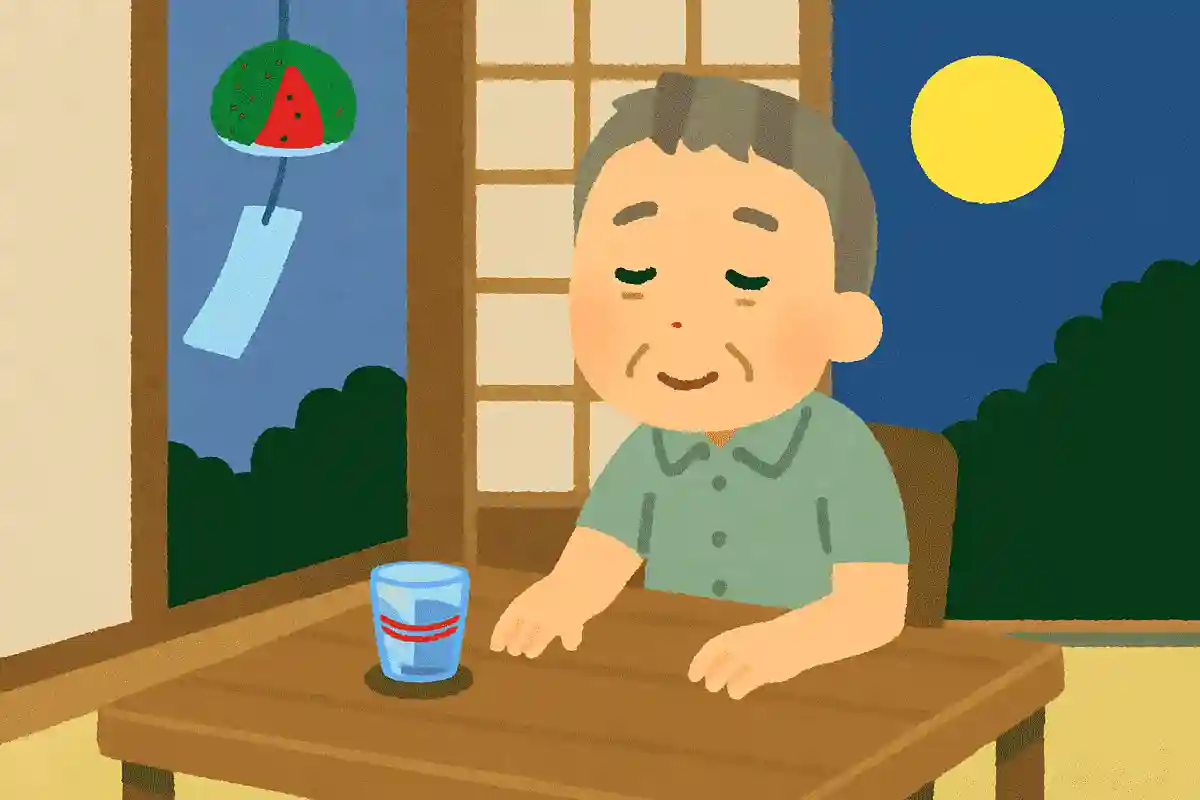
When a family member dies, normally you’re so sad you can’t do anything.
Yet Basho composed many verses in remembrance of the departed.
This haiku is a famous one he wrote at age fifty as a tribute to his late father.
His father, Tojun, was also a well-known haiku poet; “Speaking with a stranger—how lovely the autumn leaves” is one of his representative verses.
The father has passed away, but the desk he treasured remains.
The moon gently illuminates the desk, but the father is no longer there; even in not expressing the sadness as sadness, one can feel the spirit of haiku.