

[For Seniors] Nostalgic quizzes that bring back memories! Showa-era entertainment and sports questions


It’s fun to look back on the past, isn’t it? Thinking about nostalgic topics—like entertainment, sports, and pop culture—can bring back memories and make our hearts skip with excitement.
How about we revisit those moments together through a quiz? Let’s enjoy a good time reminiscing about things that are commonplace now, or those that have changed with the times, and let the conversation blossom with memories.
I can almost hear everyone saying, “Oh yeah, I remember that!”
- [For Seniors] Laugh-Out-Loud, Crowd-Pleasing! Fun Quiz
- [For Seniors] Recommended for Brain Training! Nostalgic Showa-Era Quiz
- [For Seniors] Nostalgic! Showa-Era Quizzes Recommended for Reminiscence Therapy
- [For Seniors] Trivia Multiple-Choice Quiz
- [For Seniors] Fun and Informative! Health Trivia Quiz
- [Brain Training] Lively Word Quiz for Seniors
- [For Seniors] Who Am I? Quiz: A Fun Set of Questions with Exciting Hints
- [For Seniors] Brain Training! Recall Quiz Collection!
- [For Seniors] Have Fun with Wordplay Characters! A Collection of Funny Puzzles
- [For Seniors] Lively two-choice trivia quiz. Handy to know and tidbits you'll want to share with others
- [For Seniors] Fun! Let’s Get Excited with Japan’s Number One Quiz
- [For Seniors] Sports Trivia Quiz & Fun Facts. Easy and Entertaining
- [For Seniors] Liven Things Up! 3-Choice Ranking Quiz
History and Current Affairs (1–10)
In 1974, when baseball superstar Shigeo Nagashima retired, what were the words that followed “Our Yomiuri Giants are”?
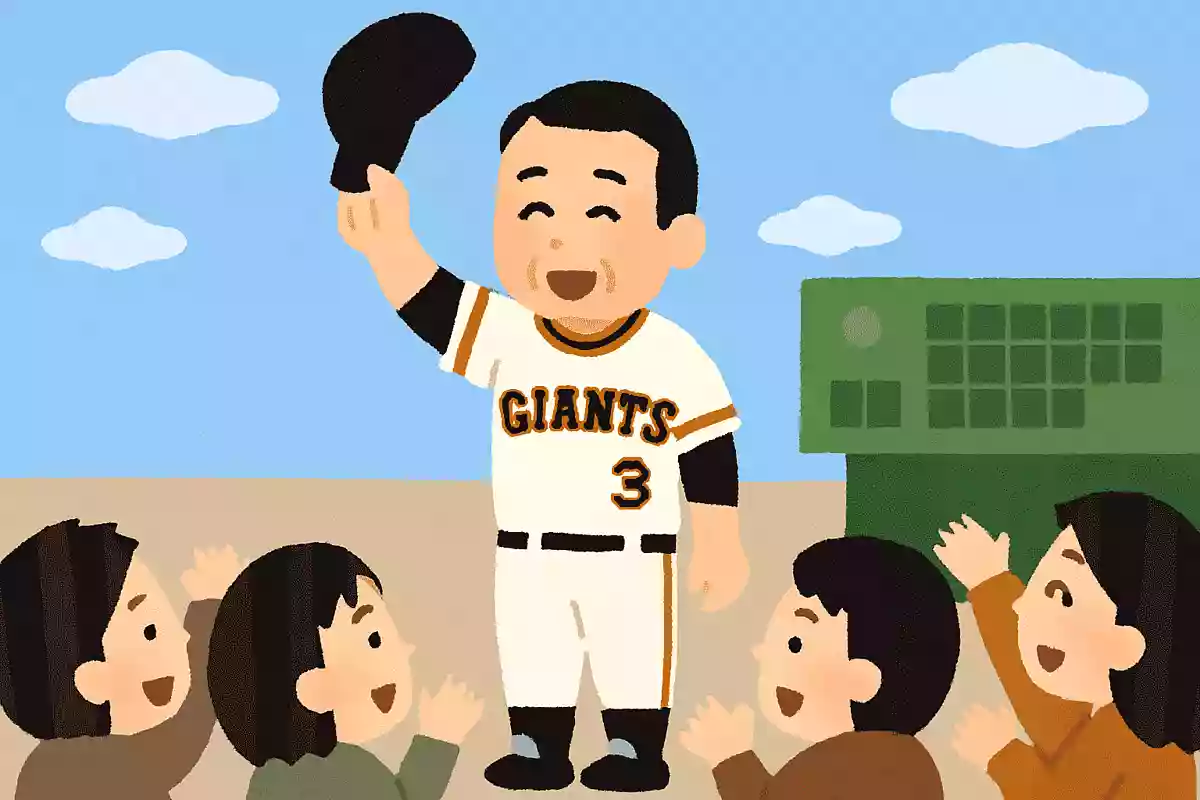
Shigeo Nagashima, a symbol of Japanese baseball, excelled not only as a player but also as a manager.
In the speech he gave when he retired as a player in 1974 (Showa 49), what were the words that followed “Our Yomiuri Giants are”? It’s a famous quote that remains in baseball history and is often cited in other fields, expressing the hope that the place will continue long after one leaves.
The answer is “eternal and immortal,” words that convey Nagashima’s deep love for his team and for baseball.

What occupations consistently ranked at the top of the “jobs elementary school students want to have” list during the Showa era?

Children in every era have dreams, but the jobs they aspire to change depending on what they see around them at the time.
Focusing on the jobs children want to do, what were the most popular careers among kids in the Showa era? If you think about what they looked forward to in everyday life and what kinds of stars existed then, the answer comes to mind.
The answer is baseball player.
Athletes are popular in any era, but because baseball was especially popular back then, many children said they wanted to become baseball players.
What is the name of the structure that became the symbol of the Japan World Exposition held in Osaka in 1970?

The Tower of the Sun, designed by artist Taro Okamoto, became the symbol of the Japan World Exposition held in 1970.
It’s a distinctive tower with a large white body and three faces—two on the front and one on the back.
The face at the top is called the Golden Face, the one on the front is the Sun Face, and the one on the back is the Black Sun.
Many older people may have seen the Tower of the Sun.
Its impactful design captivated many at the time.
Although it was originally scheduled to be dismantled after the Osaka Expo closed, a large number of requests for its preservation led to the decision in 1975 to preserve it permanently.

Who was the first Prime Minister of Japan?
The first person to become Prime Minister of Japan was Hirobumi Ito.
He served as Prime Minister from 1885 to 1888.
After that, he took office a total of four times: from 1892 to 1896, in 1898, and from 1900 to 1901.
Furthermore, Hirobumi Ito was depicted on the 1,000-yen banknote that was issued from November 1, 1963, to January 4, 1986.
One of his major achievements was drafting the Constitution of the Empire of Japan, which famously combined Japanese traditions with Western culture and a modern system of governance.
What is the term for the 57-month-long economic boom during Japan’s period of rapid economic growth, spanning from November 1965 to July 1970?

The Izanagi Boom is the popular name for the period of strong economic growth that lasted from November 1965 to July 1970 during Japan’s era of rapid economic expansion.
There were changes in citizens’ lives, such as rising income levels.
At the same time, major environmental pollution issues also became topics of concern.
With industrialization advancing, problems arose such as air and water pollution from factory emissions and effluents, as well as noise.
Excessive pumping of groundwater for industrial use caused pollution-related damage like land subsidence, which grew into a social issue.
Incidentally, the name “Izanagi Boom” comes from Izanagi-no-Mikoto, the deity of creation appearing in Japanese mythology.