

[For Seniors] Enjoyable Brain Training! Proverb Quiz Collection

A traditional Japanese proverb.
It doesn’t come up often in everyday conversation, but many people remember it as general knowledge.
So this time, we’ve prepared a quiz using proverbs, designed for older adults.
By enjoying the quiz format and recalling the phrases, it can serve as brain training, and the back-and-forth of “maybe this, maybe that” will likely help communication with those around you.
Many seniors know a lot of proverbs, so they may also shine in the role of instructor.
We hope you enjoy a fun time with the proverb quiz.
- [Brain Training] Lively Word Quiz for Seniors
- [For Seniors] Proverb Quiz with Animal Names
- [For Seniors] Weather Proverb Quiz
- [For Seniors] Recommended and Exciting! Brain-Teaser Quiz Collection
- [For Seniors] Brain Training! Recall Quiz Collection!
- [For Seniors] Fun! Let’s Get Excited with Japan’s Number One Quiz
- [For Seniors] Lively two-choice trivia quiz. Handy to know and tidbits you'll want to share with others
- [For Seniors] Laugh-Out-Loud, Crowd-Pleasing! Fun Quiz
- [For Seniors] Lively Wordplay Game: Fun Recreation for Elderly Care
- [For Seniors] Have Fun with Wordplay Characters! A Collection of Funny Puzzles
- [For Seniors] Fun and Informative! Trivia and Quizzes Introduced
- [For Seniors] Today’s recommended quiz. Daily brain-training quiz!
- [For Seniors] Nostalgic quizzes that bring back memories! Showa-era entertainment and sports questions
[For Seniors] Fun Brain Training! Proverb Quiz Collection (11–20)
Life is short and learning is hard to accomplish.
Time passes faster than we think; before we know it, we grow old and our studies no longer go as we wish.
This proverb carries the lesson that we must value our time and devote ourselves to learning.
Because it conveys a contrast between before and after the passage of time, it begins with words that depict a state before time has elapsed.
It appears in a question whose answer is “Shōnen, oi yasuku, gaku narigatashi” (“Youth is fleeting, learning is hard to achieve”), a saying that reminds us we cannot stay young forever.
It also gives the impression of teaching the importance of patiently building things up over time.

Proverb Quiz

A proverb that every Japanese person has probably heard.
This time, we’re introducing a “proverb quiz” where you think of the sentence that fits inside the parentheses to complete the proverb.
You might be thinking, “It’s just filling in one sentence, right?” but once you try it, you’ll be surprised at how tricky it can be.
You may even come across proverbs you’ve never seen before.
If you can, try not only filling in the sentence but also thinking about its meaning.
The characters and their content are called semantic memory, an important kind of memory that makes up our knowledge.
We recommend using it regularly while enjoying a bit of brain training.

Those who chase small gains fail to see the bigger picture.
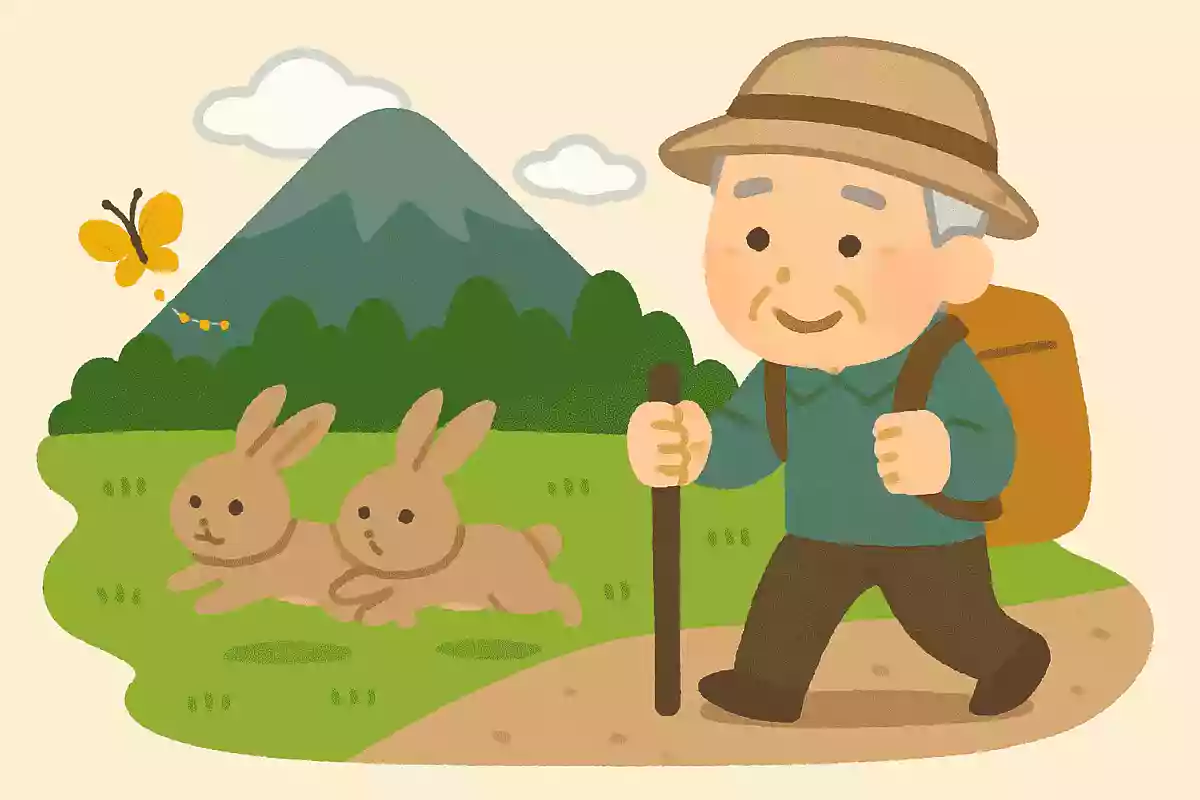
This is a phrase used to admonish someone for focusing only on what’s right in front of them and not looking around.
Imagine a situation where you’re in the mountains but not paying attention to your surroundings, and work toward the answer from there.
If you give hints like an animal that lives in the mountains and a classic target of hunting, you can probably arrive at the answer.
The answer is “deer.” The expression comes from getting so absorbed in chasing deer that you fail to notice the rugged mountains and end up in danger.
A similar expression in meaning would be “can’t see the forest for the trees.”
Plum blossoms with 〇〇〇〇

This is a phrase used as a metaphor for things that are well-matched or beautifully harmonious.
Let’s think about what appears in plum-blossom season, or what looks beautiful when placed near plum blossoms.
Clear hints include a bird flying toward the plum tree and a vivid green that stands out against the pink of the plum blossoms.
The answer is “uguisu” (Japanese bush warbler).
It’s also interesting that there are many other expressions for beautiful seasonal scenes or harmony, such as “crane with pine,” “deer with autumn leaves,” and “butterfly with peony.”
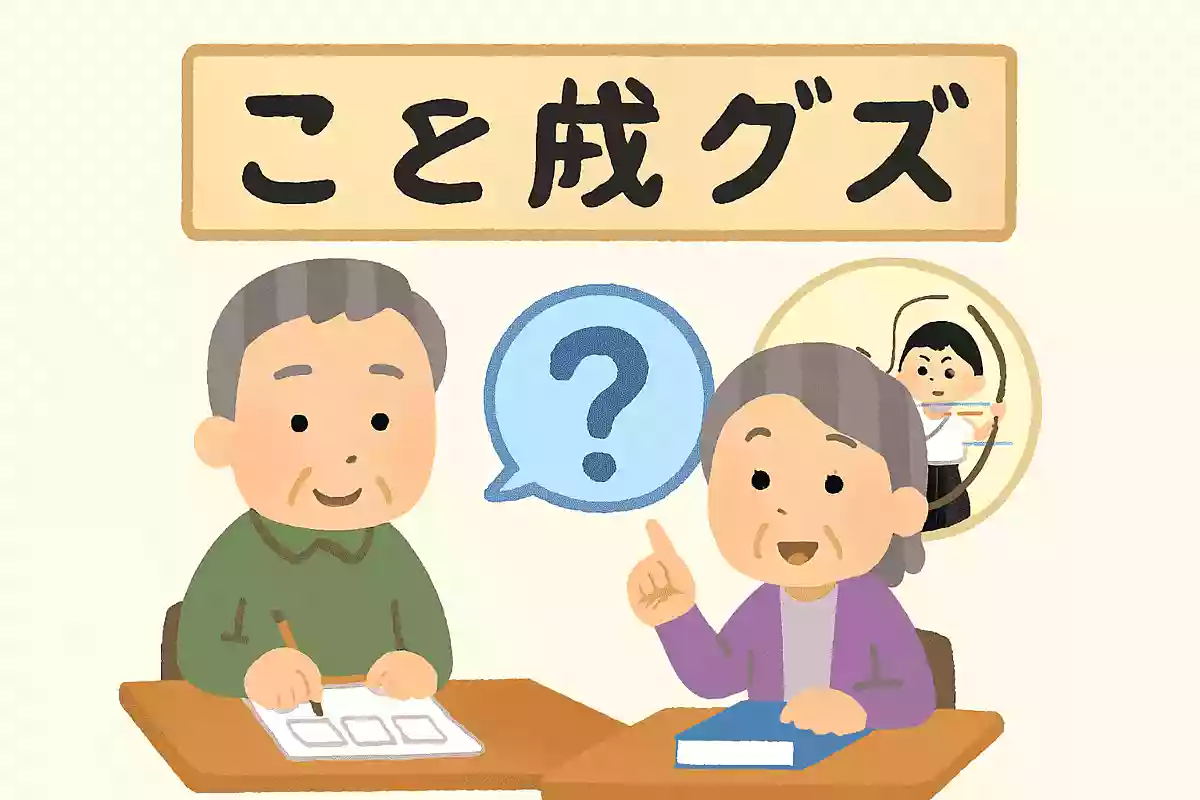
Practice makes perfect.
- interest
- like; to like; fond of
- Talent
- play
See the answer
like; to like; fond of
The proverb “Suki koso mono no jouzu nare” means that if you truly love something, you’ll improve at it quickly. When people are interested in something, they take initiative, practice or study without feeling it’s a burden, and time seems to fly by. It teaches us that liking something—more than talent or innate sense—is the most important and valuable factor.

A kite gives birth to 〇〇.

This is a proverb used as a metaphor for an excellent child being born to ordinary parents.
Since it mentions “being born,” it seems helpful to offer hints that narrow it down step by step: it’s an animal, it’s a kind of bird, it’s a bird similar to a kite.
Let’s guide people closer to the answer with progressively specific hints.
The answer is “hawk.” Hawks often fly high in the sky and are not frequently seen up close, and because they share sharp talons and beaks, some people might mistakenly think they’re the same bird.
[For Seniors] Fun Brain Training! Proverb Quiz Collection (21–30)
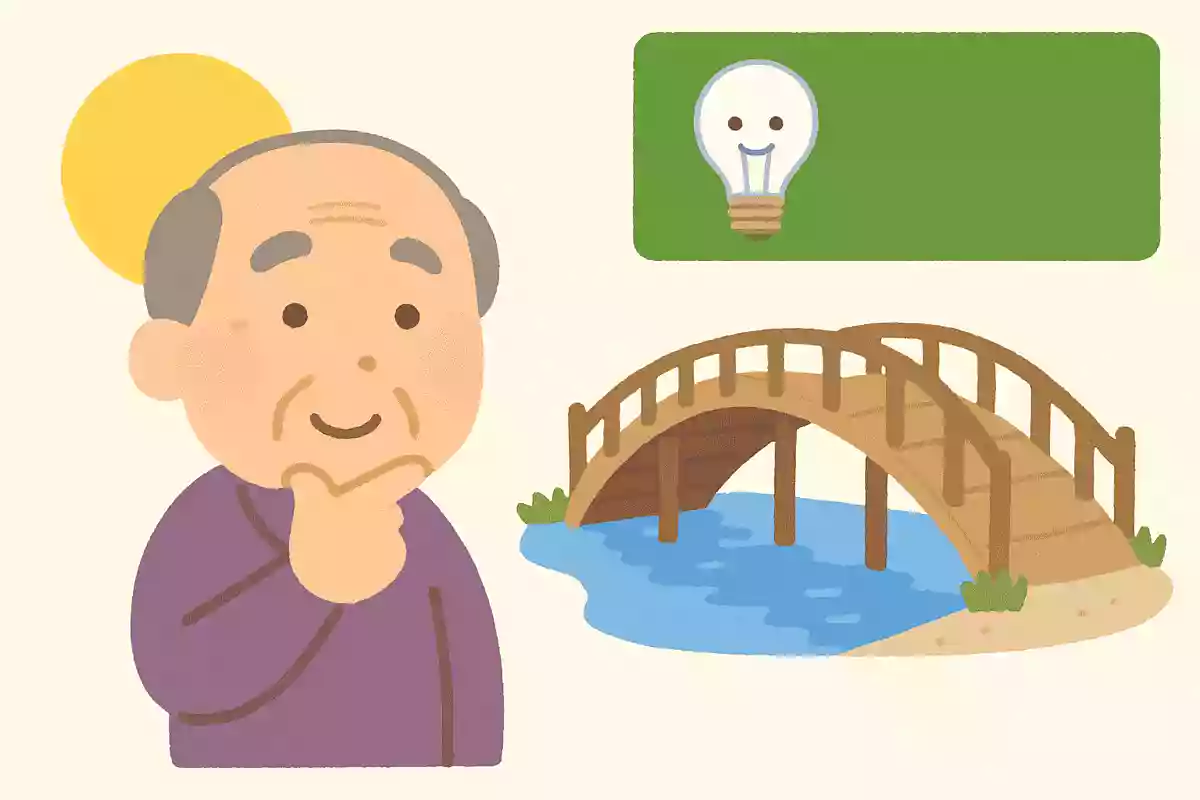
Haste makes waste.
- Run
- Turn around
- Walk.
- Stop
See the answer
Turn around
The proverb “More haste, less speed” means that sometimes a detour is necessary if you want to reach your destination as quickly as possible. When you’re in a hurry, you tend to choose the shortest route even if it involves some risk. But the lesson that it’s more reliable to take the safer, even if longer, path applies not only to physical travel but also to work and study—making it a more efficient approach overall. It’s a guideline well worth remembering.