

![[For Seniors] Enjoyable Brain Training! Proverb Quiz Collection](https://media.ragnet.co.jp/img/1200__png__https://www.ragnet.co.jp/files/2025/04/a10a0839a28f5de5886b737a5314cec5.webp)

A traditional Japanese proverb.
It doesn’t come up often in everyday conversation, but many people remember it as general knowledge.
So this time, we’ve prepared a quiz using proverbs, designed for older adults.
By enjoying the quiz format and recalling the phrases, it can serve as brain training, and the back-and-forth of “maybe this, maybe that” will likely help communication with those around you.
Many seniors know a lot of proverbs, so they may also shine in the role of instructor.
We hope you enjoy a fun time with the proverb quiz.
- [Brain Training] Lively Word Quiz for Seniors
- [For Seniors] Proverb Quiz with Animal Names
- [For Seniors] Weather Proverb Quiz
- [For Seniors] Recommended and Exciting! Brain-Teaser Quiz Collection
- [For Seniors] Brain Training! Recall Quiz Collection!
- [For Seniors] Fun! Let’s Get Excited with Japan’s Number One Quiz
- [For Seniors] Lively two-choice trivia quiz. Handy to know and tidbits you'll want to share with others
- [For Seniors] Laugh-Out-Loud, Crowd-Pleasing! Fun Quiz
- [For Seniors] Lively Wordplay Game: Fun Recreation for Elderly Care
- [For Seniors] Have Fun with Wordplay Characters! A Collection of Funny Puzzles
- [For Seniors] Fun and Informative! Trivia and Quizzes Introduced
- [For Seniors] Today’s recommended quiz. Daily brain-training quiz!
- [For Seniors] Nostalgic quizzes that bring back memories! Showa-era entertainment and sports questions
[For Seniors] Fun Brain Training! Proverb Quiz Collection (1–10)
pie in the sky
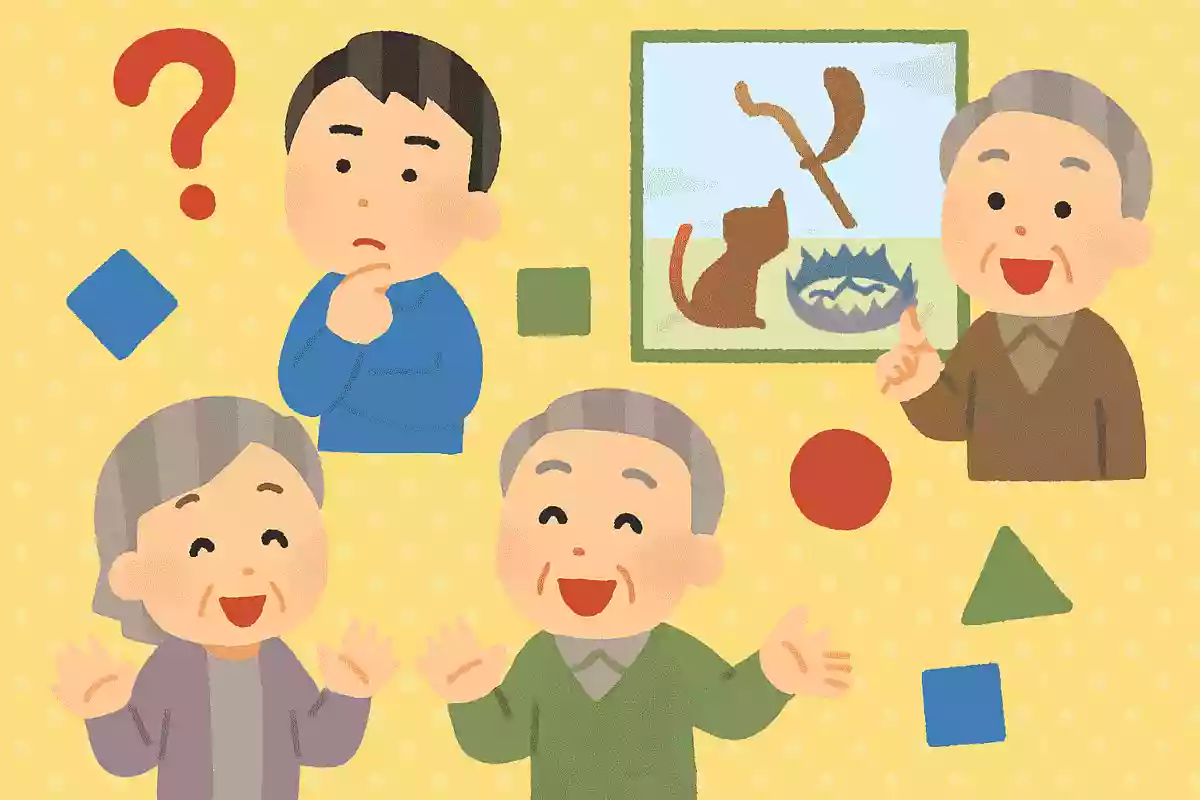
This is a proverb that describes something that may look beautiful but is actually useless.
If you think about what, when depicted in a picture, would feel particularly unhelpful, you’ll get closer to the answer.
No matter how skillfully or beautifully it’s drawn, you can’t eat it—hence the expression “a rice cake drawn in a picture” (i.e., a pie in the sky).
It could be fun to expand the discussion by considering other foods that would look appealing in a picture yet be of no use, or other things that are similarly impractical.

If you do not enter the tiger’s den, you will not catch its cubs.
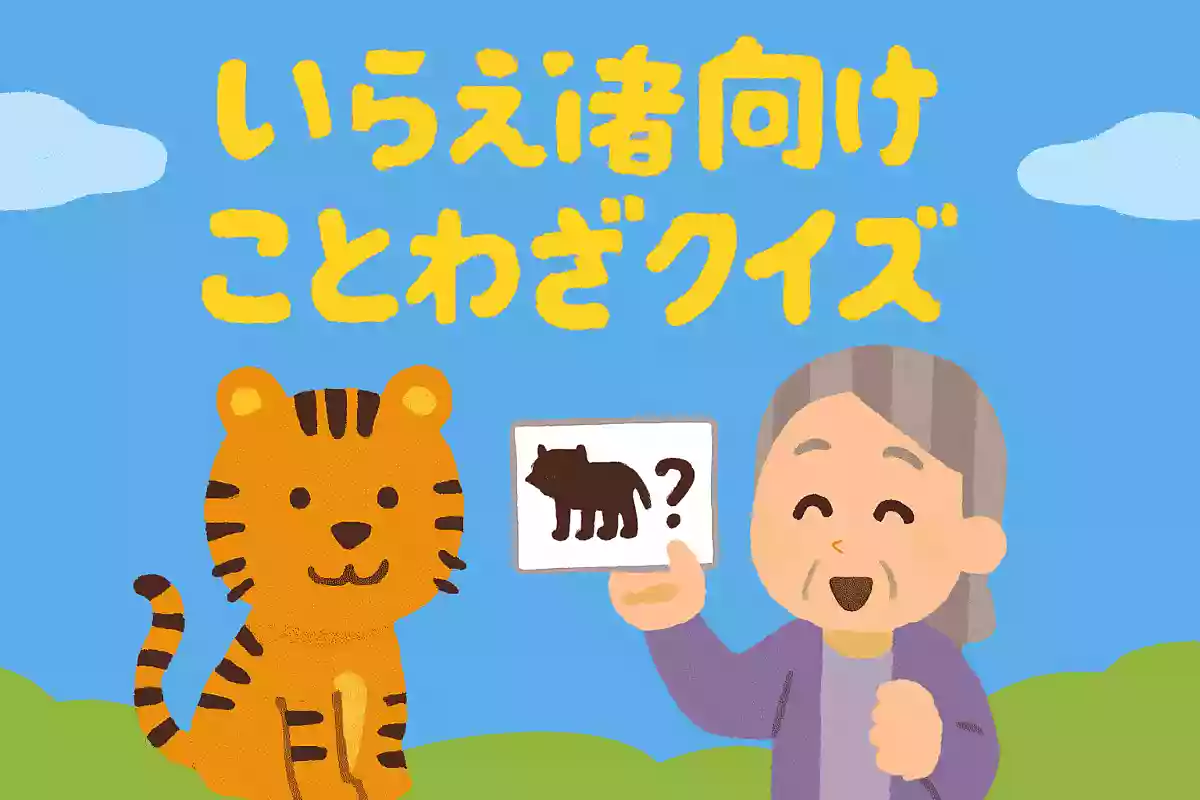
It’s a proverb that conveys the idea that you can’t achieve success without taking risks.
Because it originates from a Chinese historical text, the wording can feel unfamiliar and tricky.
If you think about where you would have to go to capture a tiger’s cub, you’ll get closer to the answer.
The proverb is “If you do not enter the tiger’s den, you cannot catch its cub,” meaning that unless you accept the risk of stepping into the tiger’s lair, you can’t catch the cub.
It may remind you, through the proverb, of times in your own experience when you braced yourself for risk and took the plunge.
You can’t win against a crying child and authority.
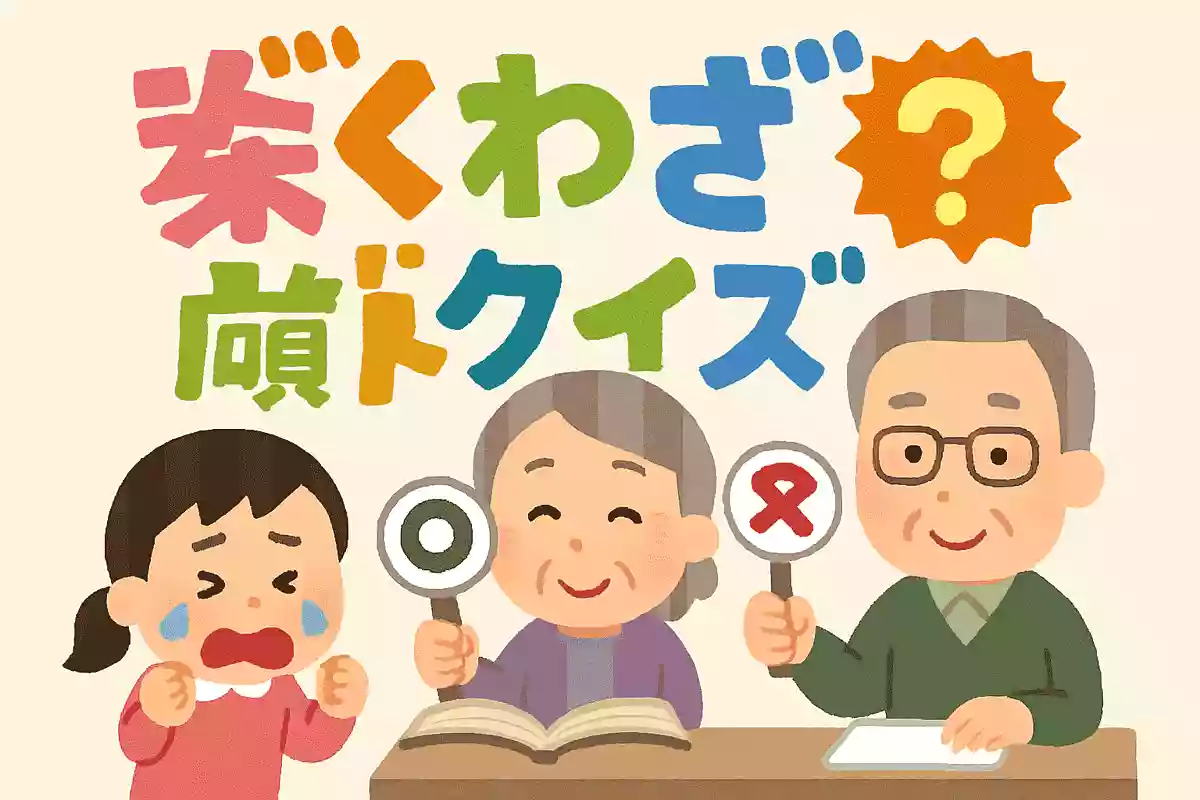
This is a proverb that conveys the idea that there’s no use fighting with unreasonable people or those in power; it’s better to go along with the stronger side.
As representatives of the unreasonable, “crying children” are often cited, and it helps to think of a paired expression that represents authority.
Considering that this is an old proverb, if you think of terms that appear in history textbooks, you might arrive at the answer.
The problem’s answer is “You can’t win against a crying child or a jitō (local land steward),” which expresses that you can’t prevail over a willful child or a tax-collecting authority.
From there, it could be fun to expand the idea by thinking of your own examples of both an unreasonable entity and an unbeatable authority.
Travel needs funds; the world runs on compassion.

This is a proverb that teaches us to value human connections and have a spirit of helping one another, based on the idea that traveling without a companion can feel insecure.
Thinking about what is needed for a journey and expanding ideas from there seems to be the key to arriving at the answer.
The word ‘companion’ is important here, so let’s think of an expression that means walking together.
The intended answer is the proverb “Tabi wa michizure, yo wa nasake” (On a journey, a companion; in life, compassion), which also seems like a saying that could prompt us to reflect on travel memories with someone or on the lives we have walked together.
Illness begins in the mind.
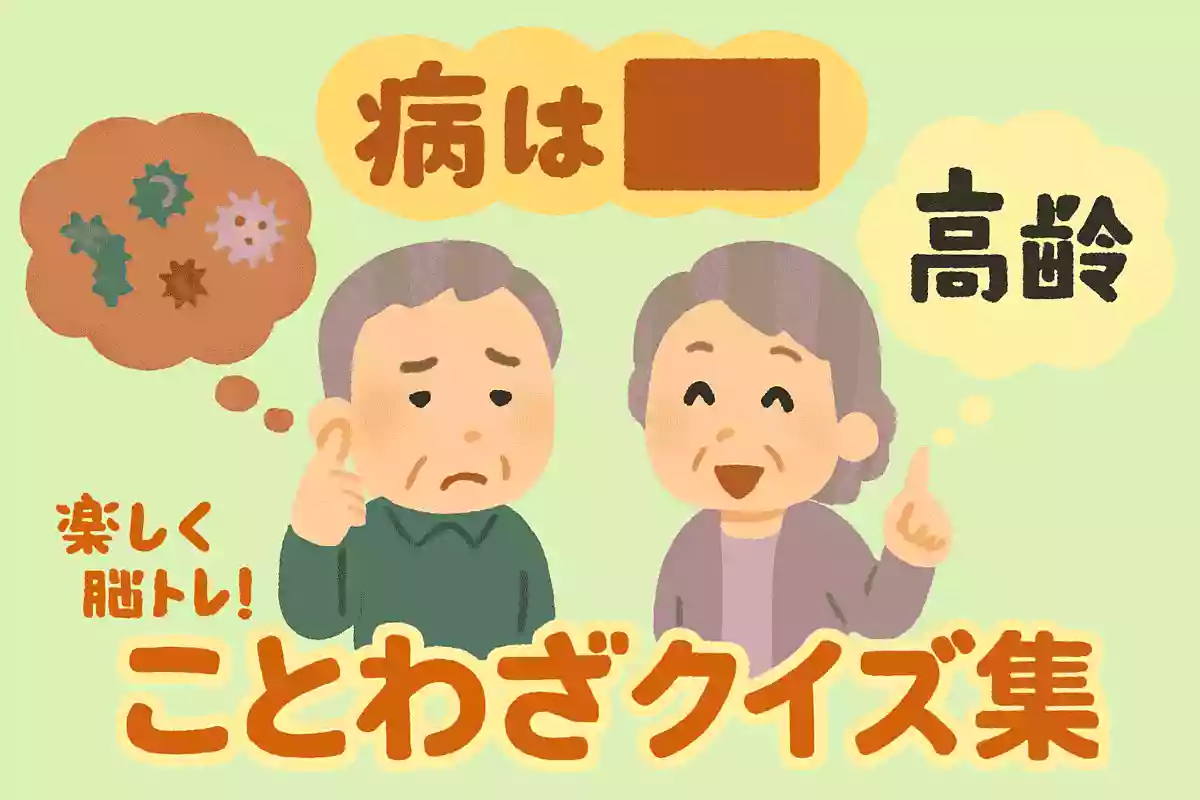
This proverb expresses what triggers the onset of illness and how to approach your mindset when you become ill.
If you consider what might lead to getting sick, you can gradually get closer to the answer.
The simple saying “Yamai wa ki kara” (Illness comes from the mind) tells us that our state of mind can influence our physical condition.
Since everyone knows that stress and immunity are related, many people likely have stories about how adjusting their mindset alleviated their symptoms.
Good things come to those who wait.

This is a proverb that expresses the idea that even if things aren’t going your way right now, patience will bring opportunities around.
It’s a positive saying that carries the message: don’t be discouraged by a single failure—keep trying with a long view.
If you think about things that change over time, like natural phenomena, you might get closer to the answer.
The standard expression is “If you wait, you’ll have fair weather for a sea voyage,” but it’s also said as “If you wait, you’ll have sweet dew weather.” Proverbs with similar meanings include “Good fortune comes to those who wait” and “There’s luck in the leftovers.”
[someone/something] is useless and incorrigible; no matter what you do, they’re hopeless (literally: “whether you roast it or burn it, you can’t eat it”).
![[someone/something] is useless and incorrigible; no matter what you do, they’re hopeless (literally: “whether you roast it or burn it, you can’t eat it”).](https://media.ragnet.co.jp/img/1200__png__/files/2025/04/029ce32764e339fb4c3ed95ed91c4353.webp)
It’s a proverb that expresses something being unmanageable no matter what means you use.
The wording evokes cooking methods and may conjure up images of food, but in practice it’s used for people or situations.
Using the words “eat” and “grill” as hints, if you try plugging in various cooking methods, you might arrive at the right answer.
The quiz answer is “ni temo yai temo kuenai” (literally, “can’t be eaten whether boiled or grilled”), and part of the fun is that other cooking methods would still make sense in context.
In keeping with the proverb, looking back on times you’ve encountered people or matters that were ‘inedible’—that is, impossible to deal with—could make for a lively discussion.