

[For Seniors] Enjoyable Brain Training! Proverb Quiz Collection
A traditional Japanese proverb.
It doesn’t come up often in everyday conversation, but many people remember it as general knowledge.
So this time, we’ve prepared a quiz using proverbs, designed for older adults.
By enjoying the quiz format and recalling the phrases, it can serve as brain training, and the back-and-forth of “maybe this, maybe that” will likely help communication with those around you.
Many seniors know a lot of proverbs, so they may also shine in the role of instructor.
We hope you enjoy a fun time with the proverb quiz.
- [Brain Training] Lively Word Quiz for Seniors
- [For Seniors] Proverb Quiz with Animal Names
- [For Seniors] Weather Proverb Quiz
- [For Seniors] Recommended and Exciting! Brain-Teaser Quiz Collection
- [For Seniors] Brain Training! Recall Quiz Collection!
- [For Seniors] Fun! Let’s Get Excited with Japan’s Number One Quiz
- [For Seniors] Lively two-choice trivia quiz. Handy to know and tidbits you'll want to share with others
- [For Seniors] Laugh-Out-Loud, Crowd-Pleasing! Fun Quiz
- [For Seniors] Lively Wordplay Game: Fun Recreation for Elderly Care
- [For Seniors] Have Fun with Wordplay Characters! A Collection of Funny Puzzles
- [For Seniors] Fun and Informative! Trivia and Quizzes Introduced
- [For Seniors] Today’s recommended quiz. Daily brain-training quiz!
- [For Seniors] Nostalgic quizzes that bring back memories! Showa-era entertainment and sports questions
[For Seniors] Fun Brain Training! Proverb Quiz Collection (21–30)
Proverb fill-in-the-blank

This is a quiz-style recreation where you write proverbs on a whiteboard with part of the phrase left blank, and participants guess the missing words.
For example, using familiar proverbs like “〇〇 saki ni tatazu” (“It’s no use crying over spilt milk”-type sayings) makes it easier for people to join in.
You can offer hints or set a time limit according to the difficulty, which adds tension and a sense of gameplay and naturally livens up the room.
The process of recalling and thinking of the answer helps stimulate the brain, and each answer check brings the joy of rediscovery—“That’s right!” Using long-cherished sayings evokes nostalgia and shared topics, making it easier for older adults to chat with each other.
Keeping a brisk pace also helps maintain concentration.

Even a [fool/idiot] can be swept away by the river
![Even a [fool/idiot] can be swept away by the river](https://media.ragnet.co.jp/img/1200__png__/files/2025/04/99617d27fb4f0b41468243f82658de30.webp)
This is a proverb used as an example that even a master in a field can sometimes fail.
It’s also used as a cautionary reminder that you might fail at something you’re good at if you let your guard down.
Given the situation of being swept away by a river, it’s easy to imagine applying it to someone who is usually good at swimming.
The answer is “kappa,” and other expressions that convey a master’s mistake include “Even monkeys fall from trees” and “Even Kobo makes mistakes with the brush,” so it’s a good idea to learn these as well.

[For Seniors] Fun Brain Training! Proverb Quiz Collection (31–40)
Casting pearls before swine

This is a proverb used to say that no matter how splendid something is, it has no value to someone who doesn’t understand it.
From the meaning of the proverb, let’s think of something that doesn’t recognize the value of a koban (an old Japanese gold coin).
With hints like “a familiar animal” and “often used as a motif for figurines,” you can probably arrive at the answer.
The answer is ‘cat.’ Many people may also recall the image of a maneki-neko holding a koban, remembered as a good-luck charm.
step on the tail of 〇〇
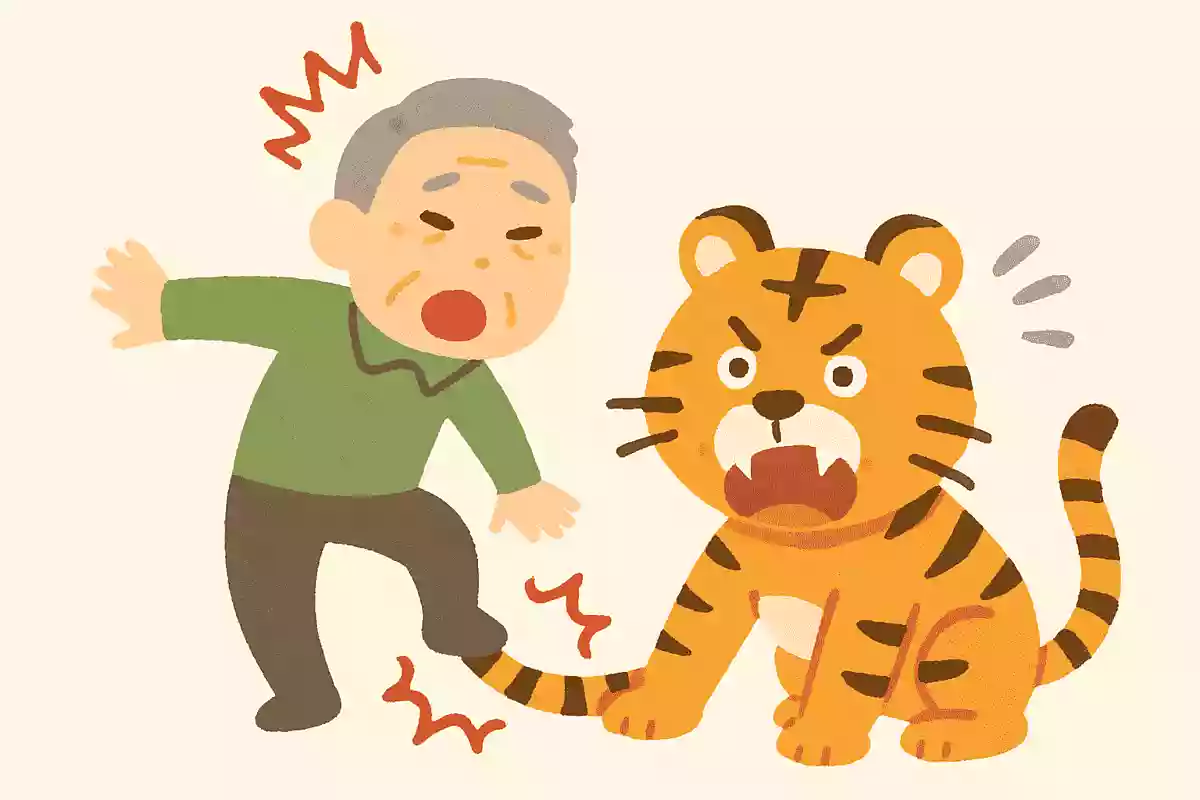
This is a proverb used as a metaphor for doing something extremely dangerous.
Stepping on a tail might evoke a sense of pity, but the hint may be that the crisis is so serious it makes you forget that feeling.
If you imagine a dangerous animal and substitute it in, you can arrive at the answer.
The answer is “tiger,” and sayings like “to put your hand in a tiger’s mouth” or “to touch someone’s sore spot” (literally, “to touch the imperial wrath”) are similar proverbs.
It could also be fun to ask, with anecdotes, which animals each person considers dangerous and why.
Even 〇〇 will run into a stick if it walks (i.e., if 〇〇 moves around, it will encounter unexpected trouble).
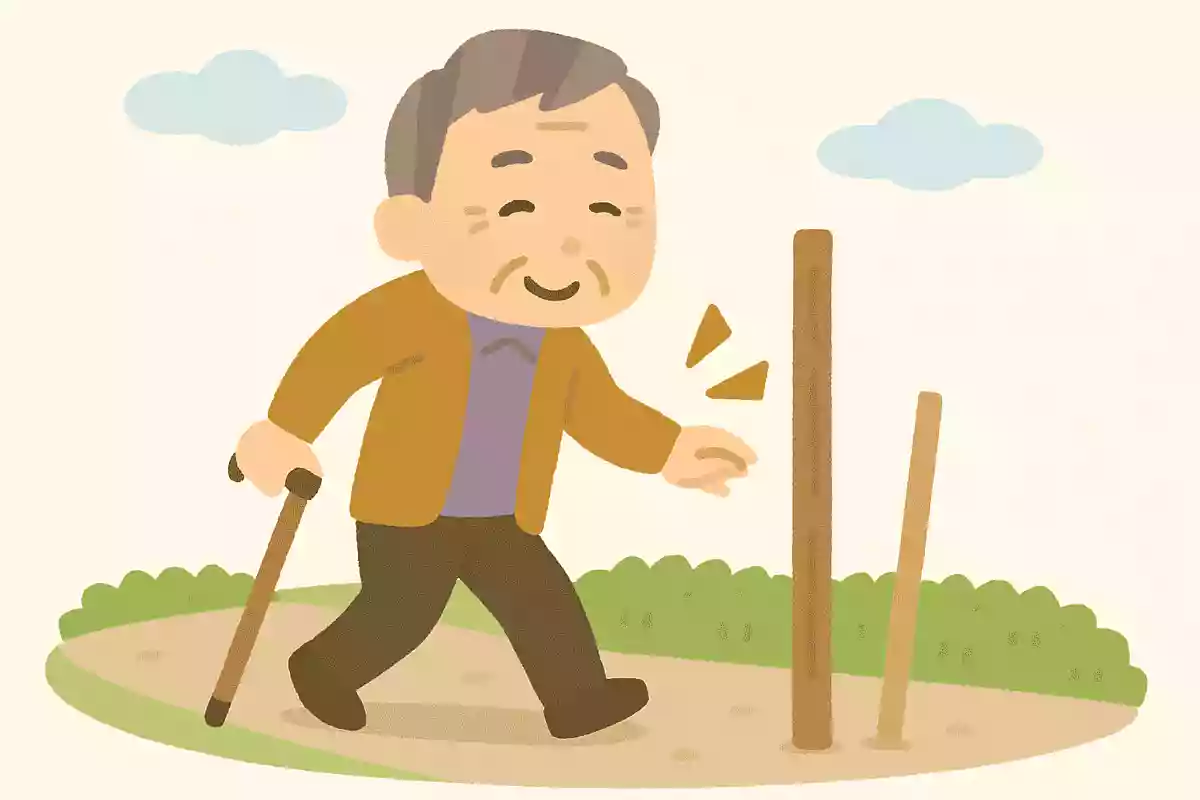
This is a proverb used both as a metaphor for how trying to do something can lead to misfortune, and for how going out and about can bring unexpected good luck.
The interesting point is that it’s used in both the negative and positive senses.
Hints include that it involves an animal—specifically one known for needing walks and being associated with walking.
The answer is “dog”; the proverb evokes the image of a cute dog getting distracted, bumping into a stick with a thud, and panicking.
(It’s the saying about a dog and a stick.)
Skills are a lifeline.
- head
- art; craft; performance; accomplishment (context-dependent)
- effort
- study
See the answer
art; craft; performance; accomplishment (context-dependent)
The proverb “Waza wa mi wo tasukeru” (literally, “Art/skill saves the body”) means that having a special skill can help you in times of trouble. Even if you lose your current job, the skills or hobbies you’ve acquired can lead to new work—an apt lesson for today’s society that values diversity. Of course, the effort and study mentioned in other options also become one’s strength, so this proverb teaches the importance of dedicating yourself to something.

Two heads are better than one.
- 2
- 3
- 5
- 6
See the answer
3
The proverb “Sannin yoreba Monju no chie” means that when three people gather, good ideas will come. Monju refers to Manjushri, the bodhisattva who presides over wisdom. The lesson is that even ordinary people, by pooling their wisdom, can match a bodhisattva—so let’s cooperate. It teaches that the more people think together, the more objectively and from multiple angles things can be seen. However, be careful: there’s also the proverb “Sendō ōkushite fune yama ni noboru” (“Too many captains steer the boat up a mountain”), meaning that having too many people giving directions can backfire and undermine leadership.