

Challenging tongue twisters: Introducing high-difficulty phrases and sentences!

Tongue twisters exist in every country.
I think everyone in Japan has been familiar with them since childhood.
This time, I’ve picked out only the especially difficult tongue twisters.
You’ll find not only long, complicated ones, but also very short tongue twisters that are surprisingly hard to say.
Although tongue twisters might seem like they’re just for kids, adults can enjoy them too at parties or drinking gatherings.
If you practice in advance, you might even become the center of attention in those situations.
Now then, please sit back and enjoy!
- Tongue twisters that will make you laugh out loud! Super funny
- [Diction Training] A Collection of Tongue Twisters to Improve Articulation
- A collection of long tongue twisters. Also recommended for practicing announcements and narration.
- Nagoya dialect tongue twisters are exquisite! A fun collection where your tongue gets tied in knots with regional dialects
- Can you say them? A collection of Hakata-dialect tongue twisters
- Challenge together! A roundup of word games for adults
- “Chau chau, anta” — a Kansai-dialect tongue twister. A phrase only Kansai folks can say.
- [Recreation] Challenge! A roundup of tongue twisters recommended for elementary school students
- [Challenging and Fun!] Quizzes & Riddles for Adults
- Chinese tongue twisters: A collection of rao kou ling helpful for learning Chinese
- Perfect for pronunciation practice! A collection of English tongue twisters.
- [Trick Quiz] Quiz Questions That Excite Everyone from Kids to Adults
- Get Caught? Or Not!? Simple Ways to Kill Time During Class
Difficult tongue twisters. Introducing high-difficulty phrases and sentences! (51–60)
Pencils and sharpened points

There’s a tongue twister that uses expressions unique to the Nagoya dialect.
It goes: “Kondon toki wa tokin-tokin no enpitsu motte kan to kan.
Teka chanto kezutto kan to kan tte itto kan to kan.” The first thing that catches your attention is “tokin-tokin,” right? This word describes a pencil tip that’s sharpened to a fine point.
In the tongue twister, it’s basically saying, “Next time, I have to bring a pencil.
Or rather, I really need to make sure it’s properly sharpened, and I should say so too.” Because it includes unfamiliar dialect words, you could say the difficulty level is on the higher side.

There are many months in which we gaze at the moon, but the moon we gaze at this month is the moon.
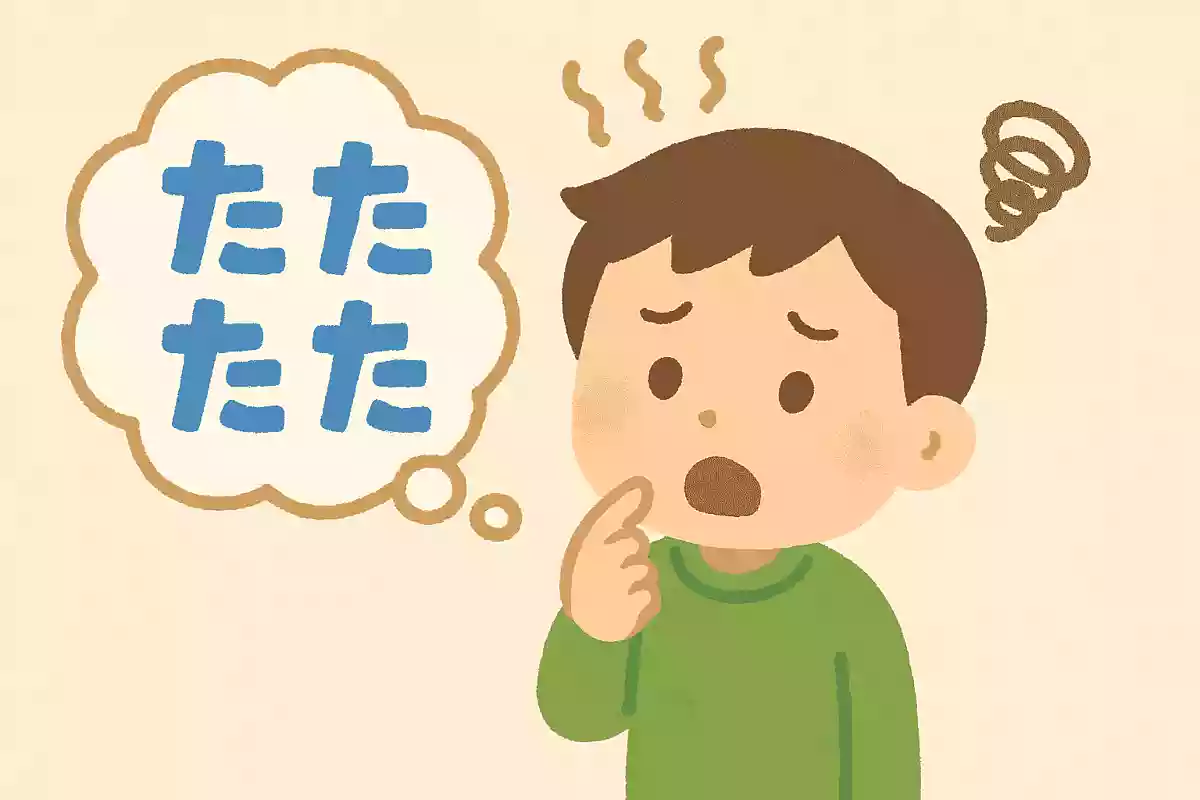
“Naka” and “kana”—these two similar sounds can really trip you up in the tongue twister: ‘Kono ko nakanaka katakana kakenakatta na, nkanakatta kana?’ When you actually try saying it out loud, you end up making mistakes like ‘Kono ko nakanaka kanakana…’ or ‘kanakanakatta kana…’ over and over, and it really makes you want to get stubborn about nailing it! That sweet spot where it feels like you can say it but you just can’t is the best part, right? It’s also fun if you set up the first line as the parent saying, ‘___,’ and then add the son’s line afterward: ‘I couldn’t write katakana, but I didn’t cry much, you know.’

100 passenger aircraft, 100 passengers each

A tongue twister that’s hard even when spoken slowly: “100 passenger planes, 100 passengers each.” Let’s first go over the reading step by step.
"旅客機" is read as "ryokakuki," and the part "客各100人" is read as "kaku-kyaku hyaku-nin." In other words, each of the 100 airplanes has 100 passengers on board.
If you insert a slight pause after “kaku,” you’ll be more likely to succeed.
Incidentally, there’s an even harder version: “In Massachusetts, 100 passenger planes, with 100 persimmon-eating passengers each, are riding a gas-spraying bus and the bus gas explodes.” If you want to raise the difficulty, give that one a try too.
Snowplow in operation

A tongue twister based on a scene often seen in snowy regions: “Snowplow snow removal in progress.” The tricky part of this tongue twister is that the word for “snow removal” appears twice, which makes it easy to lose track of where you are as you repeat it.
It also features several pronunciation challenges: the “jo” sound occurs twice, and the “sha” and “gyo” sounds each occur once.
Try practicing with those four points in mind.
If you master this tongue twister, you might just get better at pronouncing the small kana sounds (ゃ, ゅ, ょ).
Author intraoperative
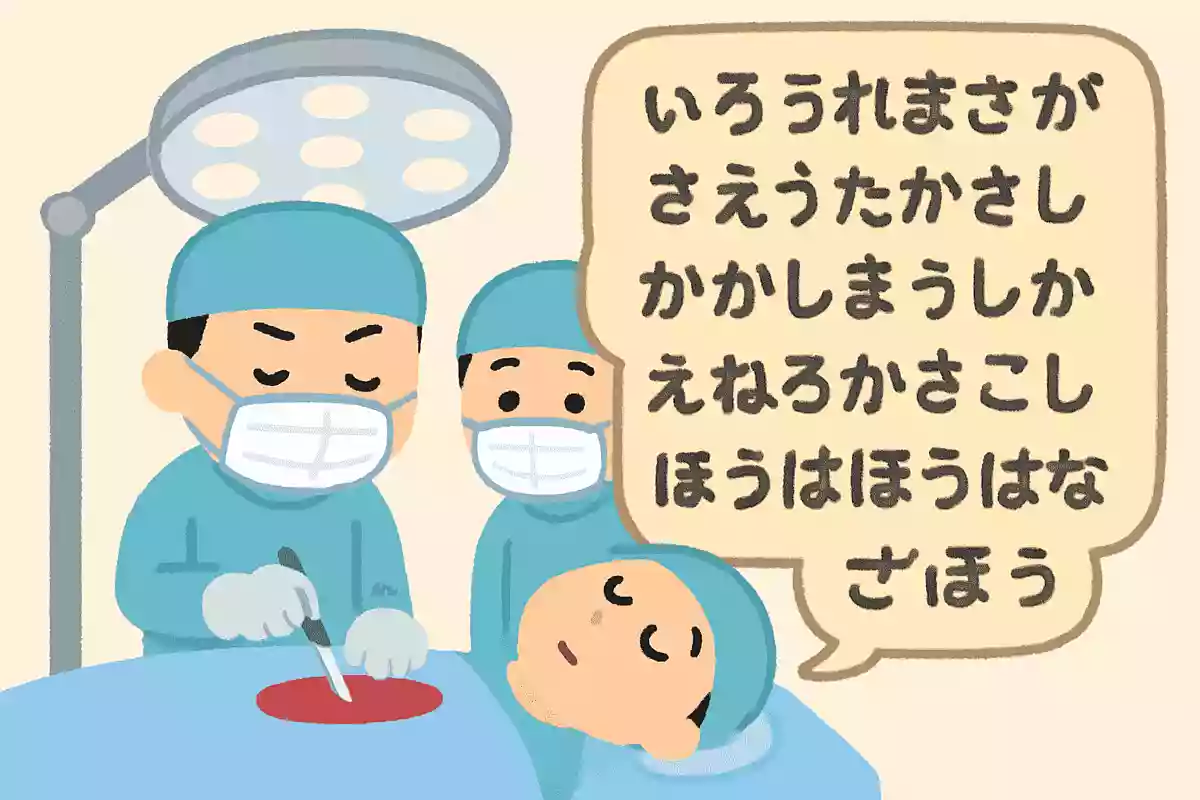
The tongue twister “chosakusha shujutsu-chu” (author undergoing surgery) gives off a somewhat serious vibe.
It makes you wonder what happened to the author, doesn’t it? This tongue twister is simply composed of hard-to-say words lined up in a row.
However, it’s trickier than it looks, so be careful.
In particular, the “shujutsu” part is where many people stumble.
Also, because it’s short, you keep running into the tricky spots as you repeat it, which is one reason it’s so difficult.