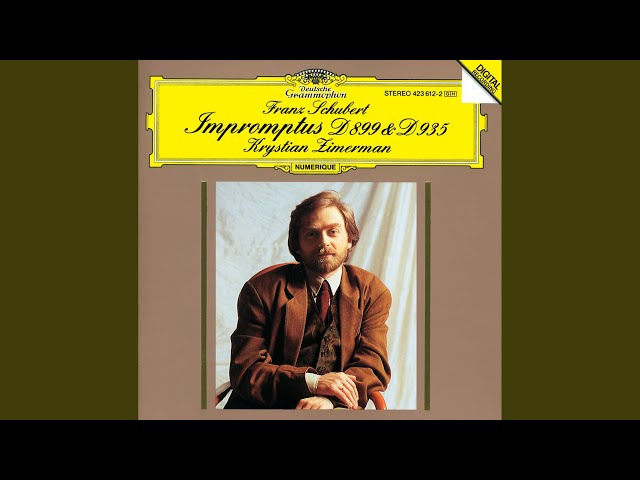
Franz Schubert, the Austrian composer hailed as the “King of Song” for leaving behind more than 600 lieder, including masterpieces such as Erlkönig and Ave Maria.
Schubert is known not only for his many celebrated songs, but also for his wide-ranging output in solo piano works, symphonies, and chamber music.
In this article, we’ve handpicked Schubert’s most popular pieces as well as hidden gems beloved by devoted classical-music aficionados.
We present a selection of sparkling works infused with the spirit of a musician who composed throughout his life.
Masterpieces by Franz Schubert: Exquisite classical works left by the King of Song. Recommended classical music (111–120)
Impromptu in G-flat major, Op. 90 No. 3Franz Schubert
Schubert – Impromptu in G flat major, Op. 90 No. 3 – pianomaedful
This piece is by Franz Schubert, a composer emblematic of the 19th-century Romantic era.
It is the third piece from his set of Impromptus composed in 1827, notable for its beautiful melody characterized by flowing sextuplet arpeggios.
Over gentle harmonies, the inner voices are ornamented, supporting a long-breathed, singing line.
This work, which conveys Schubert’s delicate sensibility and profound expressiveness, is also very popular among piano students.
The sense of meter is highly distinctive, so pay careful attention to which beat each phrase aligns with as you play.
Some arpeggios are broken chords, so as you learn them, memorize where the flats occur on the keyboard.
Holding long notes with the right hand while playing the arpeggios can be quite challenging at first, but similar figurations appear in works by other composers such as Liszt; with continued practice, you’ll be able to apply this technique to other pieces as well.
Impromptu in G-flat major, Op. 90 No. 3Franz Schubert
Schubert: Impromptus No. 3 in G-flat major, D 899, Op. 90 / Performed by: Akira Imai
What followed Classical music was Romantic music.
Romantic music departed from the earlier pursuit of axioms in musical practice, instead prioritizing human emotions and sensations; in other words, it does not demand strictness in compositional technique.
Several of Schubert’s impromptus are quintessentially human-centered.
Impromptus No. 3 in B-flat major, D 935, Op. 142Franz Schubert
Schubert: Impromptus No. 3 in B-flat major, D 935, Op. 142 / Performed by Akira Imai
Let us introduce a work by Franz Schubert, a leading figure of early 19th-century Austria.
Composed in 1827, this piece is written in a theme-and-variations form, consisting of a theme followed by five variations.
It is characterized by a familiar melody that includes quotations from incidental music by Schubert himself.
Each variation employs various techniques—such as dotted rhythms, ornamentation, and triplets—beautifully fusing Viennese Classical virtuosity with Romantic lyricism.
Among Schubert’s piano works, this impromptu is one of the most highly regarded and frequently performed.
It is a recommended piece for those beginning piano through intermediate players who wish to experience Schubert’s world.
In Japan, it has also been used in commercials for TEPCO (Tokyo Electric Power Company), so you might find yourself thinking, “Oh, it’s that piece!” as you play it.
Fantasy in C major, Op. 15, D 760 “Wanderer Fantasy”Franz Schubert
Schubert / Fantasy in C major “Wanderer Fantasy,” D 760, Op. 15 / Atsushi Imada
Franz Schubert’s Fantasy in C major, Op.
15, D.
760, is an advanced piano work in four movements.
There’s even an anecdote that Schubert himself couldn’t play it well and said, “Let the devil play a piece like this.” The left-hand arpeggios in the fourth movement, in particular, are a torment for performers.
But beyond virtuosity, the piece demands profound musicality.
Seamlessly blending Schubert’s passion and craft, it’s perfect for anyone who wants to experience the essence of piano performance.
There is also an arrangement by Franz Liszt, so comparing versions is highly recommended.
Fantasia in C major, Op. 15, D. 760 “Wanderer Fantasy”Franz Schubert
Schubert / Fantasy in C major “Wanderer Fantasy,” D 760, Op. 15 / Atsushi Imada
A work by Franz Schubert, a composer emblematic of the Romantic era.
Composed in 1822, this piece is based on the melody of Schubert’s own song “Der Wanderer.” It consists of four movements and is notable for being performed without breaks.
In the second movement, the “Wanderer” melody is clearly quoted, strongly reflecting themes of loneliness and drifting.
Technically, it is extremely difficult, and Schubert himself is said to have remarked, “Let the devil play a piece like this,” acknowledging its challenges.
It’s a piece that is sure to shine on the recital stage—a true masterpiece that experienced pianists should definitely try.
Schubert: Fantasy in F minor, D 940, Op. 103 Pf. Hiroshi Kurokawa; Pf. Ikuko Nakaoki
The celebrated Fantasy in F minor, Op.
103, D 940—said to have been composed in the year Franz Schubert died—is a single-movement work that, in practice, unfolds like a four-movement piece, each section possessing its own character.
In that sense, it resembles the Wanderer Fantasy.
From measure 133, a dissonance appears where F and E clash by a semitone; since this is difficult to bring out clearly in a piano duet, be sure to practice the final section thoroughly.