

Tongue twisters that will make you laugh out loud! Super funny


Tongue twisters used for play and articulation practice.
Whether you’re just having fun or trying to improve your diction, you might as well enjoy it! In this article, we’ll introduce tongue twisters that make wordplay fun and interesting.
We’ve gathered tongue twisters that let you feel the charm of language—some with delightful word sequences that make you want to say them out loud, and others that are amusing even if you don’t quite understand the meaning.
They can also be used for children’s play or oral exercises for older adults, so please use them as a reference!
- Challenging tongue twisters: Introducing high-difficulty phrases and sentences!
- [Recreation] Challenge! A roundup of tongue twisters recommended for elementary school students
- [Diction Training] A Collection of Tongue Twisters to Improve Articulation
- Nagoya dialect tongue twisters are exquisite! A fun collection where your tongue gets tied in knots with regional dialects
- Witty quotes that make you chuckle without thinking
- “Chau chau, anta” — a Kansai-dialect tongue twister. A phrase only Kansai folks can say.
- Can you say them? A collection of Hakata-dialect tongue twisters
- [For Seniors] Boost Oral Function with Tongue Twisters! Recommended Picks to Try
- The magical power of words that make people laugh! A collection of quotes that lighten the heart
- Challenge together! A roundup of word games for adults
- [Trick Quiz] Quiz Questions That Excite Everyone from Kids to Adults
- [Rec] Interesting! A roundup of wordplay games
- A collection of long tongue twisters. Also recommended for practicing announcements and narration.
A Collection of Funny Animal Tongue Twisters (21–30)
Kappapapakappa

This tongue twister focuses on two different words that sound the same: kappa the yokai and kappa meaning raincoat.
It depicts a certain scene where a dad kappa is wearing a raincoat kappa, and the connecting word “papa” causes a run of repeated ‘pa’ sounds.
Structurally, it’s made up of three blocks—‘kappa,’ ‘papa,’ and ‘kappa’—so it may be easier to say if you’re mindful of the breaks.
The plosive ‘pa’ requires clear mouth movement, so putting some force into it is also an important point.

Warm snail

It’s one of those tongue twisters that’s short but hard to pronounce.
What makes this phrase tricky is the repeated “ka” sounds, which make smooth pronunciation very difficult.
Your tongue tends to get tangled between “atatakaka” and “katatsumuri,” and trying to say it quickly makes mistakes even more likely.
To say this tongue twister well, it’s important to start slowly and practice while checking your tongue movements.
Keep your mouth movements smooth and pay attention to the breaks between sounds, then gradually increase your speed.

Long Text & Continuous Challenge Tongue Twisters (1–10)
Say: “Apologize to Aya and Aya, apologize to Aya and your parents.”
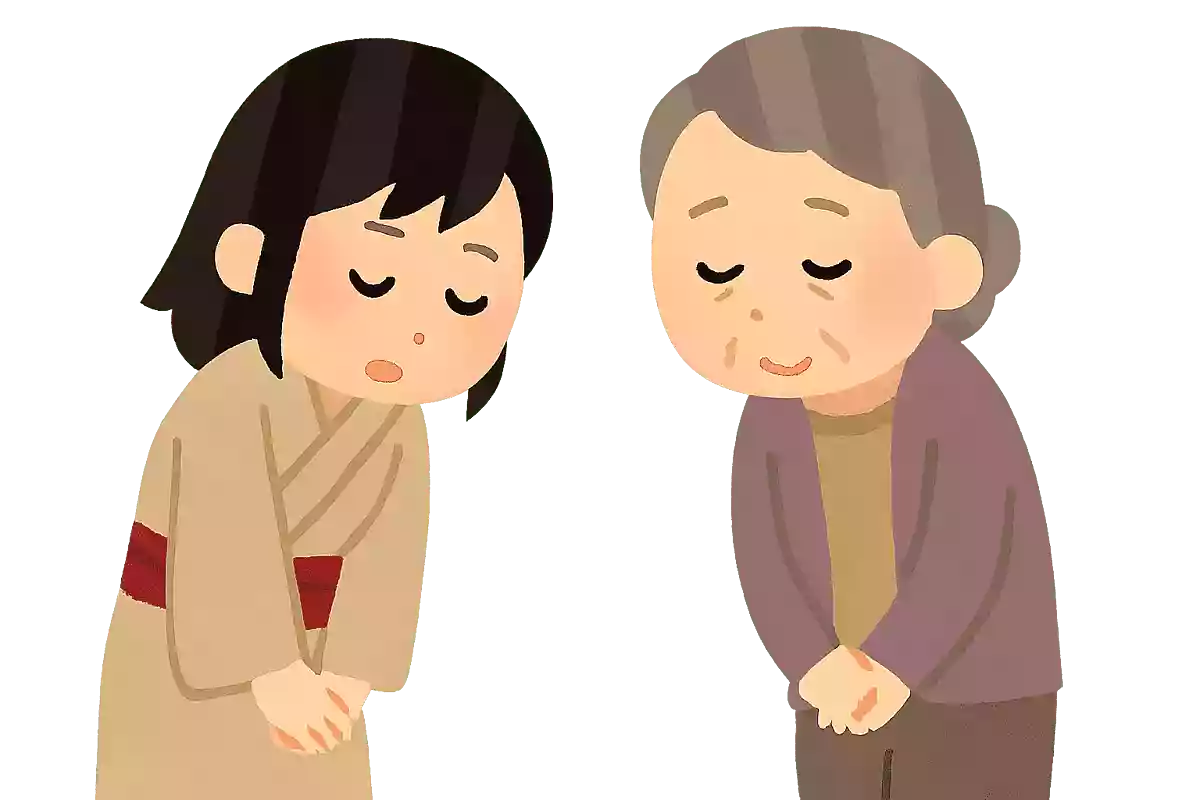
A tongue twister in dialogue style: “Apologize to Aya, and tell her to apologize to her parents.” There are several versions of this tongue twister, such as “Apologize to Aya, and tell her to apologize to the greengrocer,” or “Tell the greengrocer that Aya is going to the bathhouse with her parents.” All versions rhyme on ‘Aya’ (o-aya) and make the sentences complex in a similar way.
Even without small kana or voiced sounds, it’s still difficult—a rare type of tongue twister.
Give it a try!

A small pimple on the right ear

This tongue twister is tricky, and it also invites a bit of imagination.
First, let me point out what makes it difficult: it uses the sound “ni” a lot.
Because “ni” appears in succession, you can easily get confused about how many times you’ve said it and where you are in the phrase.
Also, the unfamiliar phrase “mini nikibi” (tiny pimple) shows up, which is amusing.
It makes you wonder how small it is and where on the ear it appears, and you can’t help but picture it.
You keep calling me “you, you,” but I don’t go around calling you “you, you,” so stop calling me “you, you,” you!NEW!

The fun part is how your tongue gets twisted by repeating “anta” and “atashi” over and over.
It’s great practice for rhythm and pronunciation when read aloud by both kids and adults.
It feels like a humorous exchange—“Don’t say anta or atashi!”—almost like a real conversation.
The key is to savor the words and laugh as you take on the challenge.
Each read creates slightly different rhythms and pauses, so repeating it makes it even more enjoyable.
It’s a playful way to cultivate a feel for language—and once you read it, you might find it irresistibly catchy.
