

[For Seniors] Laugh-Out-Loud, Crowd-Pleasing! Fun Quiz


Quick wits matter! We bring you laugh-out-loud brain teasers and riddles that make you blurt out “Ahh!” or “I see!” the moment you get the answer or someone tells you the correct one.
There are plenty of riddles that are friendly and familiar for seniors, too.
If the answer doesn’t come easily, try thinking it through with the people around you, or offer small hints to guide everyone toward the solution.
Those “almost got it, but not quite” questions give your brain a great workout.
Enjoy a delightful time that brings a little chuckle and a smile the moment the answer clicks.
- [For Seniors] Fun and Lively! Recommended Quiz Questions
- [For Seniors] Guaranteed to Liven Things Up! A Collection of Brain Training Activities That Will Spark Laughter
- [For Seniors] Nostalgic quizzes that bring back memories! Showa-era entertainment and sports questions
- [For Seniors] Fun and Educational True-or-False Quiz
- [For Seniors] Have Fun with Wordplay Characters! A Collection of Funny Puzzles
- [Brain Training] Lively Word Quiz for Seniors
- [For Seniors] Lively two-choice trivia quiz. Handy to know and tidbits you'll want to share with others
- [For Seniors] Fun! Let’s Get Excited with Japan’s Number One Quiz
- [For Seniors] Trivia Multiple-Choice Quiz
- [For Seniors] Fun Riddles That Stimulate the Brain
- [For Seniors] Fun and Informative! Health Trivia Quiz
- [For Seniors] Sports Trivia Quiz & Fun Facts. Easy and Entertaining
- [For Seniors] Recommended for Brain Training! Nostalgic Showa-Era Quiz
Showa-era retro and nostalgic goods (11–20)
Kendama is often associated with Japan, but where did it originally come from?
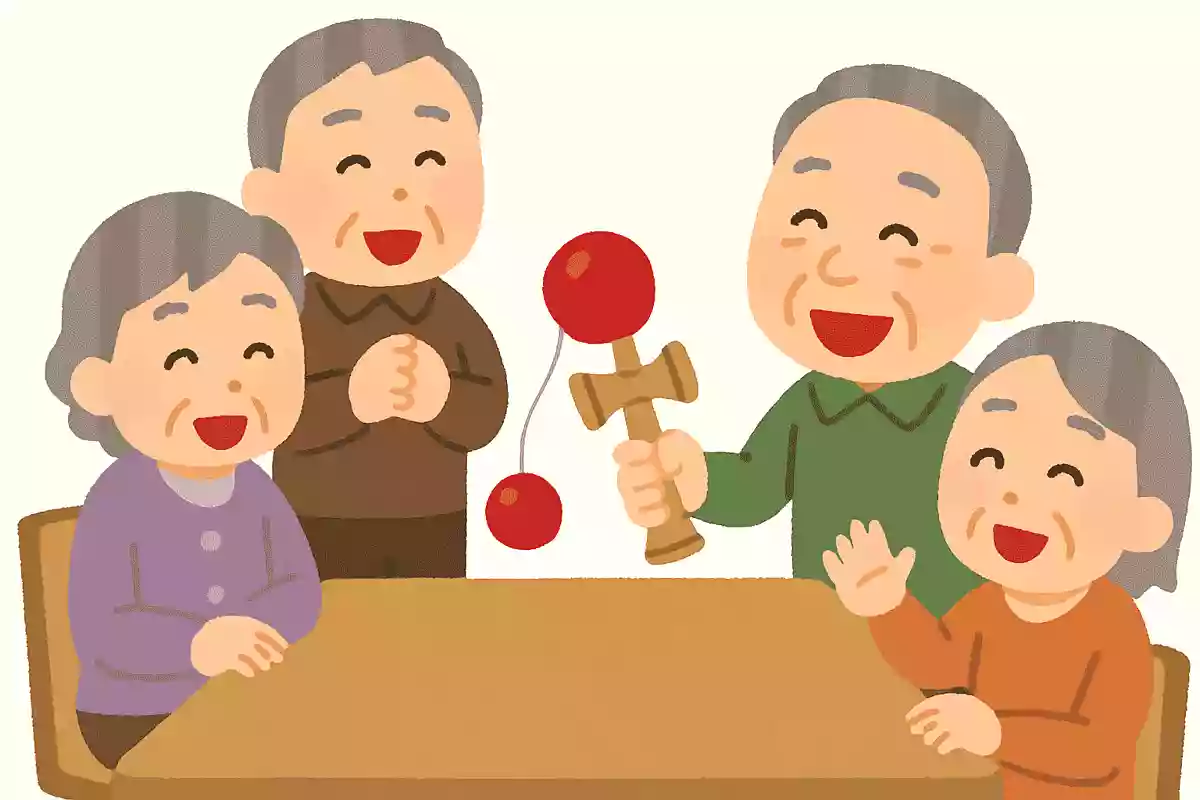
Many of you probably played with a kendama when you were children.
When you think of kendama, you might picture it as a traditional Japanese pastime.
However, it actually originated in another country.
Which country is that? The answer is France.
It was born in the 16th century, and over there it’s called “bilboquet.” Unlike the Japanese kendama, it doesn’t have the two side cups—a large cup and a small cup.
Its other structural features also differ slightly, so if you’re curious, try looking it up and comparing them.

Showa-era Retro and Nostalgic Goods (21–30)
Showa-era Buzzword Quiz

Let’s use it for recall training! Here are some ideas for a Showa-era buzzword quiz.
This is a quiz I’d love for anyone who feels their memory has been declining lately to try.
It features questions about buzzwords from 1950, which is Showa 25! The video also has segments that look back on the situation and history of the time, so many of you might find it nostalgic.
The quiz is in a multiple-choice format with three options for each question, so feel free to give it a try.
Nostalgic Games Quiz

Nostalgic games everyone enjoyed in childhood.
Memories from when we were kids never fade, even as we grow older.
The “Nostalgic Games Quiz” lets you look back on the games you were crazy about in your childhood or younger days while having fun.
It’s a quiz where you look at pictures and tease out the game’s name, clever ways of playing, and the characteristics of the play equipment.
As you trace your memories, conversation flows naturally, making it a recreation full of smiles.
Just recalling the games from your childhood can lift your spirits and provide great stimulation for the brain!

Trivia, Fun Facts, and Tidbits (1–10)
Scissors that have become dull can be revived by cutting something found in a household kitchen. What is that “something?”
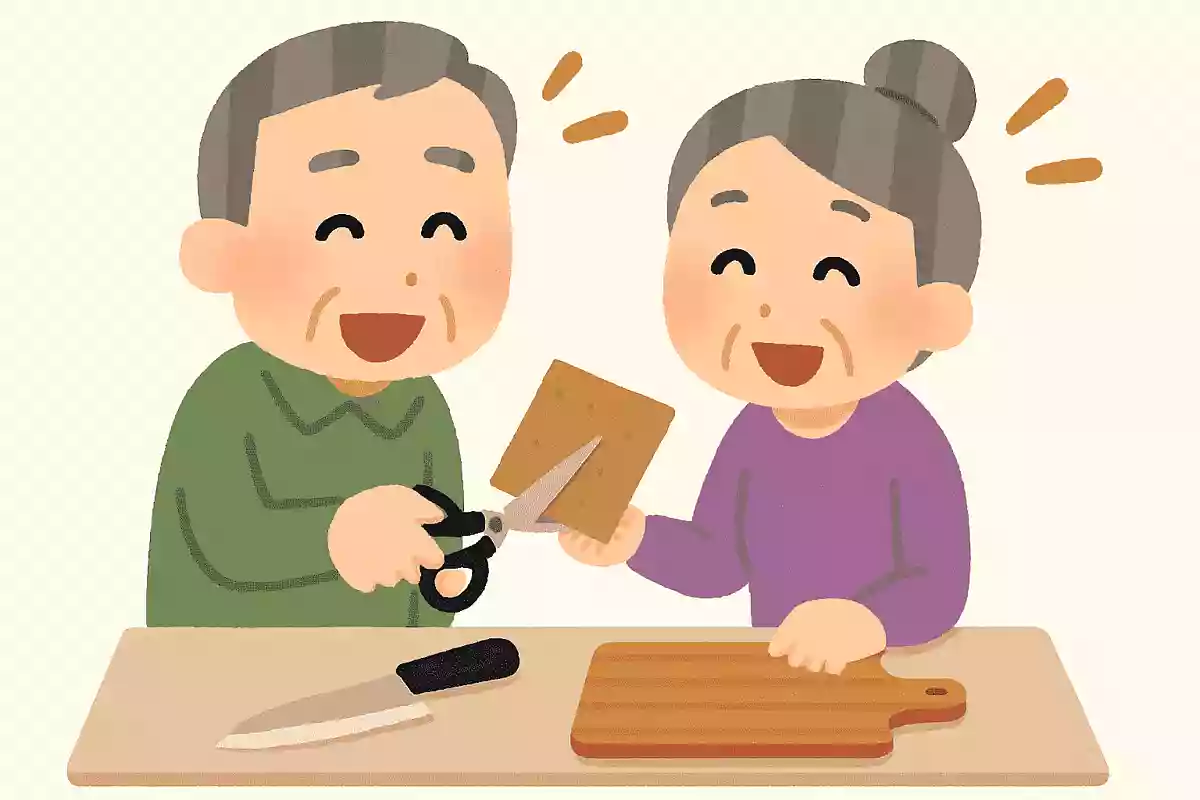
Scissors are stationery that everyone uses daily, but their sharpness inevitably dulls over time.
However, even dulled scissors can be easily revived just by cutting a common household item.
The hint is something from the kitchen: it’s made of metal, yet it can be cut with scissors—this should make it clear.
The answer is aluminum foil.
It’s said that a phenomenon occurs where the aluminum compensates for the worn parts of the scissors.
Since the effect is only temporary, it’s good to remember that properly sharpening them with tools is a more reliable solution.

What are the buttons on the sleeves of school uniforms and suits for?
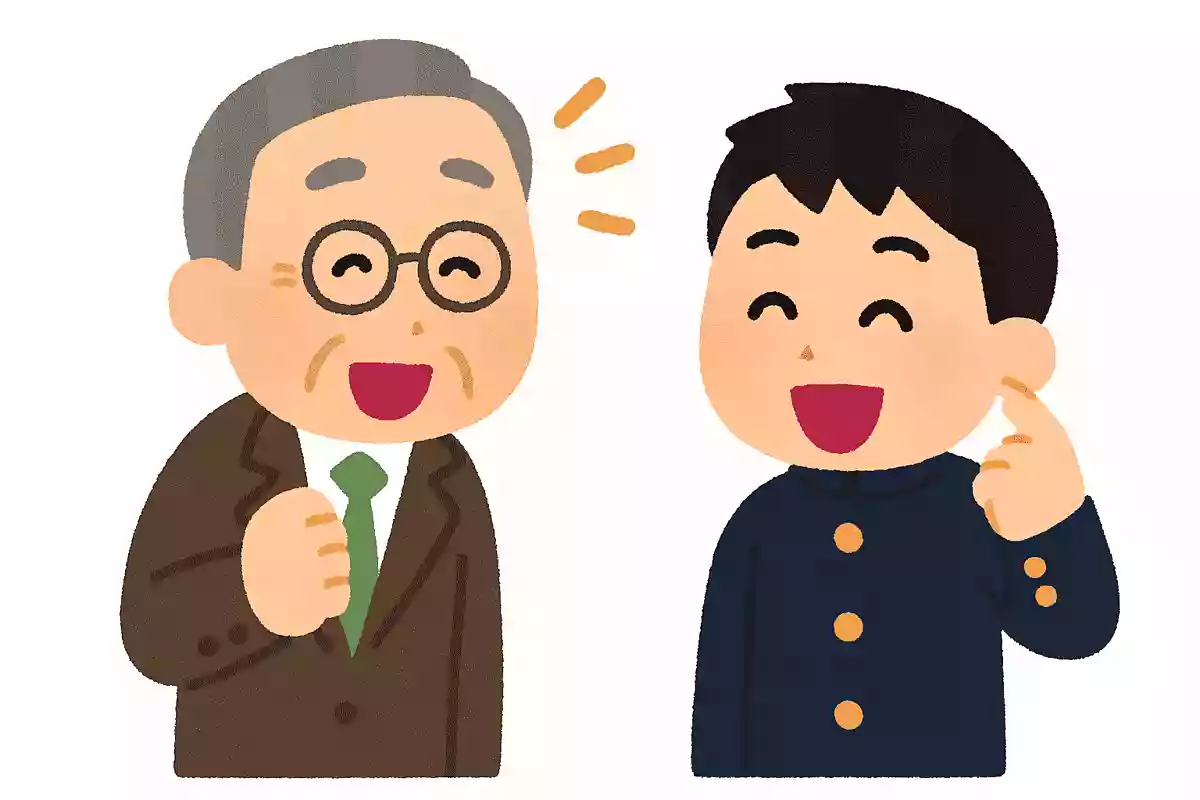
The buttons on the sleeves of jackets, like those on school uniforms and suits, may seem to serve little purpose—but why are they there? The answer is: to keep people from wiping their noses on their sleeves.
One theory says it began during Napoleon’s Russian campaign, when, unable to bear the sight of soldiers shivering in the cold and wiping their noses on their uniform sleeves, buttons were added.
There are also theories that they were meant to make it easier to open the cuffs and roll up the sleeves, or that they serve a purely decorative purpose.
In any case, it’s fun to ponder the history behind them.

If two or more candidates receive the same number of votes in an election, there is a method used to determine the winner. What is that method?
Elections are major events that decide who will lead a country or region, and each vote—just one vote—is an important opinion.
So how is the winner decided when there’s a tie in the number of votes? A simple method that everyone is familiar with: in the end, the person with the better luck wins.
In other words, a lottery.
The exact form of the lottery isn’t fixed, but there are real examples of it being used, so it could be interesting to look those up as well.
Why are houseplants displayed in banks?

Banks are essential facilities, and for some reason we have a strong image of them being decorated with potted plants.
In fact, the plants placed in banks have a deeper purpose beyond simply creating a fresh, pleasant impression.
Here’s a hint: they help resolve a type of trouble that can occur in banks—though you might rarely encounter it.
The answer is: “to roughly gauge a bank robber’s height.” It’s the kind of reason that makes you hope it’s never actually needed.