

[For Seniors] Fun and Lively! Recommended Quiz Questions


How about quiz games like wordplay and riddles during recreation time at day service centers and other senior facilities? Puzzles that hide meanings in the arrangement, color, or orientation of letters, as well as riddles, are enjoyable brain teasers.
The answers often draw on familiar folk tales or everyday events, so seniors can experience that delightful “I get it!” moment of surprise and accomplishment when inspiration strikes.
The process of thinking stimulates the brain, and smiles and conversation naturally arise when the answer is revealed.
This time, we’ll introduce clever wordplay and riddle quizzes that are sure to get seniors excited and thinking, the kind that make you say, “Wow, that’s clever!”
- [For Seniors] Laugh-Out-Loud, Crowd-Pleasing! Fun Quiz
- [For Seniors] Lively Wordplay Game: Fun Recreation for Elderly Care
- [Brain Training] Lively Word Quiz for Seniors
- [For Seniors] Have Fun with Wordplay Characters! A Collection of Funny Puzzles
- [For Seniors] Fun and Educational True-or-False Quiz
- [For Seniors] Fun Riddles That Stimulate the Brain
- [For Seniors] Fun! Let’s Get Excited with Japan’s Number One Quiz
- [For Seniors] Fun Quiz Questions That Will Liven Up December
- For seniors: Fun, crowd-pleasing word association game ideas
- [For Seniors] Fun Recreational Activities Without Equipment
- [For Seniors] Perfect Brain Training! Fun Trivia
- [For Seniors] Recommended and Exciting! Brain-Teaser Quiz Collection
- [For Seniors] Recommended Trivia Quizzes & Fun Facts for November
Trivia and Fun Facts Quiz (21–30)
What do you call an athlete who has competed in the Olympics?
Athletes who have competed in the Olympics are called “Olympians.” The word “Olympian” originally referred to residents of Olympia, the Greek city known as the site of the ancient Olympic Games, but today it is commonly used to refer to Olympic athletes.
The term “Olympian” is also said to evoke the gods of Greek mythology and carry the sense of being “majestic and imposing.” That meaning perfectly overlaps with the image of Olympians who take on the challenge of competition while carrying their nation on their shoulders.

Which country leads the parade of nations at the Olympic opening ceremony?
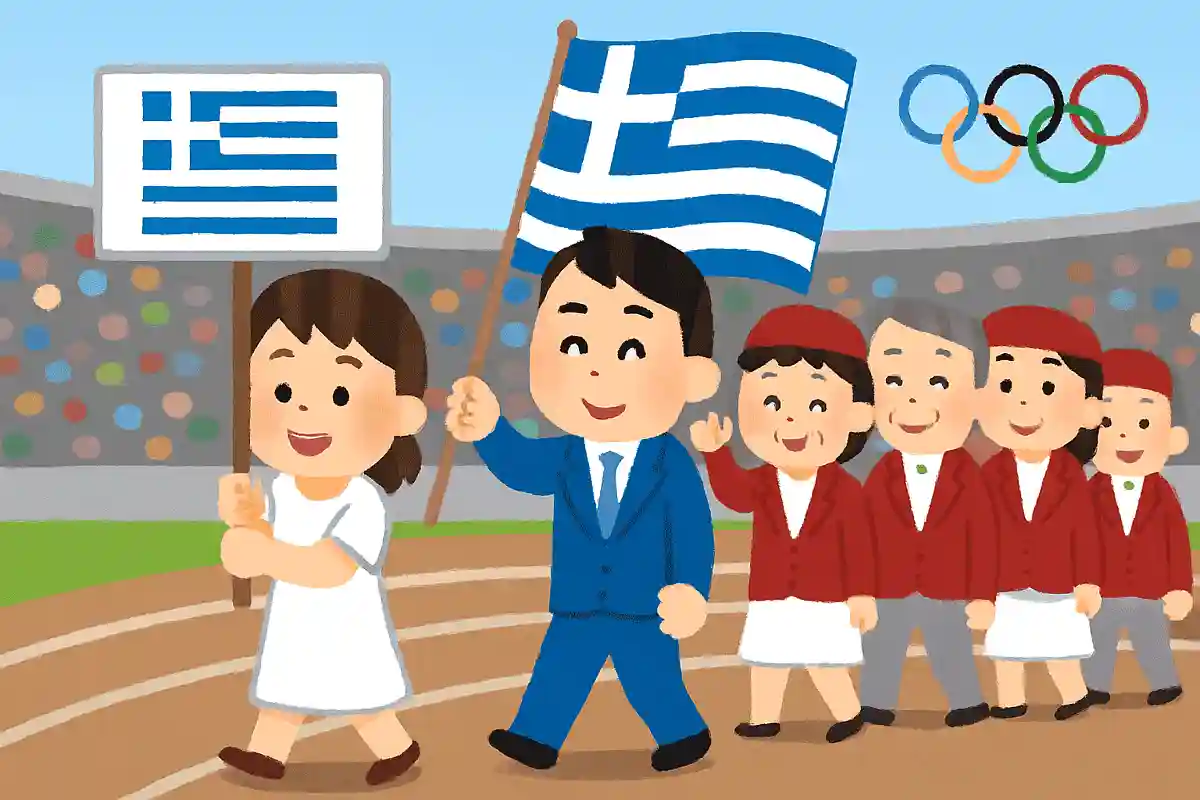
As for the order of the opening parade, it has actually changed over time.
In fact, even in Japan, the 1964, 1972, and 1998 Games used the alphabetical order, but in 2021 it switched to the Japanese syllabary order.
However, despite such changes, the country that enters first has remained the same.
The correct answer is Greece, because it is the birthplace of the modern Olympics.
In recent years, the country hosting the next Olympics is also often placed near the end.
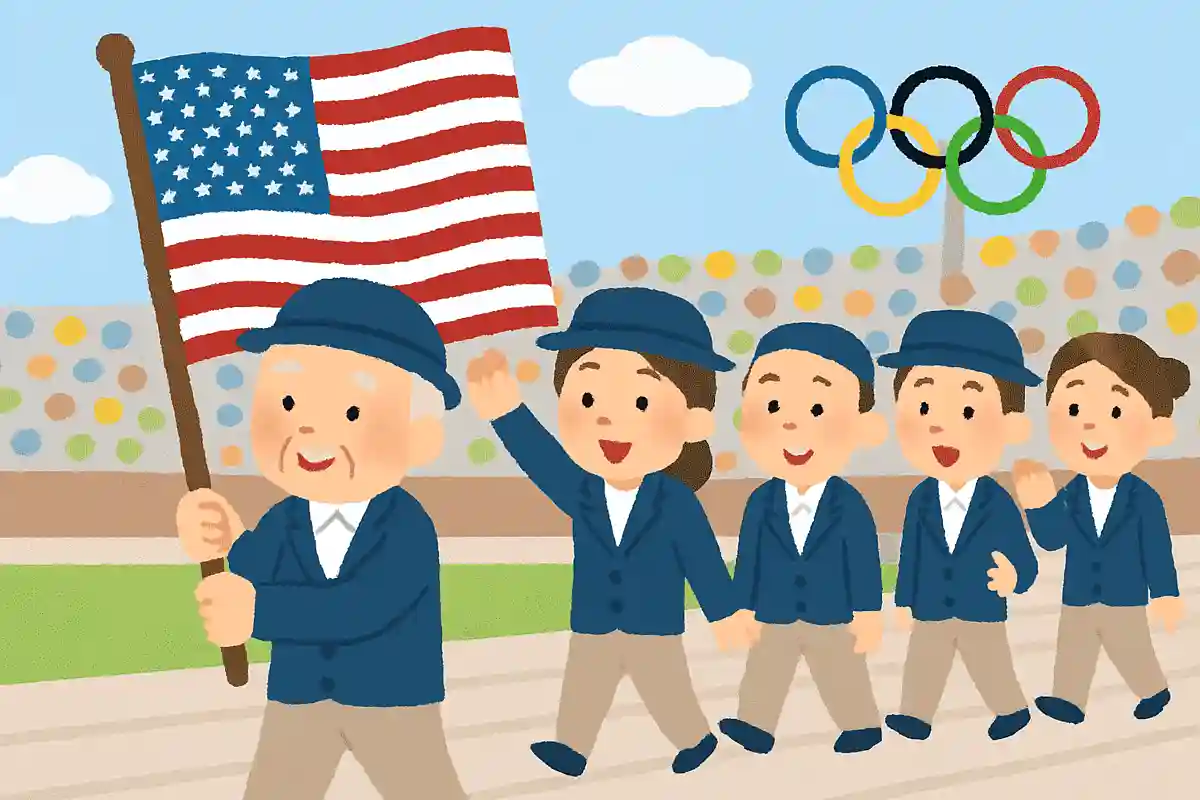
Which country marches last in the Olympic Parade of Nations?
Some of you may be curious about how the order of the Olympic parade of nations is determined.
In recent years, the order has generally followed the host country’s language, but since it used to be based on the Latin alphabet, it could change again in the future.
However, there are fixed rules for the first and last countries to enter.
The first to enter is the country considered the birthplace of the modern Olympics.
And the last to enter, which is the answer to this question, is the host nation.
At the Tokyo Olympics held in 2021, Japan, as the host country, marched in last.
What bird always appears at the Olympic opening ceremony?
This is an issue that ties into the staging specified in the Olympic Charter.
The answer is “doves.” As many of you know, doves are recognized as a symbol of peace, and at the Olympic Opening Ceremony, doves were always released after the lighting of the Olympic flame.
However, due to a tragic accident at the 1988 Seoul Olympics, real doves no longer appear in the staging today.
That doesn’t mean doves have disappeared from the Olympics altogether—each country incorporates doves into their staging in different ways, so please keep an eye out for them.
What do the Olympic rings represent?

The Olympic symbol consists of five interlocking rings, right? When people hear “Olympics,” I think this is the first image that comes to mind, but do you know what the symbol represents? In fact, the rings stand for the five continents—Asia, Europe, Africa, the Americas, and Oceania—and signify their unity and the gathering of athletes from around the world.
The colors of the rings—blue, yellow, black, green, and red—were chosen because they appear in many national flags.
How many events have been held continuously from the first Olympic Games to the present?

People tend to think the same events are held every time, but in fact, only five Olympic sports have continued without interruption since the first Games: athletics (track and field), swimming, artistic gymnastics, fencing, and cycling.
Some events that used to be included have been dropped or later reinstated—so it really varies by Olympics.
The Olympic program is decided by the International Olympic Committee at its Session, but if issues arise—such as doping problems or any concerns about the governance capacity of the international federations, commonly called IFs—sports can be excluded.
Trivia and Fun Facts Quiz (31–40)
The second Sunday in May is Mother’s Day. Which country is the origin of Mother’s Day?

The second Sunday of May is Mother’s Day—a day to acknowledge mothers’ daily efforts and express our gratitude.
It has become customary to give gifts like carnations to show appreciation, but few people may know the detailed history behind it.
How about a quiz that delves into the origins and history of Mother’s Day? It’s said that the tradition of giving carnations began as a tribute to American social activist Ann Jarvis.
Behind it lies a mother’s strong love and the desire not to send husbands and children off to war.
