

[For Seniors] Fun and Lively! Recommended Quiz Questions


How about quiz games like wordplay and riddles during recreation time at day service centers and other senior facilities? Puzzles that hide meanings in the arrangement, color, or orientation of letters, as well as riddles, are enjoyable brain teasers.
The answers often draw on familiar folk tales or everyday events, so seniors can experience that delightful “I get it!” moment of surprise and accomplishment when inspiration strikes.
The process of thinking stimulates the brain, and smiles and conversation naturally arise when the answer is revealed.
This time, we’ll introduce clever wordplay and riddle quizzes that are sure to get seniors excited and thinking, the kind that make you say, “Wow, that’s clever!”
- [For Seniors] Laugh-Out-Loud, Crowd-Pleasing! Fun Quiz
- [For Seniors] Lively Wordplay Game: Fun Recreation for Elderly Care
- [Brain Training] Lively Word Quiz for Seniors
- [For Seniors] Have Fun with Wordplay Characters! A Collection of Funny Puzzles
- [For Seniors] Fun and Educational True-or-False Quiz
- [For Seniors] Fun Riddles That Stimulate the Brain
- [For Seniors] Fun! Let’s Get Excited with Japan’s Number One Quiz
- [For Seniors] Fun Quiz Questions That Will Liven Up December
- For seniors: Fun, crowd-pleasing word association game ideas
- [For Seniors] Fun Recreational Activities Without Equipment
- [For Seniors] Perfect Brain Training! Fun Trivia
- [For Seniors] Recommended and Exciting! Brain-Teaser Quiz Collection
- [For Seniors] Recommended Trivia Quizzes & Fun Facts for November
Health and Body Knowledge Quiz (1–10)
Nails are part of a certain part of the body. Where on the body are they?
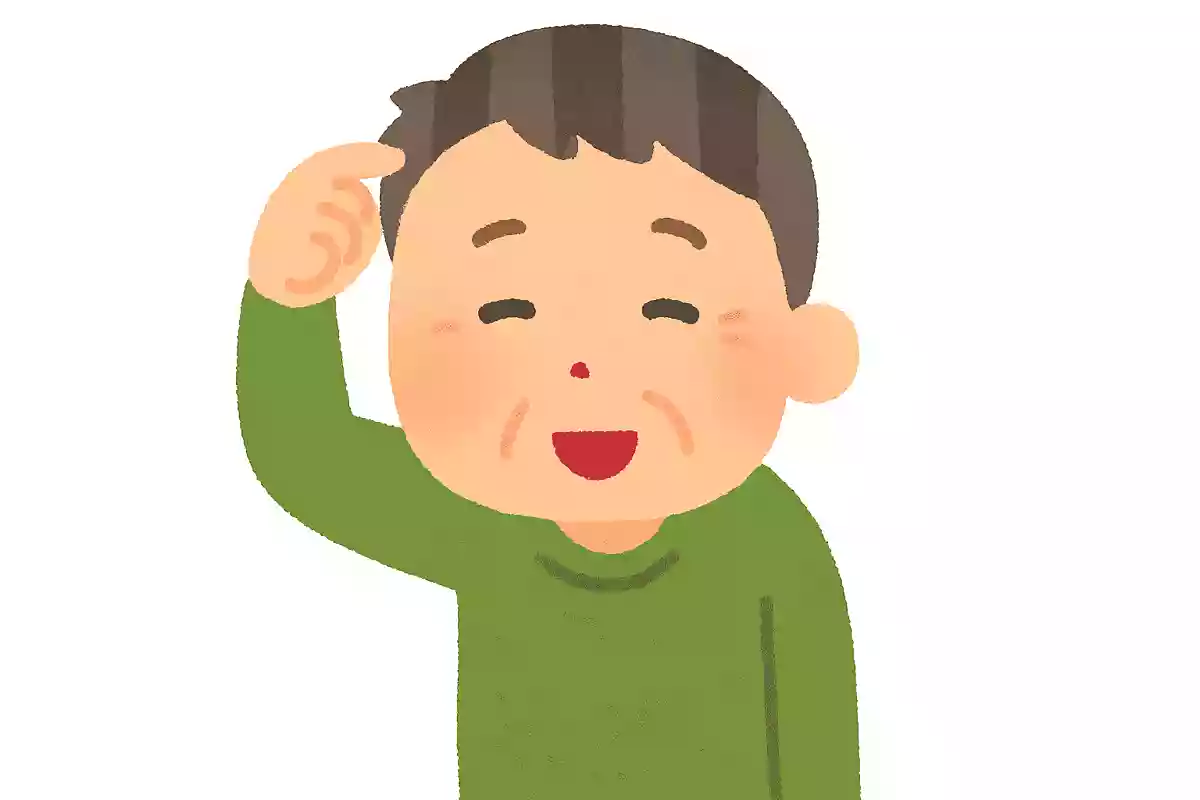
You might think a nail is just a nail, but in fact it’s simply a part of another part of the body.
So, what exactly is it? Rather than overthinking it, it might help to go with the first body part that comes to mind.
The straight answer: skin! Nails are formed when the skin hardens and changes, becoming something harder and different from soft skin.
By the way, if you lose your nails, you may have trouble gripping objects properly, protecting your fingertips, and—in the case of toenails—keeping your body stable.
So take good care of them.

When your eyes are tired, what color should you look at to relieve eye fatigue?
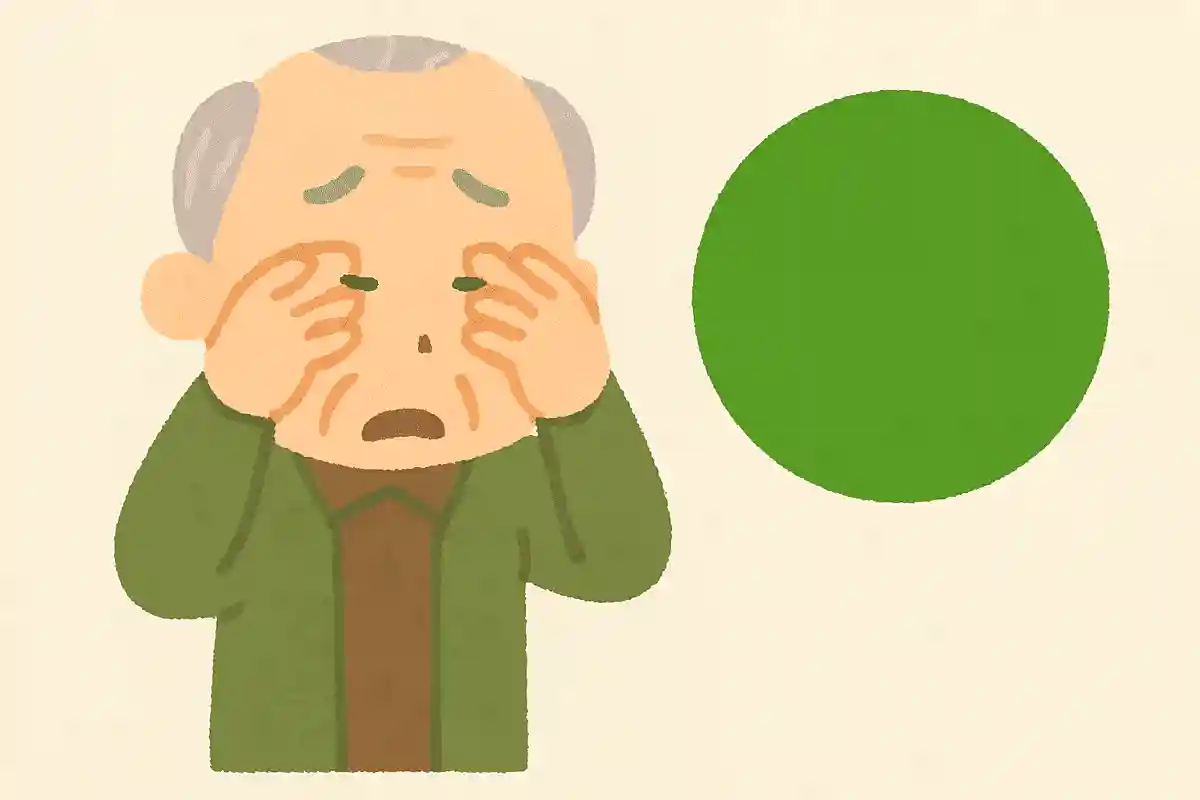
The answer is “green.” Green is said to have a psychological effect of helping you relax and easing tension in the mind and body.
Perhaps the reason we place houseplants in our rooms is that we modern people are unconsciously seeking healing and relaxation.
Have you also heard that it’s good to look at distant mountains when your eyes are tired? It seems that looking into the distance rather than at something nearby allows the eye muscles to relax.
This, too, is the wisdom of those who came before us.
In addition to sourness, sweetness, and saltiness, the tongue can detect one more taste. What is the other one?
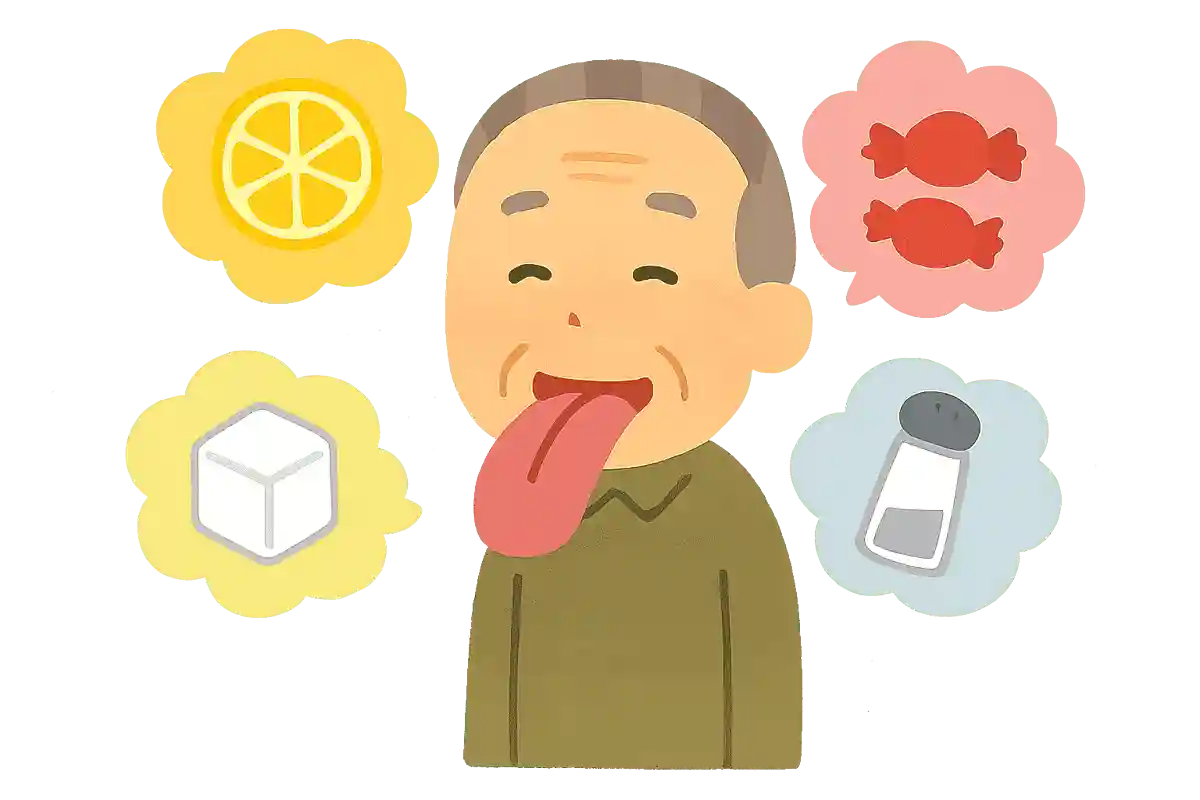
When we eat food, we sense various tastes with our tongues.
So, alongside sourness, sweetness, and saltiness, what is the other taste we actually perceive? Here’s a hint: many children tend to dislike it a bit, and many people come to appreciate its deliciousness more as they grow older.
The answer is bitterness.
The tongue has taste buds—organ-like sensors that detect tastes—that perceive each of these flavors.
Eat plenty and enjoy a wide variety of tastes!
When does “between meals” mean in terms of how to take medicine?
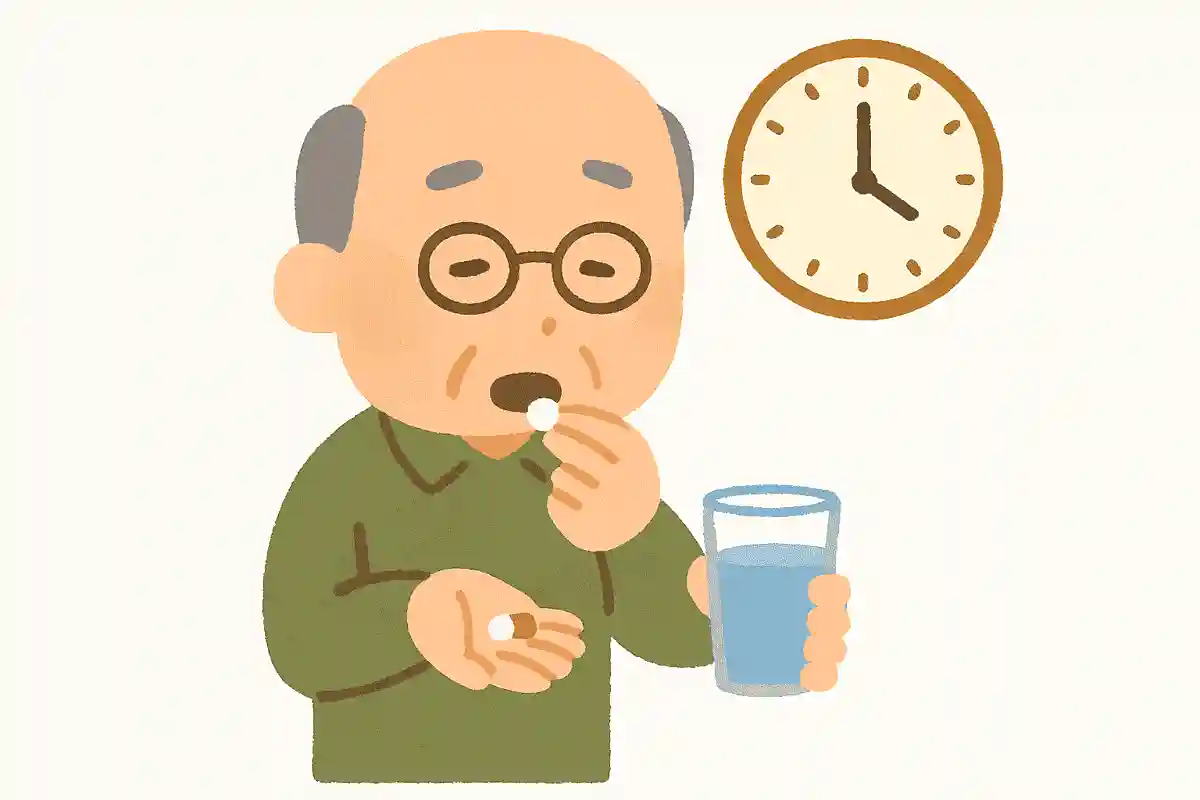
Among older adults, many probably receive medications from the hospital.
Some of you might also have been instructed to take your medicine “between meals.” So, when exactly does “between meals” mean you should take your medicine? Many people think it means during a meal, but that’s incorrect.
The answer is: between one meal and the next—for example, between breakfast and lunch, or between lunch and dinner.
Strictly speaking, the guideline is about 2 to 3 hours after eating.
If you’re an older adult and you’re given medicine with the instruction to take it “between meals,” please be careful to follow this timing.
Health and Body Knowledge Quiz (11–20)
What disease has an increased risk due to a weakening of the ability to swallow food?
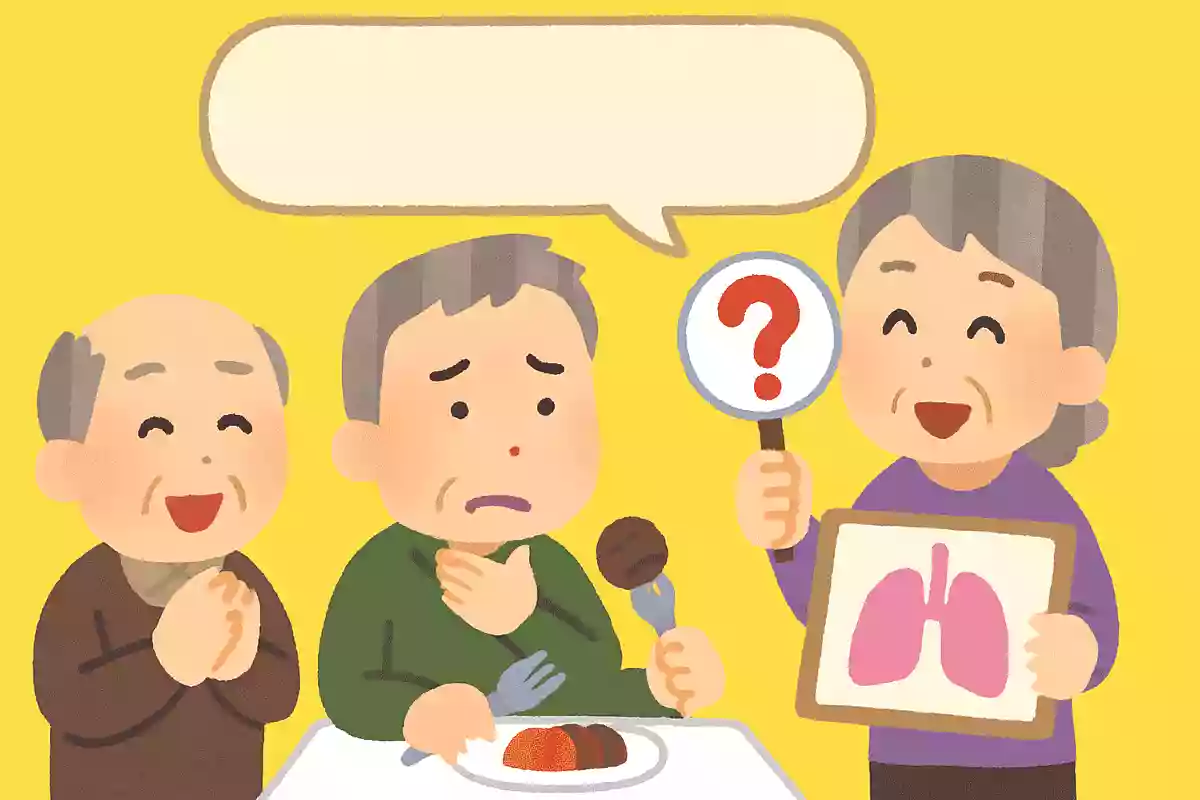
A decline in muscle strength is something you may notice in everyday moments, and some people might feel that swallowing food has become harder than before.
Did you know that there’s a disease whose risk increases as your swallowing ability weakens? The answer is aspiration pneumonia—a dangerous condition in which food or saliva enters the airway and causes inflammation.
It can easily become severe and even be life-threatening, so keep this in mind and pay attention to your swallowing ability and the muscles of your face.

What foods are expected to be effective for cancerous eye strain?
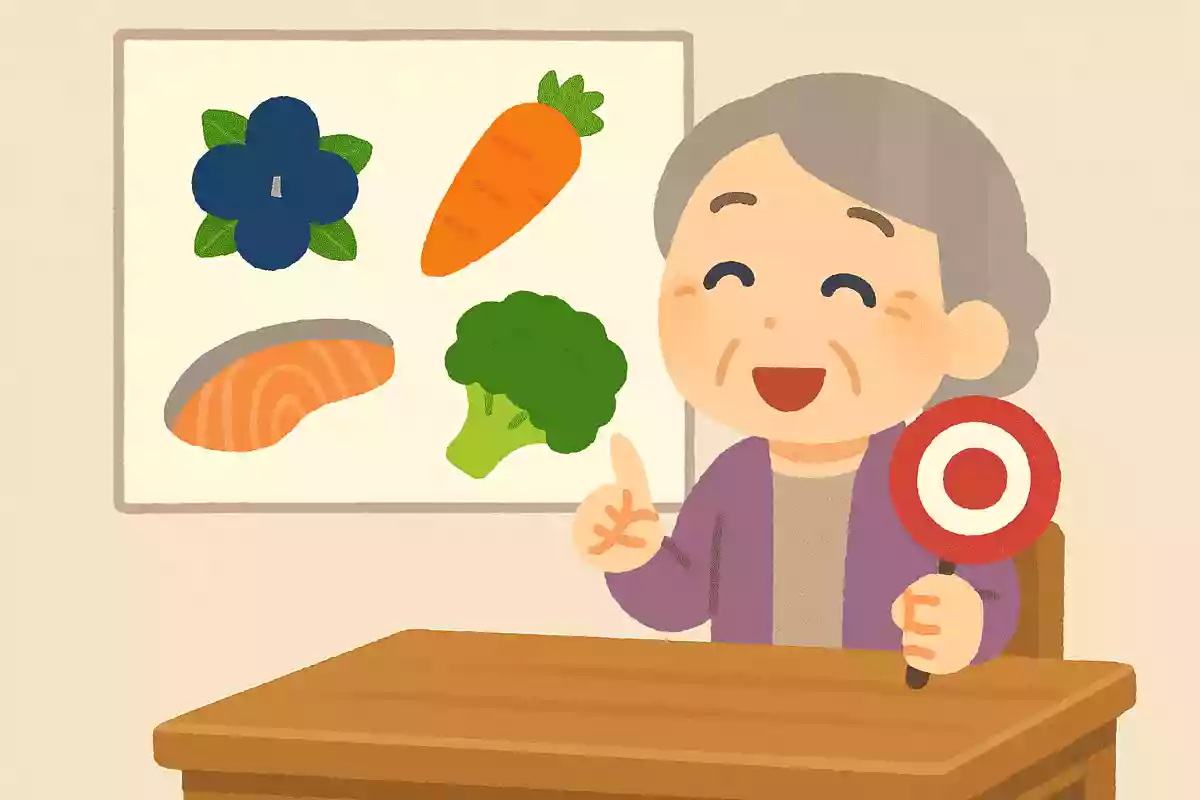
Blueberries are a food that may help relieve eye strain.
Eye strain occurs when the muscles around the eyes become tense.
Blueberries are rich in a pigment called anthocyanin, which supports eye movement.
There is a pigment called rhodopsin that is necessary for capturing light; when the eyes are overused, the resynthesis of rhodopsin can’t keep up, leading to eye fatigue.
The anthocyanins in blueberries help promote the resynthesis of rhodopsin and can help alleviate eye fatigue.

When you feel a sneeze coming on, you can stop it by using a certain part of your body. How do you use that body part?
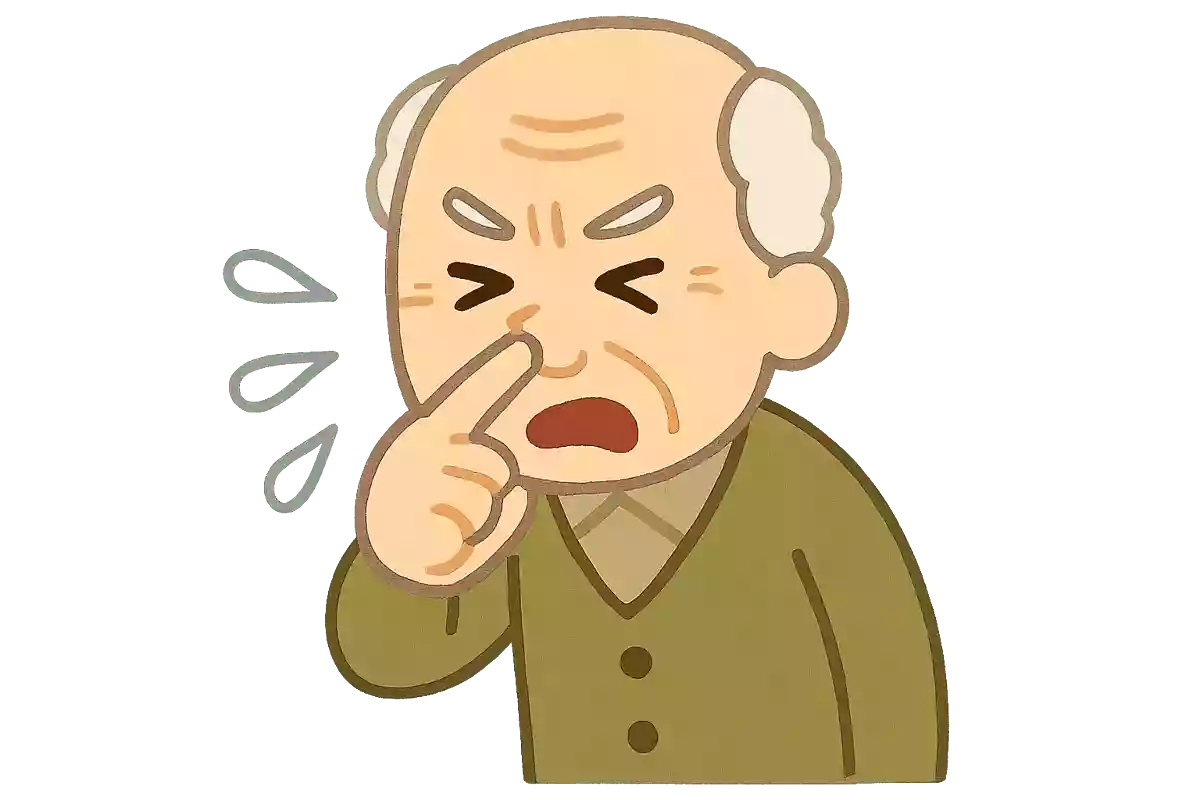
You’re about to sneeze in a quiet place… In times like that, knowing this method could come in handy! The spot is a part of your face—close to your nose, where the sneeze comes from.
The answer is to press under your nose with your finger.
If you say it’s the spot Kato-chan from The Drifters presses when he does “Kato-chan, pe!” older people might get it right away.
That said, it seems that stopping a sneeze isn’t very good for your body, so try using this only when you really have to!