

[For Seniors] Fun and Lively! Recommended Quiz Questions

How about quiz games like wordplay and riddles during recreation time at day service centers and other senior facilities? Puzzles that hide meanings in the arrangement, color, or orientation of letters, as well as riddles, are enjoyable brain teasers.
The answers often draw on familiar folk tales or everyday events, so seniors can experience that delightful “I get it!” moment of surprise and accomplishment when inspiration strikes.
The process of thinking stimulates the brain, and smiles and conversation naturally arise when the answer is revealed.
This time, we’ll introduce clever wordplay and riddle quizzes that are sure to get seniors excited and thinking, the kind that make you say, “Wow, that’s clever!”
- [For Seniors] Laugh-Out-Loud, Crowd-Pleasing! Fun Quiz
- [For Seniors] Lively Wordplay Game: Fun Recreation for Elderly Care
- [Brain Training] Lively Word Quiz for Seniors
- [For Seniors] Have Fun with Wordplay Characters! A Collection of Funny Puzzles
- [For Seniors] Fun and Educational True-or-False Quiz
- [For Seniors] Fun Riddles That Stimulate the Brain
- [For Seniors] Fun! Let’s Get Excited with Japan’s Number One Quiz
- [For Seniors] Fun Quiz Questions That Will Liven Up December
- For seniors: Fun, crowd-pleasing word association game ideas
- [For Seniors] Fun Recreational Activities Without Equipment
- [For Seniors] Perfect Brain Training! Fun Trivia
- [For Seniors] Recommended and Exciting! Brain-Teaser Quiz Collection
- [For Seniors] Recommended Trivia Quizzes & Fun Facts for November
Brain Teasers and Riddles Quiz (11–20)
Fairy Tale Guessing Quiz

How about doing a quiz based on old folktales—something that might bring back memories like reading to your children or reading books to your grandchildren? For example, if you hear “drifted down the river,” “defeating ogres,” and “three companions,” you’d think of… Momotaro, right? Folktales often have similar plots or openings, so they can be a bit confusing.
If you include hints along with each question, it will be easier to understand and answer.
After the answer is revealed, you could also talk a bit about the story itself.

rebus

Have you heard of hanjie, picture riddles that were popular among commoners in the Edo period? Hanjie are a type of ukiyo-e in which you guess a word suggested by the image.
For example, in a puzzle where the characters a, ka are written on an umbrella (kasa), you read it as a-kasa-ka, which becomes Akasaka.
You can also have fun by including numbers in addition to pictures and characters.
Although hanjie were a craze in the Edo period, it’s fine to use modern answers.
Combine pictures, letters, and numbers to represent words like place names, foods, or animals.
It also sounds fun to make your own puzzles.

Ten Times Quiz

The “say it 10 times” quiz that almost everyone played as a kid.
The most famous one is, “Say ‘pizza’ ten times.” After they say it ten times, you point to your elbow and ask, “What’s this?” and everyone gets baited by “pizza” and cheerfully answers “Knee!” That one (lol).
It’s a slightly mean trick question, but it’s fun to have everyone say it ten times together, and even if you get tricked afterward, you hear the answer and everyone goes, “Ohhh, I get it!” It’s a simple but fun quiz.
A wordplay lettering using “u” and “shi.”

Let’s figure out the correct answer from the combined characters.
Here’s a wordplay puzzle using the Japanese characters “う” (u) and “し” (shi).
The character “u” forms a ring encircling “shi.” It’s a unique arrangement, and some people might have no idea what the answer could be.
The hints are that there are ten “う” characters and that “し” is placed in the center.
The answer is “雨天中止” (canceled due to rain).
ポイントは、数字の10を「ten(テン)」と読むことで、日本語の読み「テン」と同じ音になり、その結果としてそのフレーズにつながるということです。
A wordplay (riddle) using the name “Taro”

Let’s capture the features of the characters and try a brain teaser! This is a wordplay puzzle using the name “Taro.” The characters for “Taro” are reversed and have a striped pattern.
The hints are the reversed “Taro” and the stripes.
If I also tell you it’s related to a folktale, many of you might get it right.
The answer is “Urashima Taro.” Since “Taro” is flipped and has stripes (shima), it makes sense.
It’s a folktale long loved in Japan.
A witty wordplay using “shō” and “jō”

Let’s solve a riddle that looks like an official-style problem! It’s a wordplay puzzle using “shou” and “jou.” The display shows “shou × 2” and “jou ÷ 2.” The hints are that it suggests a bustling crowd, and that “shou” is doubled while “jou” is halved.
The answer is “shoubai hanjou,” meaning “prosperous business.” It makes sense if you think of it as “shou” multiplied and “jou” halved—“shou-bai” and “han-jou.” It’s a perfect brain teaser with clever wordplay, and once you get it, it’s quite satisfying.
Give it a try!
Tonchi and Riddle Quiz (21–30)
Even though you went to the trouble to attach it, what kind of “mochi” can’t be eaten?
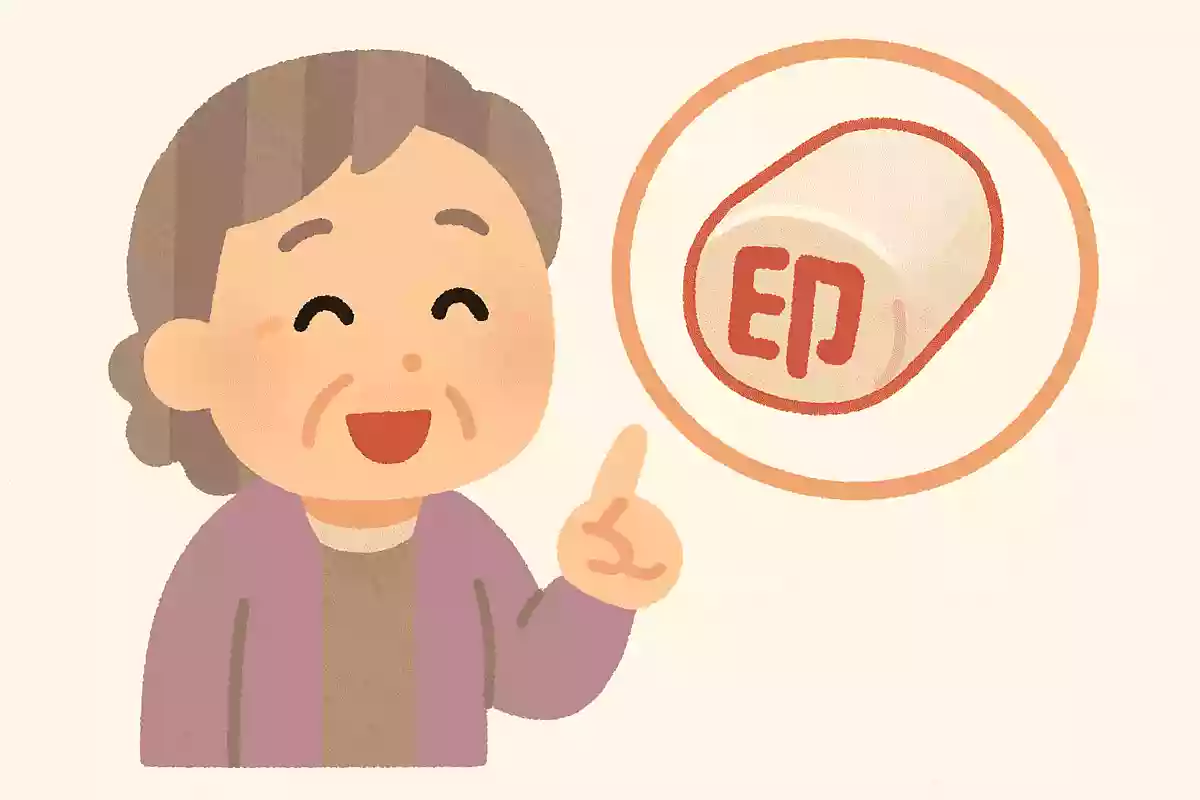
The phrase “even though it finally stuck” is the key to this riddle.
If you follow the associations of “something that sticks” and “mochi,” you’ll naturally arrive at “falling on your butt” (shirimochi).
By the way, do you know why falling on your backside is called shirimochi? In fact, shirimochi originally referred to a custom where a child under one year old was made to carry mochi on their back and then gently toppled onto their bottom.
That’s why even today, falling on your backside is called shirimochi.
Incidentally, because a baby’s fall was considered a good omen, shirimochi was also seen as something auspicious.
