

[For Seniors] Winter Haiku: Introducing Beautiful Masterpieces by Famous Haiku Poets


Haiku have a unique depth of flavor that belongs to the winter season.
From the cold moon and the first winter showers to the soft fall of snow, there are countless famous verses that richly capture these scenes.
For older readers in particular, encountering haiku filled with nostalgic landscapes and memories can warm and soothe the heart.
This time, we will introduce winter haiku composed by Japan’s leading poets, such as Matsuo Bashō and Yosa Buson.
We have carefully selected beautiful verses that conjure vivid scenes the moment you close your eyes.
Why not relax and immerse yourself in the world of haiku, while also noting the playful expressions and turns of phrase?
- [For Seniors] Winter songs you'll want to hum along to. A collection of classic tunes recommended for BGM and recreational activities
- [For Seniors] Fun Winter Activities: Recreation and Games
- Hand games that liven things up for seniors—also great brain training
- [For Seniors] Introducing Whiteboard Activities to Enjoy in Winter!
- [For Seniors] Haiku for March: Enjoying a Spring Moment with Famous Verses
- [For Seniors] Enjoy the Cold Winter! Simple, Recommended Crafts
- [For Seniors] Get Through the Chilly February! Recommended Health-Themed Recreations
- [For Seniors] Enjoy the Cold Winter! Seated Activities You Can Do
- [For Seniors] Spring Haiku. Spring Activity
- [For Seniors] Extremely Effective Brain Training! A Fun Collection of Hand Games
- [For Seniors] Brain-training with winter-themed quizzes. Great for activities, killing time, and dementia prevention.
- [For Seniors] Hand and finger play roundup: Finger exercises that lead to brain training
- [For Seniors] Fun Riddles That Stimulate the Brain
[For Seniors] Winter Haiku: Introducing Beautiful Masterpieces by Famous Haiku Poets (81–90)
At the beautiful battledore fair, I pass by without buying.Kyoshi Takahama
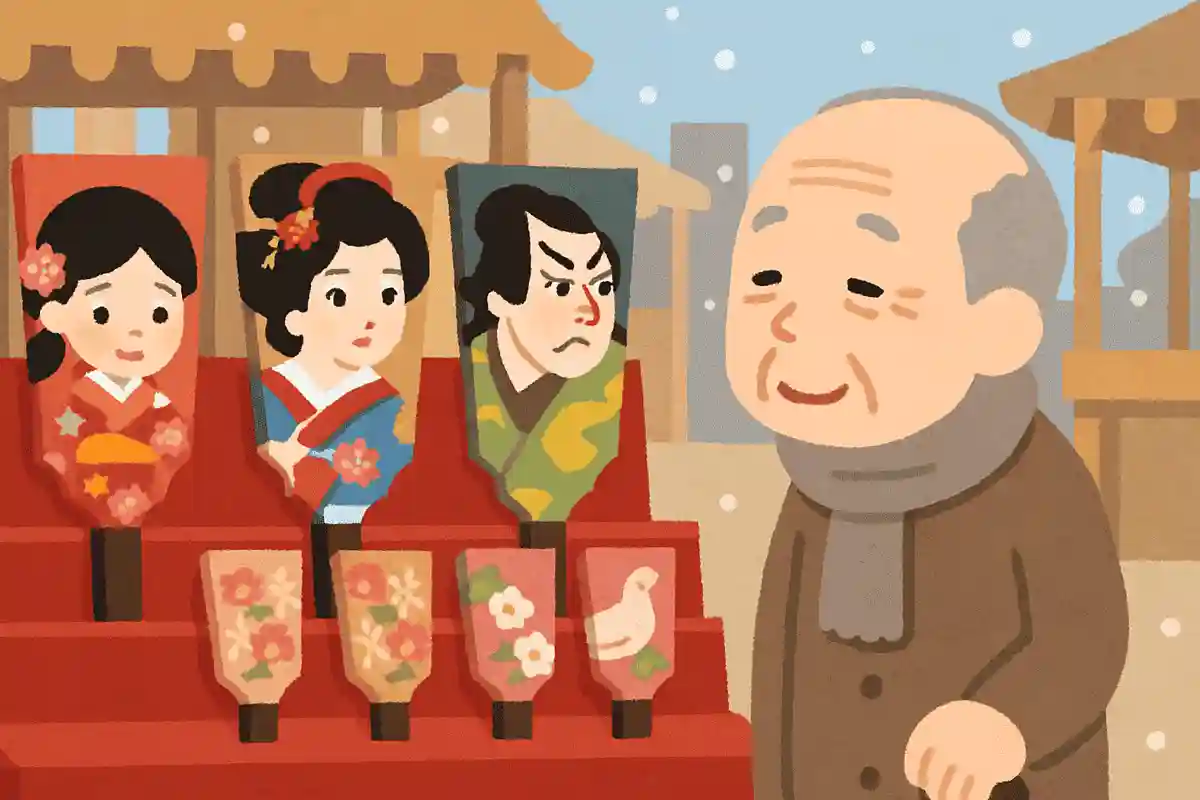
This verse is a haiku by Takahama Kyoshi composed while sensing the seasonal sights from late autumn into early winter, the year-end of December.
The “Hagoita Market” is a fair selling decorative battledores for the New Year, where colorful, ornate paddles are lined up.
Although he finds them “beautiful,” as the phrase “I pass by without buying” suggests, he depicts himself simply picking one up and moving on without purchasing it this time.
Kyoshi seems to imbue the poem with a feeling of quietly savoring the changing season—watching the brightness and festivity yet deliberately not taking part.
It is a gentle, soothing poem that evokes the quiet preparations for year’s end on a December street corner.

Riddle play of the coughing child—endless and unresolved.Teijo Nakamura
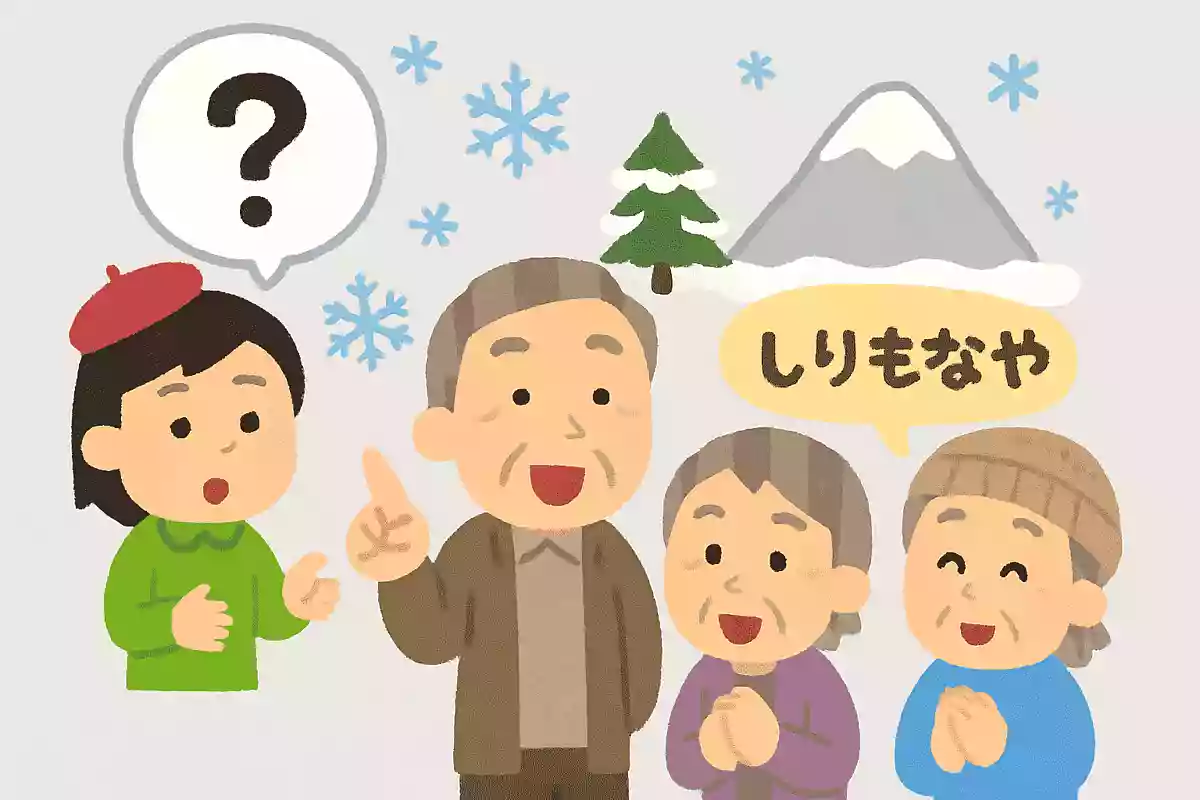
The haiku “Seki no ko no / nazo nazo asobi / kiri mo naya” (“A coughing child / playing riddles— / it never ends”) was written by Nakamura Teijo, a leading female haiku poet of the Showa era.
Teijo often wrote about everyday life, and you can feel her perspective as a woman in this haiku as well.
The seasonal word (kigo) is “cough,” and related kigo include chapped skin, colds, and frostbite.
The poem depicts a child with a cold, coughing under the covers, yet still playing riddles; even if the mother thinks of stopping, the child keeps asking and it feels endless.
You can sense a parent’s tender feelings from the haiku.
Older adults with children may have had similar experiences.

The wintry gust blows the setting sun down into the sea.Soseki Natsume

Natsume Sōseki was a literary giant of the Meiji era who was active in many fields, including as a novelist, critic, and scholar of English literature.
If you’re an older reader who loves literature, you may also be familiar with the anecdote about “The moon is beautiful, isn’t it?” Sōseki also wrote many haiku.
In the haiku “Kogarashi ya / umi ni yūhi o / fukiotosu” (“The wintry gust / blows the setting sun / down into the sea”), he evokes a scene—the force of the wind and the winter sun that seems to sink in an instant.
The meaning is that the fiercely blowing wintry wind, the kogarashi, is strong enough to knock even the setting sun down into the sea.
It conveys the way the winter sun seems to drop quickly at this time of year, as if driven down by the strong kogarashi.
While tying my skate laces, the fashion already moves onSeishi Yamaguchi

Seishi Yamaguchi, a famous Japanese haiku poet, wrote “While tying the laces of my skates, I’m already all a-flutter,” a haiku that evokes thoughts of skating.
Skating, beloved by Japanese people since the Meiji era, was at that time a sport enjoyed only by the wealthy.
It wasn’t until the Taisho era that ordinary people could enjoy it.
Even in the brief moment spent tying skate laces, you can sense the impatient desire to start gliding as soon as possible.
It conveys how thrilling and exhilarating skating was for Yamaguchi.

Off we go—until the place where, watching the snow, we tumble.Matsuo Bashō

Matsuo Basho was a haikai poet who was active in the early Edo period.
He is so famous that many older people may know of him.
Here I’d like to introduce a haiku he composed at a snowy gathering in Nagoya: “Come, let us go— to see the snow, even to the place where we tumble.” From this haiku you can feel a lively, buoyant mood.
Since the snow has begun to fall, let’s all go out to view it; even if we slip and fall, that’s fine too—let’s go see the snow all the way to the point where we take a spill.
Encourage older adults to put their own feelings into a haiku and give it a try.
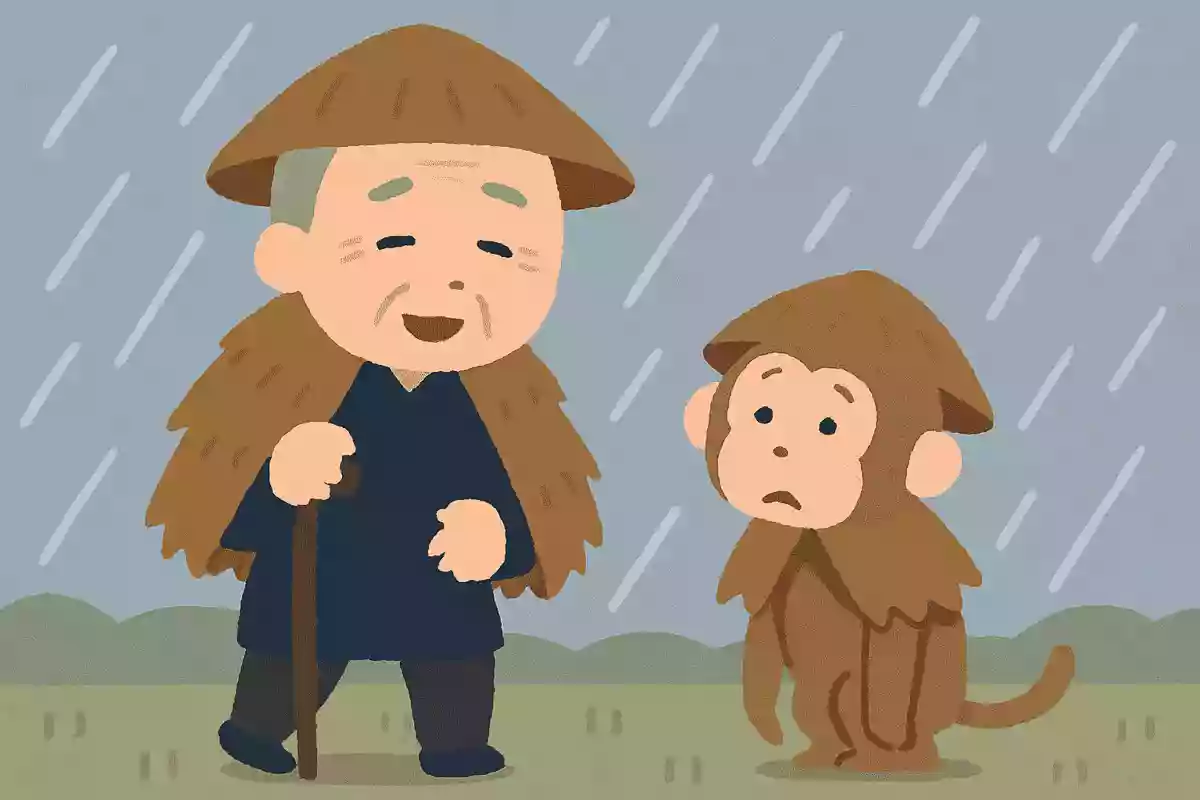
First winter drizzle— even the monkeys seem to want small straw raincoats.Matsuo Bashō
It’s said that in Japan there are over 400 words to describe rain, such as drizzle (kirisame) and long, steady rain (nagai ame).
People in the past had so many terms for rain that it’s as if they found joy in rainfall itself.
In haiku as well, words that describe rain often serve as seasonal words (kigo).
In Matsuo Bashō’s poem “First winter shower— even the monkey seems to want a little straw raincoat,” the phrase “first winter shower” (hatsu-shigure) is the kigo.
Do you know what hatsu-shigure means? Shigure refers to light, intermittent showers that fall from late autumn to early winter.
So in the haiku, it conveys the scene of encountering, for the first time that year, a light rain falling during a journey in the late autumn to early winter season.
Savoring the atmosphere and taking shelter from the rain for a while, one notices a monkey up in a nearby tree, watching the rain as if feeling cold, seeming to wish for a small straw raincoat.
[For Seniors] Winter Haiku: Introducing Beautiful Masterpieces by Famous Haiku Poets (91–100)
Ill on my journey, my dreams roam over withered fields.Matsuo Bashō

Matsuo Basho was a haikai poet active during the Edo period.
Even today, the haiku he composed across various parts of Japan remain.
“Falling ill on a journey, my dreams go wandering over a withered moor” was the last haiku he composed in his lifetime, at age 51.
He wrote it while bedridden after falling ill on his way to mediate a quarrel among his disciples.
Although it is regarded as his death poem, there is a view that he did not intend it as such at the time he composed it.
Beyond this haiku, it might also be enjoyable to consider, together with older adults, the deeper meanings embedded in his poems.