

[For Seniors] Winter Haiku: Introducing Beautiful Masterpieces by Famous Haiku Poets


Haiku have a unique depth of flavor that belongs to the winter season.
From the cold moon and the first winter showers to the soft fall of snow, there are countless famous verses that richly capture these scenes.
For older readers in particular, encountering haiku filled with nostalgic landscapes and memories can warm and soothe the heart.
This time, we will introduce winter haiku composed by Japan’s leading poets, such as Matsuo Bashō and Yosa Buson.
We have carefully selected beautiful verses that conjure vivid scenes the moment you close your eyes.
Why not relax and immerse yourself in the world of haiku, while also noting the playful expressions and turns of phrase?
- [For Seniors] Winter songs you'll want to hum along to. A collection of classic tunes recommended for BGM and recreational activities
- [For Seniors] Fun Winter Activities: Recreation and Games
- Hand games that liven things up for seniors—also great brain training
- [For Seniors] Introducing Whiteboard Activities to Enjoy in Winter!
- [For Seniors] Haiku for March: Enjoying a Spring Moment with Famous Verses
- [For Seniors] Enjoy the Cold Winter! Simple, Recommended Crafts
- [For Seniors] Get Through the Chilly February! Recommended Health-Themed Recreations
- [For Seniors] Enjoy the Cold Winter! Seated Activities You Can Do
- [For Seniors] Spring Haiku. Spring Activity
- [For Seniors] Extremely Effective Brain Training! A Fun Collection of Hand Games
- [For Seniors] Brain-training with winter-themed quizzes. Great for activities, killing time, and dementia prevention.
- [For Seniors] Hand and finger play roundup: Finger exercises that lead to brain training
- [For Seniors] Fun Riddles That Stimulate the Brain
[For Seniors] Winter Haiku: Introducing Beautiful Masterpieces by Famous Haiku Poets (51–60)
New Year’s Day— washing my hands, an evening moodRyūnosuke Akutagawa

It’s not widely known, but writers like Ryunosuke Akutagawa and Natsume Soseki also left many haiku.
These are sometimes categorized as “literati haiku,” and many have a uniquely distinctive atmosphere.
This haiku is one of those.
Its content is: “New Year’s shrine visit, New Year’s greetings rounds—despite it being the New Year’s holiday, I ended up being busy with all sorts of things today.
Ah, it’s already evening.” You can sense the slightly bittersweet feeling of “I wish I could have stayed in the New Year mood a bit longer,” can’t you? How was your New Year’s this year?
Kagami mochi, in a dark place, sits split apart.Saito Sanki

This is a haiku composed while quietly observing the New Year deity symbolized by the kagami mochi and the passing of the seasons.
Kagami mochi is a rice cake displayed for the New Year to pray for prosperity and safety, but as the phrase “cracked and sitting in a dark place” suggests, it is depicted as being set quietly where light does not reach, slightly cracked.
Saito Sanki likely felt the sentiment of year’s end and the realities of life even in things that are not perfect, finding beauty and pathos in their natural state.
Gazing quietly at the kagami mochi, this verse evokes a deep sense of the season’s close and thoughts for the year to come.

Something like a rod that pierces through last year and this year.Kyoshi Takahama
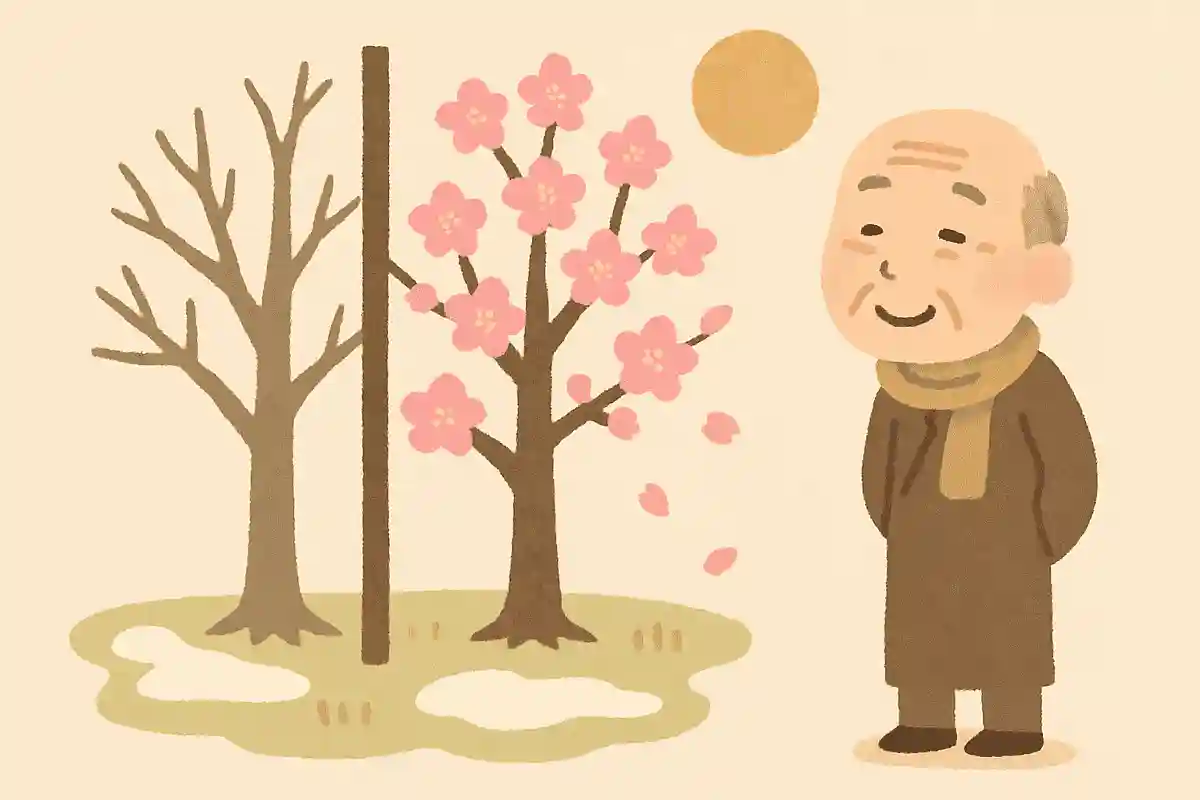
‘Kozokotoshi’ is read as ‘kozo-kotoshi,’ and thanks to this haiku it has become a well-known seasonal word in the haiku world.
However, it’s actually a word that is difficult to use when composing haiku.
Some interpret it as expressing a strong resolve: ‘Even though the year has turned and it is the New Year, my will remains unchanged.’ Interpretations of this verse will vary from reader to reader.
But there are haiku poets who say that a truly great poem is one that allows for many such interpretations.
How did you read this haiku?
Temari song: making sorrow beautifulKyoshi Takahama
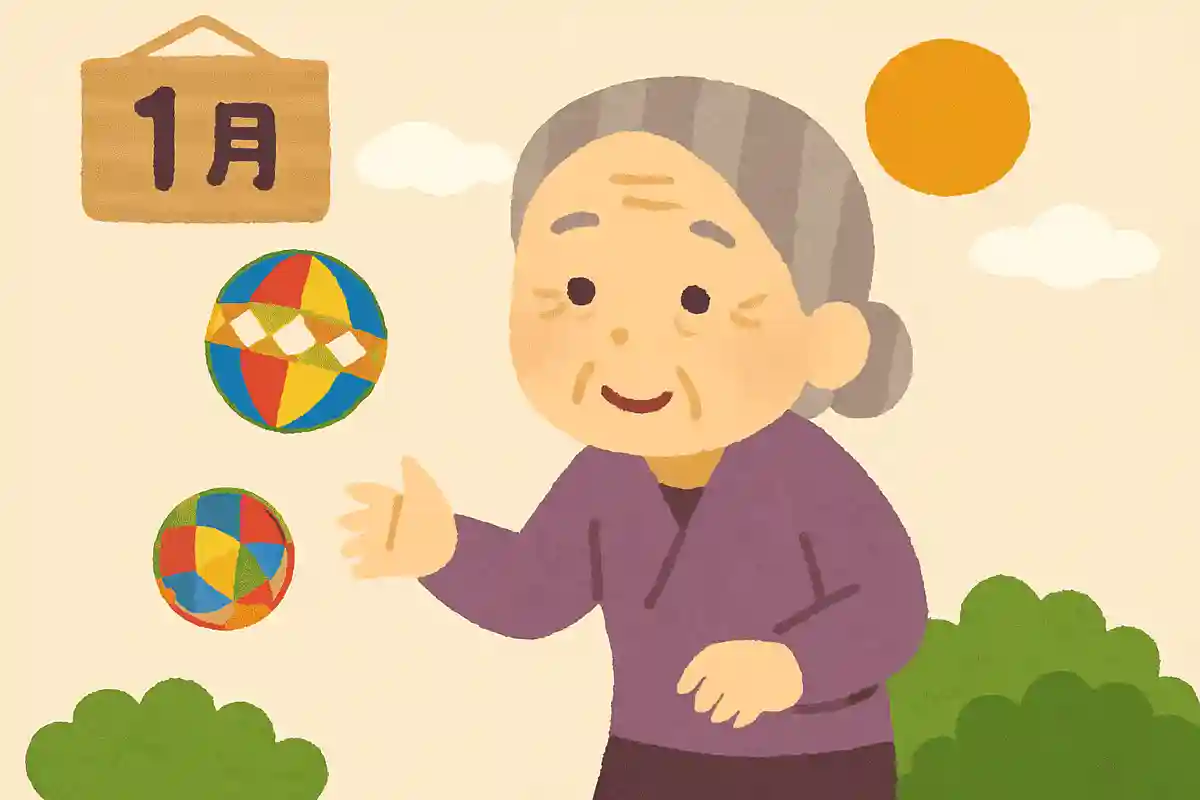
Temari balls are made by winding beautiful threads into geometric patterns such as vivid triangles and circles.
From the Edo period through the Meiji period, temari were often used for New Year’s play.
For that reason, “temari” is also a seasonal word for the New Year.
Children would play while singing pretty temari songs.
However, it is said that this haiku was composed around the time the Second World War began.
Perhaps even the songs sung by the innocent children playing with temari carried heavy, dark themes.
And because those songs were still sung in the beautiful voices of children, they may have left listeners with a feeling that had nowhere to go.
It seems like a haiku that could also serve as a reference for older adults on how to capture small moments of everyday life.

[For Seniors] Winter Haiku: Introducing Beautiful Masterpieces by Famous Haiku Poets (61–70)
At the grassy hut, New Year’s cards flutter here and there—how auspicious it is.Kyoshi Takahama
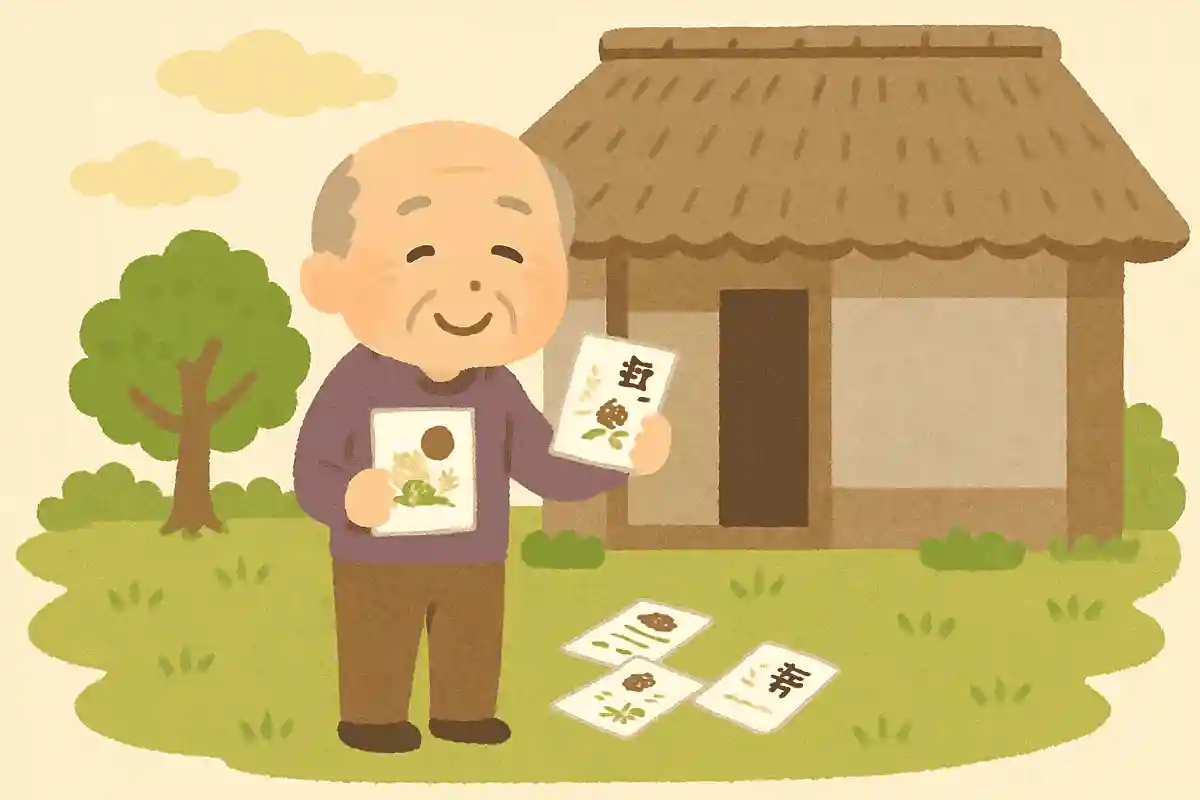
Some older adults still write and receive New Year’s cards.
Even though they’ve become less common lately, it’s still nice to find one in your mailbox at home.
The joy of receiving a New Year’s card may be something that never changes, no matter the era.
You can sense both celebratory and happy feelings from haiku as well.
It’s also recommended to create New Year’s cards together with older adults.
The year-end and New Year period is hectic, but there are plenty of enjoyable moments.
Please spend fulfilling time together with the seniors in your life.
A train passes down the street—how strange—the Tori-no-Ichi fair.Masao Kume
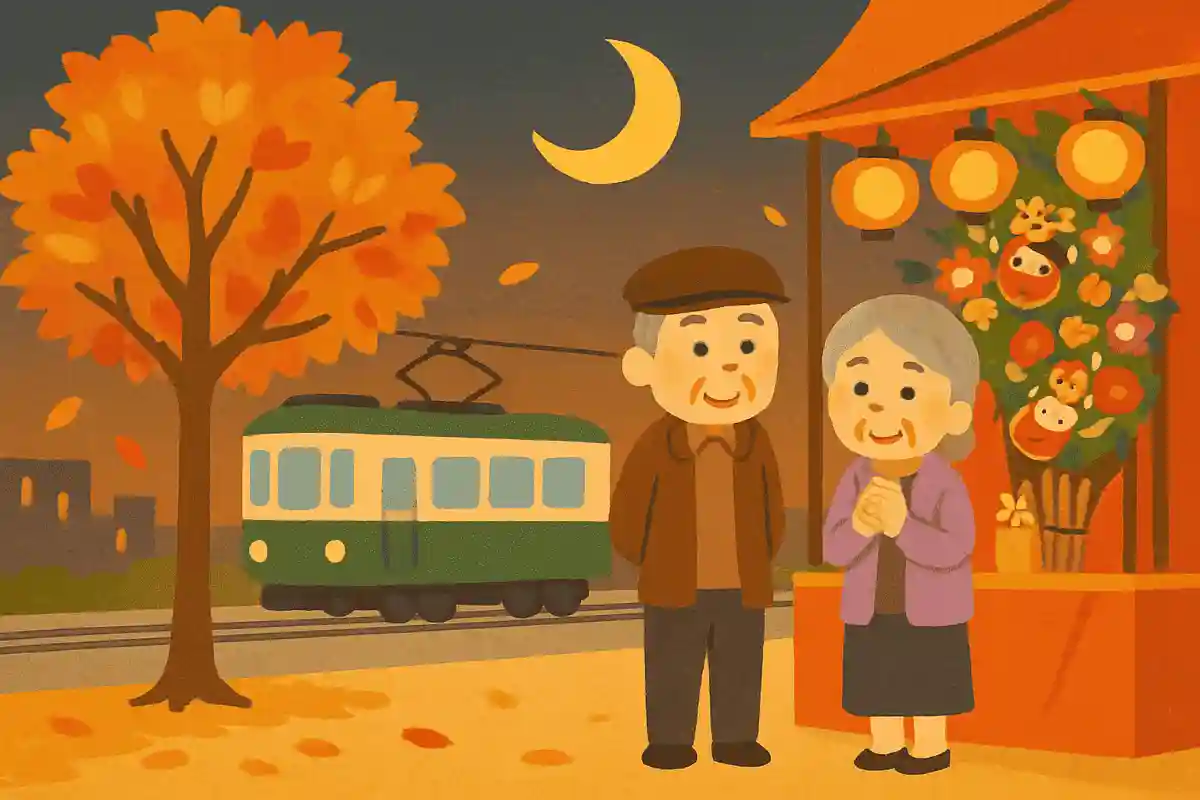
Here is a haiku by Masao Kume, composed while gazing at the lively cityscape of November.
The phrase “the streetcar passing along the street” refers to the trams busily coming and going through the city.
Their motion and sound evoke a somewhat mysterious sensation in the poet.
The Tori-no-Ichi is a fair for prosperous business held in November, where stalls and the bustle of people color the streets.
Kume contrasts the modern speed of the streetcar with the traditional liveliness of the Tori-no-Ichi, sensing the extraordinary within the everyday and the shifting of the seasons.
On a November street corner, you can gently savor a scene where nostalgia and newness mingle.
Poinsettias— from every window, the harbor lights.Mariko Koga
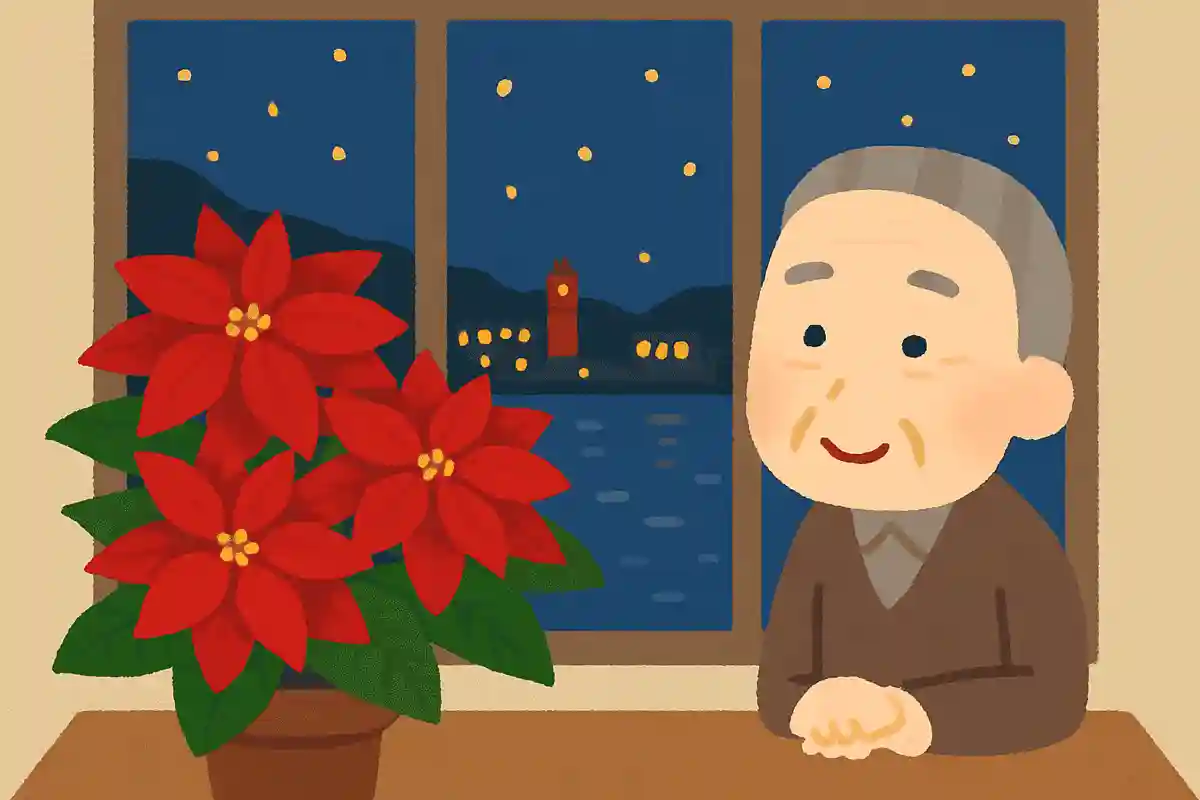
This is a haiku by Mariko Koga, composed while envisioning the quiet scenes of a town and harbor in December.
The poinsettia is a red flower that evokes the arrival of winter, adding color to the town’s windowsills.
As the phrase “from every window” suggests, together with the harbor lights visible from homes and shop fronts, the entire town seems wrapped in a gentle glow.
Even amid the winter cold, Koga likely felt soothed by the warm lights and the colors of the flowers, sensing the warmth of people’s daily lives.
It is a calm, heartwarming verse that lets you gently savor the harbor’s stillness and the town’s warmth on a December night.